
An axolotl squishy toy is a soft, squeezable novelty toy designed in the shape of an axolotl. Depending on the model, it may be squeezed, gently stretched, pressed, or handled as a simple fidget or sensory-play item. Its appeal comes from combining a cute axolotl design with the tactile experience of a soft squeeze toy.
If you have seen one of these toys online and are not sure whether it is a stress ball, a stretchy toy, or something else entirely, this guide answers that clearly. The HA Baby Toys Axolotl Squeeze Soft Squishy is a good example of the category — a soft, character-shaped squeeze toy made for casual hand play.
What Is an Axolotl Squishy Toy?
An axolotl squishy toy is typically:
- Soft and squeezable
- Designed like an axolotl
- Made for repeated hand play
- Potentially stretchable, depending on construction
- Useful as a fidget-style toy
- Suitable for gifts or party favors when age guidance allows
- Often enjoyed for its texture and cute appearance
Touch → Squeeze → Stretch → Release → Repeat
Five stages of typical squishy-toy play
Axolotl Squishy
Soft, tactile, and satisfying to handle
Touch
Feel the soft outer surface.
Squeeze
Compress it gently in the hand.
Stretch
Gently pull it only within the product’s intended limits.
Release
Allow the toy to return toward its original shape.
Repeat
Use it again during casual tactile or fidget play.
Touch → Squeeze → Stretch → Release → Repeat
What Exactly Is an Axolotl Squishy Toy?
This product combines two ideas:
The character
An axolotl-inspired design gives it the cute aquatic salamander appearance buyers recognize.
The toy format
The body is soft enough to squeeze and manipulate by hand, which is what separates it from a plush toy or a hard collectible figure.
Parents who want the practical side of using one can read the guide on how to use an axolotl squeeze toy.
Why an Axolotl?
The toy’s design is inspired by the distinctive appearance of an axolotl, often represented with:
- External-looking gills
- Wide head
- Small limbs
- Long tail
- Cute facial expression
The biology of the real animal is not the point here — this article is about the toy. But the axolotl’s highly recognizable face is exactly why the design has become popular in squishy and collectible toy ranges. The character gives the toy more personality than a plain stress ball.
Toy Anatomy
Six parts of a typical axolotl squishy toy
Head
Often the widest, most recognizable part of the toy.
Soft Body
The central squeezable area designed for hand play.
Arms
Small limbs that are typically not designed for pulling.
Tail
Often the thinner, more delicate part of the toy.
Stretch Zone
The areas best suited for gentle stretching, if the model is stretch-rated.
Outer Surface
The tactile finish that determines how the toy feels in hand.
Do not assume a specific filling material — silicone, gel, TPR, foam, or something else — unless the product listing confirms it. Fillings vary between models and brands.
What Does “Squishy” Actually Mean?
A squishy toy is designed to deform when pressure is applied. The typical interaction is:
Press → compress → release → reshape
The recovery speed depends on the toy’s material and construction. Some return to shape quickly; others recover more slowly. Do not assume a “slow rising” property unless the product listing specifically confirms it.
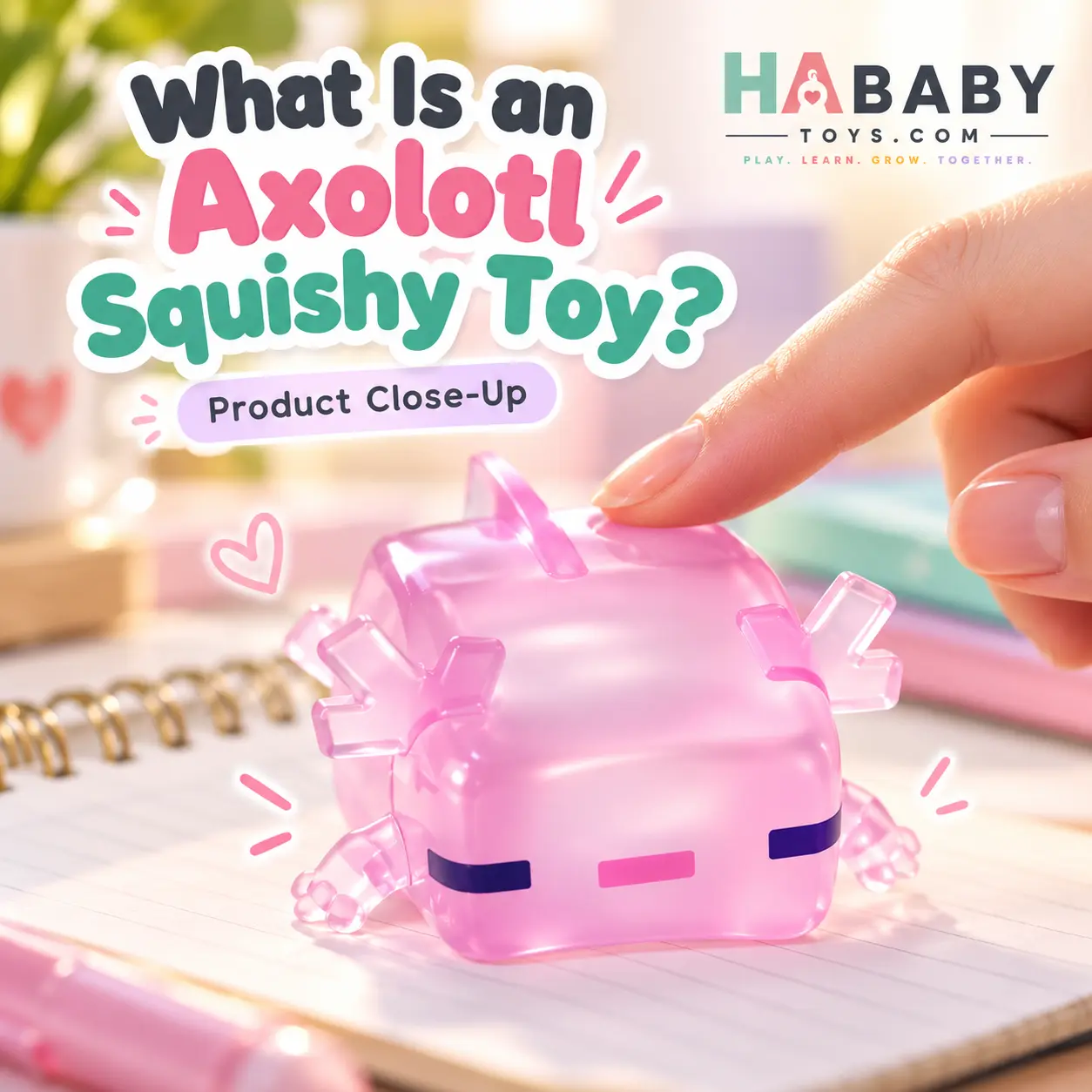
What Does “Stretchable” Mean?
Stretchable generally means the toy can tolerate some pulling or elongation during normal play, but it does not mean it can be stretched indefinitely.
Parents should avoid:
- Extreme pulling
- Twisting aggressively
- Using sharp fingernails
- Stretching thin sections excessively
This is useful practical information. A stretchy toy still has limits, and the thinner parts — tail, limbs, gills — are usually the first to fail under repeated extreme stretching.
Axolotl Squishy Toy vs Traditional Stress Ball
| Feature | Axolotl Squishy | Traditional Stress Ball |
|---|---|---|
| Character design | Yes | Usually no |
| Squeezable | Yes | Yes |
| Stretching | May be possible | Usually limited |
| Novelty appeal | High | Lower |
| Gift or party use | Strong | Possible |
| Decorative appeal | Strong | Limited |
| Tactile play | Yes | Yes |
The point is not that one is universally better. The axolotl toy adds a character and novelty element to basic squeezing, which is why many buyers choose it over a plain stress ball.
Axolotl Squishy vs Regular Plush Toy
Squishy axolotl
- Hand manipulation
- Squeezing
- Tactile feedback
- Compact fidget-style use
Plush axolotl
- Hugging
- Pretend play
- Decorative use
- Usually not designed for repeated squeezing or stretching
Both serve different purposes. A plush is better for comfort and cuddling; a squishy toy is better for tactile hand play.
Axolotl Squishy vs Slime
Squishy toy
- Contained object
- Reusable
- No loose slime during normal intact use
- Easier to pick up and store
Slime
- Moldable substance
- More open-ended manipulation
- More cleanup
- Storage container usually needed
Do not describe squishy toys as completely mess-proof. Damaged toys may leak or tear depending on construction, so checking them regularly matters.
Is It a Fidget Toy?
It can be used in a fidget-like way because the hands repeatedly:
- Press
- Hold
- Squeeze
- Release
- Manipulate
Many people may use a soft squeeze toy as something to keep their hands occupied during casual downtime. It is not a medical device, and it should not be presented as a treatment for ADHD, anxiety, autism, or any other condition.
Is It a Sensory Toy?
Possible tactile characteristics include:
- Softness
- Resistance
- Compression
- Stretch
- Shape change
- Repeated hand movement
The toy can provide a tactile play experience, which is why products of this type are often grouped with sensory toys. Families exploring that category can browse the HA Baby Toys Sensory Toys collection.
What Your Hands Experience
Four tactile qualities of a squishy toy
Soft
A gentle surface that feels comfortable in the hand.
Squishy
The toy compresses under pressure and returns toward shape.
Stretchy
Some models tolerate gentle elongation during play.
Resistant
The toy pushes back against pressure, giving feedback.
Can Kids Use an Axolotl Squishy Toy?
Suitability depends on the manufacturer’s age recommendation, the size of the toy, its construction, and whether small or detachable parts are present.
Parents should:
- Follow stated age guidance
- Inspect before use
- Supervise where appropriate
- Stop use if damaged
Do not assume a specific age range. Always check the product listing and packaging for the manufacturer’s recommendations. For broader guidance on choosing age-appropriate toys, the American Academy of Pediatrics’ HealthyChildren.org publishes useful advice.
Can Adults Use It Too?
Yes, as a novelty or desk or fidget item. Potential uses:
- Desk toy
- Casual squeeze toy
- Cute collectible
- Small gift
- Decorative novelty
Some people enjoy repetitive squeezing as a calming or satisfying hand activity, but the toy should not be presented as treatment for stress or anxiety.
What Does “Stress Relief Toy” Mean?
“Stress relief toy” is commonly used as a retail term for squeezable or fidget-style toys. It describes how people may choose to use the product rather than promising a medical or psychological effect.
Buyers comparing reasons to choose one can read why choose an axolotl stress relief toy. The term describes a category of tactile toys — it is not a clinical claim.
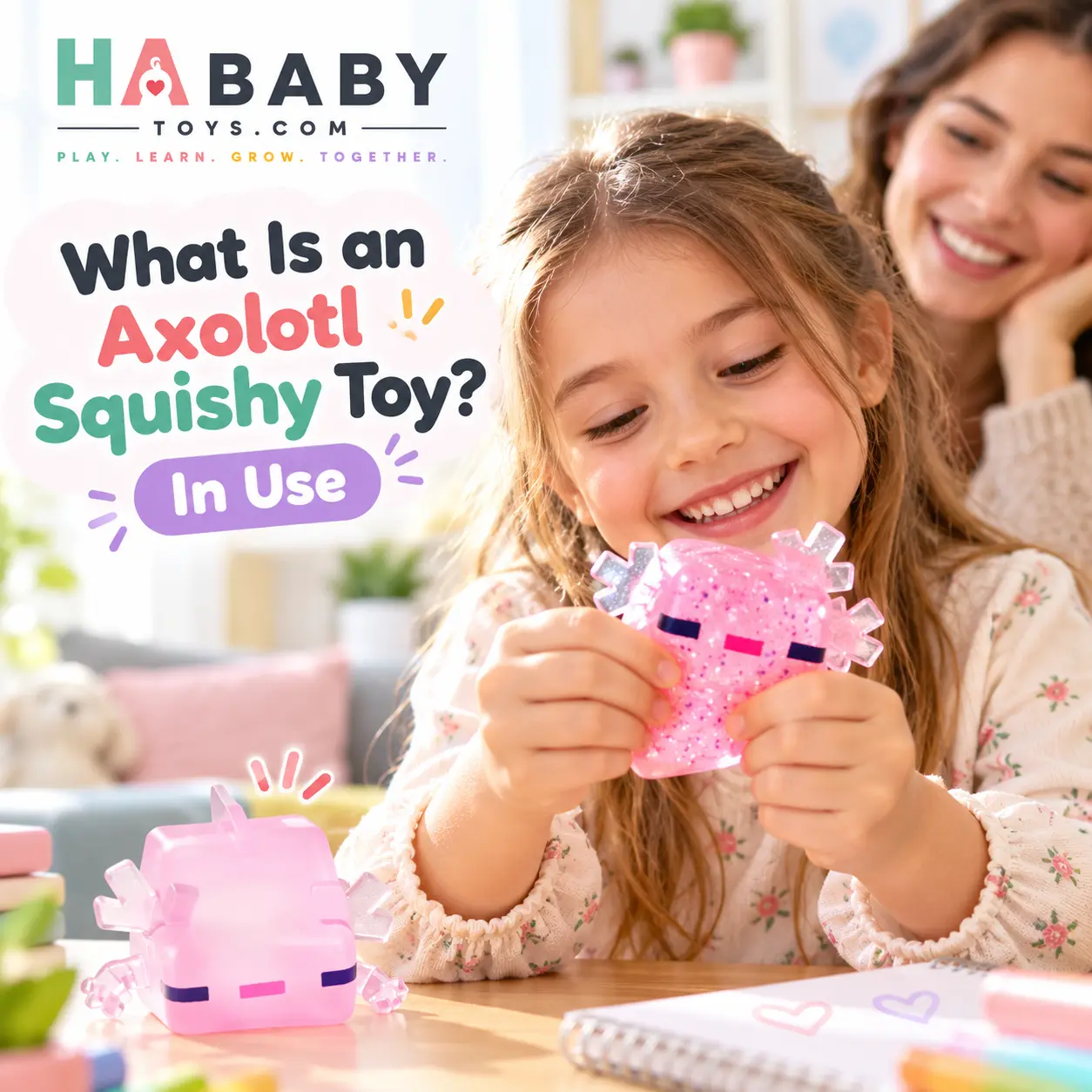
What Can Children Do With It?
Simple squeezing
Press and release the toy.
Texture exploration
Notice how the surface and shape feel.
Gentle stretching
Only as intended by the product.
Pretend play
Use the axolotl character in simple stories.
Desk or quiet-time toy
Keep hands occupied during suitable quiet activities.
Collection play
Pair it with other animal-themed toys.
The 30-Second Fidget Routine
For fast-solution readers who just want a simple pattern to try.
- Squeeze: press the toy gently in your hand.
- Hold briefly: keep it compressed for a second or two.
- Release: let it return toward its original shape.
- Reshape: smooth it back with your fingers if needed.
- Repeat: continue as long as it feels comfortable.
This is recreational hand play, not therapy. It should not be described as a treatment for stress or any other condition.
Why the Axolotl Shape Makes It More Appealing
Design makes a difference in the squishy toy category. The axolotl brings:
- A recognizable character
- A cute aesthetic
- A fun facial design
- More personality than a plain stress ball
- A dual role as both toy and small gift
This is commercially useful without sounding overly sales-focused. The design is often the reason a child or adult picks it up in the first place.
Is It Good as a Party Favor?
Potential occasions:
- Birthday parties
- Classroom reward bags
- Animal-themed parties
- Axolotl-themed events
- Holiday gift bags
Always confirm the product’s age guidance before using toys as children’s party favors. Small squishy toys may not be suitable for younger children.
Halloween, Christmas, and Birthday Gift Ideas
Halloween
A small novelty alternative to candy-based favors.
Christmas
Stocking or small-gift option.
Birthday
Party bag or standalone novelty gift.
Classroom rewards
A possible reward or prize where permitted by school policy and age guidance.
Can It Be Used in a Classroom?
Possible classroom roles:
- Prize or reward
- Quiet desk item if the teacher permits
- Sensory or fidget basket item
- Party favor
Classroom use depends on the teacher’s rules and whether the toy becomes helpful or distracting for the individual child. It is not an educational intervention.
What Should a Good Squishy Toy Feel Like?
Check for:
- Comfortable surface
- No sharp edges
- Secure construction
- No obvious damage
- Squeeze response
- Ability to return toward normal shape
- Appropriate size for the intended user
A good squishy toy should feel pleasant to handle and look intact. If the surface is sticky, cracked, or leaking, it should be taken out of use.
What Should Parents Check Before Buying?
Before you buy
- Manufacturer age recommendation
- Overall size
- Construction and material information
- Care instructions
- Whether it contains liquid or gel
- Whether it is designed for stretching
- Product safety information
- Presence of small parts
- Cleaning instructions
- Intended use
For toy safety guidance, the U.S. Consumer Product Safety Commission publishes information on age labeling, recalls, and small-parts hazards. Safe Kids Worldwide also offers injury-prevention resources that apply to children’s toys in general.
What Happens If the Toy Tears?
Stop using it
Take the toy out of play immediately.
Keep the damaged toy away from children
Especially if the filling is exposed.
Avoid contact with any exposed filling
If the filling is present and exposed, treat it as a hazard.
Follow the manufacturer’s disposal guidance
Dispose of the damaged toy as directed.
Replace rather than repair
Home repairs to soft toys can create safety risks.
Do not puncture, glue, reheat, inject, or modify the filling of a torn squishy toy. These repairs are not safe and can create new hazards.
Can You Wash an Axolotl Squishy?
Cleaning methods depend on the material and construction, so check the manufacturer’s care instructions first.
Generally, buyers should avoid assuming it can be:
- Submerged
- Machine washed
- Exposed to strong cleaners
- Heated
This prevents accidental product damage. If the manufacturer lists a specific cleaning method, follow that exactly.
How Should It Be Stored?
- Dry location
- Away from sharp objects
- Away from direct heat
- Not compressed under heavy objects
- Away from pets that may chew it
If the material becomes sticky or damaged, follow manufacturer care instructions. Avoid leaving soft toys pressed under books or stacked items, as this can deform the shape over time.
Common Myths vs Reality
Myths
- “Stretchable means I can pull it as far as I want.”
- “A stress toy medically reduces anxiety.”
- “Squishy means safe for every age.”
- “If it tears, I can just keep using it.”
Reality
- Excessive force can damage soft toys.
- “Stress relief” is a retail term, not a treatment guarantee.
- Age guidance and product construction still matter.
- Damaged squeeze toys should be taken out of use.
Who Is This Toy Best For?
Who Might Prefer Something Else?
Another toy may be more suitable if:
- The child tends to bite or puncture soft toys
- You want a durable outdoor toy
- You want a formal educational activity
- You need something suitable for very rough play
- You want a plush toy primarily for hugging
- The manufacturer’s age guidance does not suit the intended child
This is not a weakness of the product — it is simply a boundary of when it is most useful.
Is an Axolotl Squishy Toy Right for You?
- You like axolotl-themed toys
- You want something squeezable
- You enjoy tactile or fidget-style toys
- You understand it is a novelty toy, not therapy
- You can follow the manufacturer’s age guidance
- You are prepared to inspect it for tears
- You want a small gift or party-favor option
- Gentle rather than destructive play fits the intended user
If that sounds like the kind of toy you’re looking for, explore the HA Baby Toys Axolotl Squeeze Soft Squishy.
Ready to bring a soft axolotl squishy toy home?
Explore the HA Baby Toys Shop →Frequently Asked Questions
What is an axolotl squishy toy?
It is a soft, squeezable novelty toy shaped like an axolotl. Depending on the model, it may be squeezed, gently stretched, pressed, or handled as a simple fidget or tactile-play item.
What is inside an axolotl squishy toy?
Filling varies by manufacturer. Some models use gel, foam, silicone, or another soft material. Do not assume a specific filling unless the product listing confirms it.
Is an axolotl squishy the same as a stress ball?
Not exactly. A stress ball is usually a plain squeezable sphere. An axolotl squishy adds a character design and often a softer, more deformable body — which is why some are also stretch-rated.
Can you stretch an axolotl squishy toy?
Some models are stretch-rated, others are not. Stretchable means the toy can tolerate some pulling during normal play, but not unlimited stretching. Avoid pulling thin sections or using sharp fingernails.
Is it a fidget toy?
It can be used in a fidget-like way because the hands repeatedly press, hold, squeeze, release, and manipulate the toy. It is not a medical device and should not be presented as a treatment for any condition.
Is an axolotl squishy considered a sensory toy?
It can be grouped with sensory toys because it provides tactile feedback — softness, resistance, compression, and shape change. Families exploring that category can browse the HA Baby Toys Sensory Toys collection.
Are squishy toys suitable for kids?
Suitability depends on the manufacturer’s age recommendation, the size of the toy, its construction, and whether small or detachable parts are present. Always check the product listing and packaging for age guidance. The American Academy of Pediatrics’ HealthyChildren.org publishes useful advice on choosing age-appropriate toys.
Can adults use an axolotl squeeze toy?
Yes. Adults often use soft squeeze toys as desk items, novelty collectibles, or casual hand-occupying toys. Some people enjoy repetitive squeezing as a calming hand activity, but the toy is not a treatment for stress or anxiety.
Can it actually relieve stress?
“Stress relief toy” is a retail term for squeezable or fidget-style toys. Some people find repetitive squeezing calming or satisfying, but it is not a medical treatment. If you have ongoing concerns about stress or anxiety, speak with a healthcare professional.
What happens if a squishy toy tears?
Take it out of use immediately, keep the damaged toy away from children, avoid contact with any exposed filling, follow the manufacturer’s disposal guidance, and replace rather than attempt a home repair. Do not puncture, glue, reheat, or modify the filling.
How do you clean an axolotl squishy?
Cleaning methods depend on the material and construction, so check the manufacturer’s care instructions first. Avoid assuming it can be submerged, machine washed, exposed to strong cleaners, or heated.
Can it be used as a classroom fidget?
Possibly, if the teacher permits it and if the toy helps rather than distracts the individual child. Some classrooms keep a small collection of tactile items for permitted use. The National Association for the Education of Young Children (NAEYC) publishes resources on play and classroom environments.
Is it suitable as a birthday party favor?
Yes, if the age guidance suits the recipients. It works well for animal-themed parties, axolotl-themed events, and small prize bags. Always check the manufacturer’s age recommendation before using toys as party favors.
Is it a good Halloween or Christmas gift?
It can be a good small gift for Halloween bags, Christmas stockings, and birthday party favors. Match the toy to the recipient’s age and interests. The HA Baby Toys FAQ also answers common product and ordering questions.
What should I check before buying one?
Check the manufacturer’s age recommendation, size, material information, care instructions, whether it contains liquid or gel, whether it is designed for stretching, product safety information, presence of small parts, and cleaning instructions. Safe Kids Worldwide and the U.S. Consumer Product Safety Commission both provide helpful toy safety guidance.
Where can I buy the HA Baby Toys axolotl squishy?
Visit the HA Baby Toys shop to see the axolotl squeeze toy and other sensory toys. Retailers and larger buyers can also request a quote from HA Baby Toys.
The Short Version for Busy Parents
An axolotl squishy toy is not a medical product and not a plush toy. It is a soft character-shaped squeeze toy designed for casual tactile play, gentle squeezing, and — on stretch-rated models — light stretching.
If you like the axolotl design, if a child enjoys squeezing and manipulating soft toys, and if you are comfortable checking age guidance and inspecting the toy for tears, it can be a fun and affordable addition. If the intended user is rough on toys, prefers cuddly plush items, or the age guidance does not suit them, another option will serve better.
For more family-friendly sensory and fidget-style products, HA Baby Toys offers toys and activity products designed around everyday play. You can also browse the HA Baby Toys blog for more practical guides on sensory play, small gifts, and child-friendly toys.
One Response