
Using an axolotl squeeze toy is simple: hold it in one or both hands, squeeze gently, release, and repeat. If the toy is designed to stretch, pull it only within its intended limits, avoid sharp objects or aggressive twisting, and inspect it regularly for tears or leaks.
If you are new to this type of toy, start with the guide on what an axolotl squishy toy is. This article assumes you already own one — or are about to — and want it to last without rips, leaks, or sticky surfaces.
How to Use an Axolotl Squeeze Toy
- Inspect the toy first.
- Hold it comfortably.
- Squeeze gently.
- Release and let it return toward shape.
- Stretch only if the product is designed for it.
- Avoid twisting or puncturing.
- Clean and store it properly.
Check → Squeeze → Release → Stretch → Store
The five-step routine for keeping a squishy toy in good shape
Axolotl Squeeze Toy
Gentle hands, longer lifespan
Check
Look for cracks, tears, or leaks.
Squeeze
Apply gentle hand pressure.
Release
Let the toy recover naturally.
Stretch
Only pull gently if the manufacturer says it is stretchable.
Store
Keep it clean, dry, and away from sharp objects.
Check → Squeeze → Release → Stretch → Store
Step 1: Inspect the Toy Before Use
Check for:
- Surface tears
- Cracks
- Loose parts
- Sticky or damaged areas
- Leaking filling
- Sharp edges
- Detached decorative elements
If the outer skin is damaged or any filling is exposed, stop using the toy rather than continuing to squeeze it.
For broader guidance on safe use of toys with small or detachable parts, the U.S. Consumer Product Safety Commission publishes information on age labeling and small-parts hazards.
Step 2: Hold It Comfortably
Simple hand placement:
- One hand for smaller squeeze play
- Two hands for larger toys
- Avoid gripping very thin limbs or tail sections too aggressively
This is especially useful with axolotl-shaped toys because the narrow gills, arms, and tail may be more vulnerable than the main body.
Step 3: Start With Gentle Squeezes
The recommended basic use is:
Press → hold briefly → release
Repeat without excessive force. A squishy toy should be manipulated, not crushed as hard as possible. Gentle handling extends the toy’s lifespan noticeably.
Safe Squeeze Zones
General care guidance for axolotl-shaped toys
Main Body
Best squeeze zone — the most durable area.
Head
Light pressure is usually fine.
Arms
Avoid aggressive pulling.
Tail
Avoid twisting — it concentrates stress.
Thin Details
Handle gently — these are the first to fail.
This is general care guidance, not a verified engineering specification. Follow the manufacturer’s guidance for your specific toy.
Step 4: Let the Toy Return Naturally
After squeezing:
- Release pressure
- Give it time to reshape
- Do not manually force it back aggressively
Recovery speed depends on material and construction. Some toys return to shape quickly; others take longer. Do not assume a “slow-rising” property unless the product listing confirms it.
Step 5: Stretch Only If Intended
If the product is stretchable:
- Pull gently
- Use both hands
- Keep force even
- Stop if the material looks strained
- Avoid stretching thin parts
Avoid:
- Extreme pulling
- Sudden jerks
- Twisting while stretched
- Pulling by one leg or gill repeatedly
Important
“Stretchable” does not mean “unbreakable.” Stretchy toys still have limits, and the outer surface can thin over time if it is over-stretched.
What Not to Do
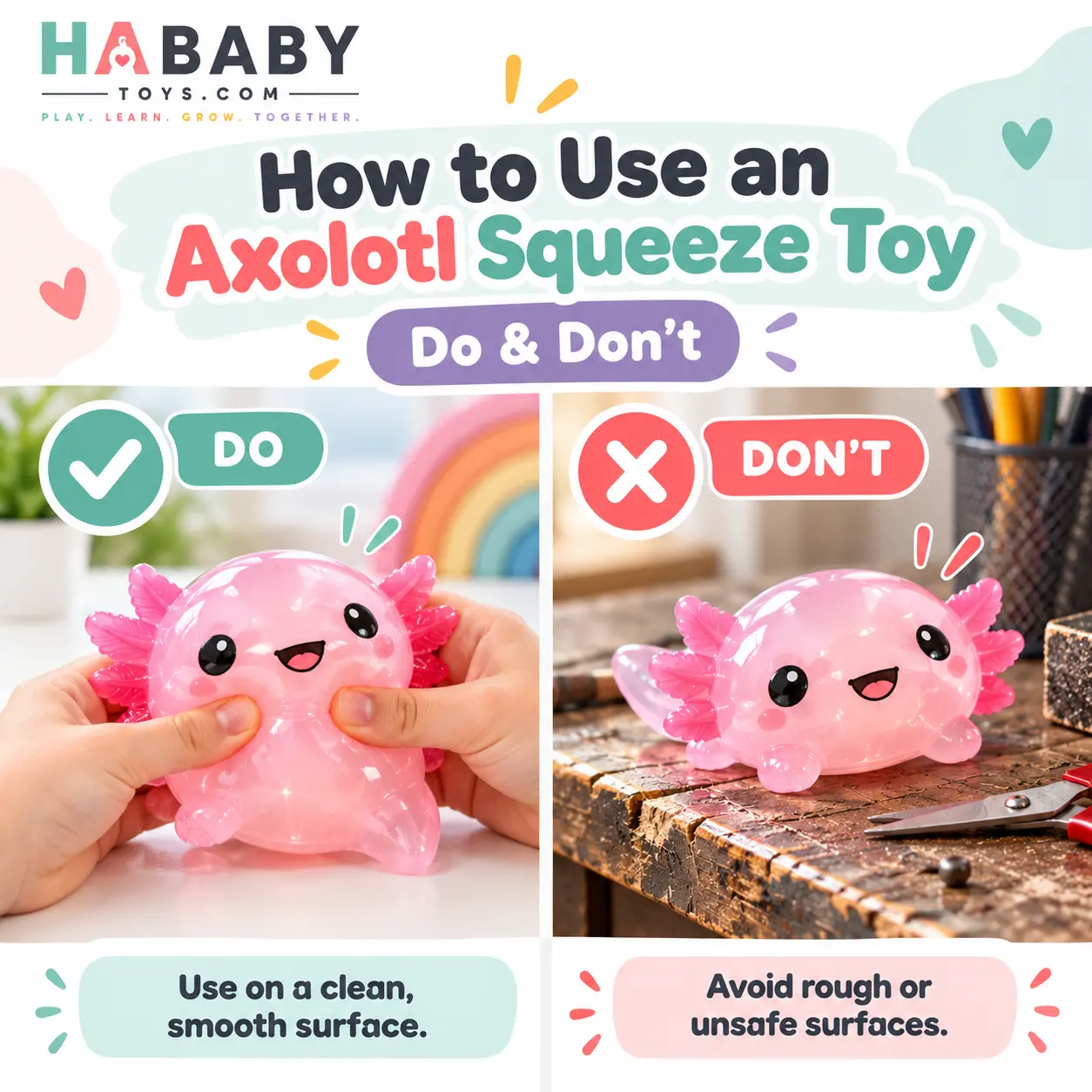
Avoid the following to protect both the toy and the user.
- Biting
- Puncturing
- Cutting
- Twisting hard
- Pulling thin parts
- Heating
- Freezing unless the manufacturer permits it
- Adding chemicals
- Throwing it at walls
- Using damaged toys
Simple 1-Minute Fidget Routine
A gentle recreational routine that keeps hands busy without stressing the toy:
10 gentle squeezes
Press and release with light pressure.
5 slow presses
Hold each press for a second before releasing.
5 light stretches
Only if the toy is designed for stretching.
Release and reshape
Let the toy return toward its original shape.
Put it down
Stop before the material feels strained or warm.
This is a recreational hand activity, not a therapeutic intervention. It should not be described as a treatment for anxiety or any other condition.
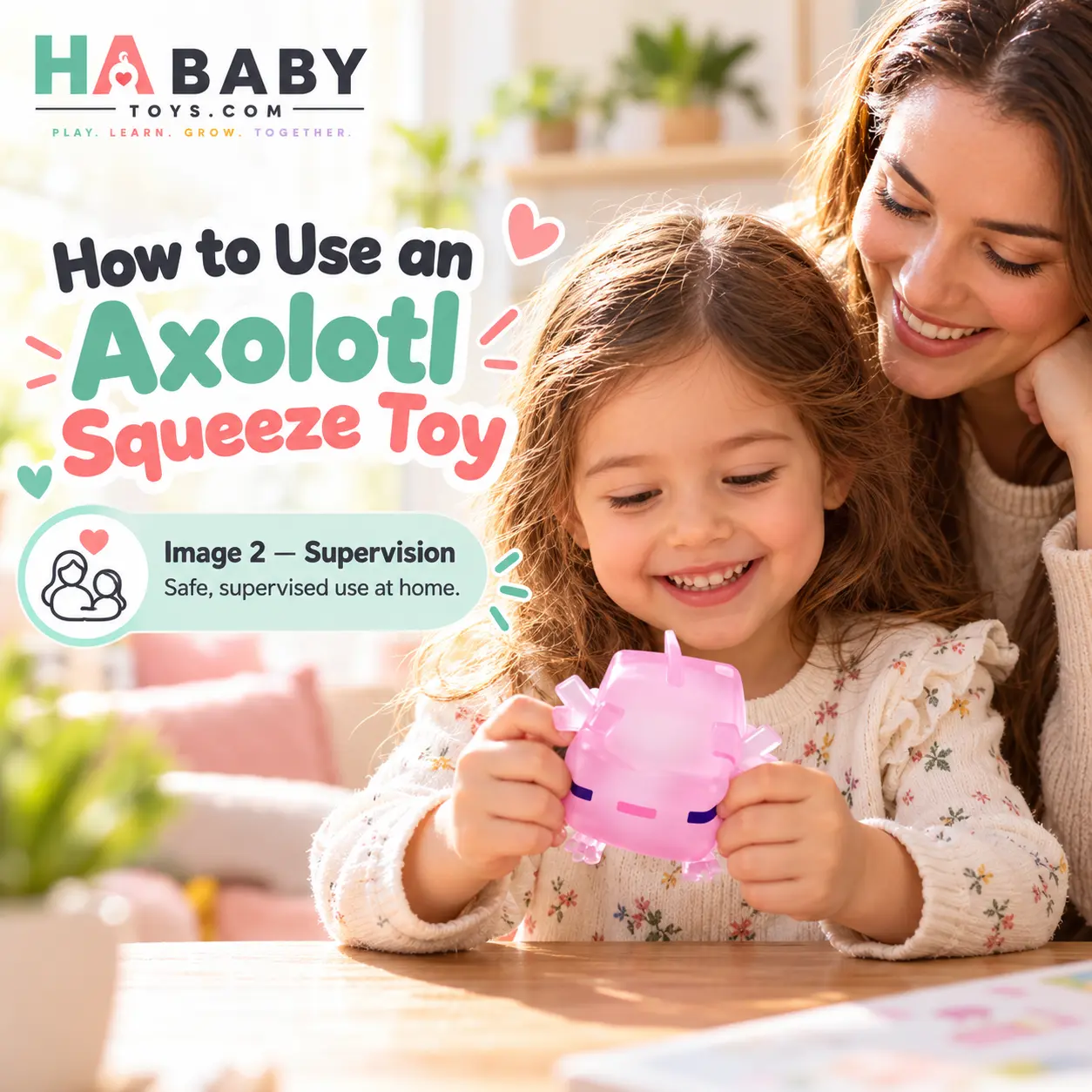
How Kids Can Use It
Quiet hand play
Squeeze during calm play time.
Pretend play
Use the axolotl as a character in simple stories.
Texture exploration
Feel how the material changes under pressure.
Collection play
Pair with other animal-themed toys.
Simple turn-taking
Pass it between siblings.
Desk or table toy
Keep hands occupied during quiet activities.
How Adults Can Use It
Possible uses:
- Desk toy
- Casual fidget item
- Novelty collectible
- Small gift
- Conversation piece
Some adults may enjoy repetitive squeezing as a satisfying hand activity, but the toy is not a medical treatment.
Classroom Use
If permitted by school rules, possible roles include:
- Quiet fidget item
- Reward or prize
- Prize box item
- Sensory station item
- Party favor
Classroom use should depend on teacher policy and whether the toy helps or distracts the individual child. The National Association for the Education of Young Children (NAEYC) publishes resources on play and classroom environments.
Party Favor Use
Possible occasions:
- Birthday parties
- Axolotl-themed parties
- Halloween bags
- Christmas stocking fillers
- Classroom celebrations
Always match the toy to the recipient’s age. Small squishy toys may not be suitable for younger children, so check the manufacturer’s age guidance before using them as party favors. Safe Kids Worldwide provides injury-prevention resources that apply to children’s toys in general.
How to Clean It
General guidance:
- Follow manufacturer instructions first
- Wipe with a soft damp cloth if allowed
- Avoid harsh cleaners
- Do not soak unless permitted
- Dry fully before storage
Do not assume dishwasher or washing-machine safety. Submerging or machine washing a squishy toy can damage the material or introduce water into the filling.
What If It Gets Sticky?
Possible steps:
- Check care instructions
- Wipe lightly if permitted
- Keep it away from dusty surfaces
- Store it in a clean container
Do not use powders, oils, solvents, or other chemicals unless the manufacturer explicitly approves them for the specific material.
What If It Gets Dirty Quickly?
- Wash hands before use
- Avoid floor play
- Keep it away from food
- Store it separately
- Clean gently after use
Most dirt on squishy toys comes from hands and floors. A quick wash before use and a clean storage container make a large difference.
How to Store the Toy
- Dry place
- Room temperature
- Away from direct sunlight
- Away from sharp objects
- Not under heavy books
- Away from pets
Storage Rule
Store the toy in a way that does not keep it permanently compressed. A soft pouch or open container works better than a tight bag that squashes the shape over time.
What If the Toy Tears?
Stop using it
Take it out of play immediately.
Keep it away from children
Especially if the filling is exposed.
Avoid touching exposed filling unnecessarily
Treat any exposed filling as a hazard.
Follow manufacturer disposal guidance
Dispose of the damaged toy as directed.
Replace it if needed
A damaged toy is not worth repairing at home.
Do not puncture, glue, inject, or attempt to repair the filling of a torn squishy toy. These repairs are not safe and can create new hazards.
What If Filling Leaks Out?
The correct response depends on the material inside the toy, which can vary by manufacturer.
Recommended steps:
- Stop use immediately
- Keep children and pets away
- Avoid ingestion or eye contact
- Clean according to product instructions
- Contact the manufacturer if material information is unclear
This is much safer than guessing what the filling is. If filling gets into eyes or is accidentally swallowed, contact a healthcare professional right away.
How Hard Should You Squeeze?
Use enough pressure to deform the toy comfortably, but not so much that the surface feels overstretched or strained.
A good rule: comfortable pressure > maximum force.
If the toy feels unusually hot, warm, or tense after squeezing, that is a signal to put it down and let it rest.
How Far Can You Stretch It?
There is no universal safe stretch distance. Follow the product’s own guidance and stop before the material looks overly thinned or stressed.
This is especially important because “stretchy” can make buyers think unlimited stretching is safe. It is not. Repeated over-stretching can thin the material and lead to tearing.
Can You Twist It?
Avoid aggressive twisting. Twisting places uneven stress on the outer material and can increase the risk of damage, especially around narrow sections like the tail, arms, or gills.
Can You Throw It?
It is better used as a hand toy than as a throwing toy unless the manufacturer specifically says otherwise.
Throwing a squishy toy at walls or hard surfaces can damage the outer skin and shorten its life. Keep play focused on squeezing, gentle stretching, and hand manipulation.
Axolotl Squeeze Toy vs Stress Ball Use
| Use Style | Axolotl Squeeze Toy | Traditional Stress Ball |
|---|---|---|
| Squeezing | Yes | Yes |
| Character play | Yes | Usually no |
| Stretching | May be possible | Usually limited |
| Desk use | Yes | Yes |
| Pretend play | Stronger | Low |
| Gift appeal | Strong | Moderate |
Axolotl Squeeze Toy vs Slime
Squishy toy
- Contained
- Reusable
- Easy to pick up
- Less cleanup when intact
Slime
- Loose or moldable
- More open-ended manipulation
- More cleanup
- Container needed
Both are tactile activities, but a squishy toy is tidier as long as it remains intact. A damaged squishy toy, however, is not mess-proof — so regular inspection matters.
Common Problems and Quick Fixes
Toy feels sticky
Check cleaning and storage guidance.
Shape looks distorted
Release pressure and let it rest.
Small tear appears
Stop using it.
Filling leaks
Remove from use immediately.
Dirt sticks to the surface
Clean gently if permitted by the care instructions.
Child pulls thin parts
Redirect to squeezing the main body instead.
Troubleshooting Wheel
Six common problems and their quick responses
Sticky
Wipe gently if permitted and store in a clean container.
Dirty
Clean gently after use and keep it away from floors.
Stretched
Release and let it recover naturally — do not force it.
Torn
Stop using it and follow manufacturer disposal guidance.
Leaking
Remove from use immediately and keep away from children.
Misshapen
Let it rest uncompressed so it can return toward shape.
60-Second Safe-Use Checklist
- No cracks or tears
- No exposed filling
- Hands are clean
- Squeeze gently
- Stretch only if intended
- Avoid thin-part pulling
- No biting or puncturing
- Store away from sharp objects
- Stop using if damaged
If you want to compare options or see the toy itself, explore the HA Baby Toys Axolotl Squeeze Soft Squishy. For a buyer-focused look at the category, see why choose an axolotl stress relief toy.
Ready to bring a soft axolotl squeeze toy home?
Explore the HA Baby Toys Shop →Frequently Asked Questions
How do you use an axolotl squeeze toy?
Inspect the toy first, hold it comfortably in one or both hands, squeeze gently, release, and let it return toward shape. Stretch only if the manufacturer says the toy is designed for it. The full process is covered above.
How hard should you squeeze it?
Use enough pressure to deform the toy comfortably, but not so much that the surface feels overstretched or strained. Comfortable pressure beats maximum force.
Can you stretch an axolotl squishy?
Only if the specific product is designed for stretching. Stretch-rated models can tolerate gentle pulling, but not unlimited stretching. Check the product listing or manufacturer guidance.
How far can you stretch it?
There is no universal safe stretch distance. Follow the product’s own guidance and stop before the material looks overly thinned or stressed.
Can kids twist it?
Avoid aggressive twisting. Twisting places uneven stress on the outer material and can increase the risk of tearing, especially around thin sections like the tail or arms.
Can adults use it as a fidget toy?
Yes. Adults often use soft squeeze toys as desk items, novelty collectibles, or casual hand-occupying toys. Some adults find repetitive squeezing satisfying, but the toy is not a medical treatment.
How do you clean an axolotl squishy?
Follow the manufacturer’s care instructions first. In general, wipe with a soft damp cloth if permitted, avoid harsh cleaners, and do not soak or machine wash unless the manufacturer explicitly allows it. Dry fully before storage.
What should I do if it gets sticky?
Check the care instructions, wipe lightly if permitted, keep it away from dusty surfaces, and store it in a clean container. Do not use powders, oils, or solvents unless the manufacturer approves them for the specific material.
What happens if it tears?
Stop using it immediately, keep it away from children, avoid touching exposed filling unnecessarily, follow the manufacturer’s disposal guidance, and replace it rather than repairing it at home. Do not glue, inject, or modify the filling.
What should I do if the filling leaks?
The correct response depends on the material inside the toy, which varies by manufacturer. Stop use immediately, keep children and pets away, avoid ingestion or eye contact, clean according to product instructions, and contact the manufacturer if the material information is unclear. If filling gets into eyes or is swallowed, contact a healthcare professional right away.
Can you wash it with soap?
Only if the manufacturer’s care instructions permit it. Harsh soaps or cleaners can damage the outer surface of soft squishy toys, so follow the product-specific guidance exactly.
Can it be used in the classroom?
Possibly, if the teacher permits it. Some classrooms keep a small collection of quiet tactile items for permitted use. Classroom use should depend on whether the toy helps or distracts the individual child. The National Association for the Education of Young Children (NAEYC) publishes resources on play and classroom environments.
Is it suitable as a party favor?
Yes, if the age guidance suits the recipients. It works well for animal-themed parties, axolotl-themed events, and small prize bags. Always check the manufacturer’s age recommendation before using toys as party favors. Safe Kids Worldwide provides useful injury-prevention resources.
How should it be stored?
Store it in a dry place at room temperature, away from direct sunlight, sharp objects, and pets. Do not store it under heavy books or in a way that keeps it permanently compressed. Follow the manufacturer’s care instructions for your specific toy. The HA Baby Toys FAQ also answers common product and ordering questions.
Where can I buy the HA Baby Toys axolotl squishy?
Visit the HA Baby Toys shop to see the axolotl squeeze toy and other sensory toys. Families can also browse the Sensory Toys category for related tactile products. Retailers and larger buyers can request a quote from HA Baby Toys.
The Short Version for Busy Parents
Using an axolotl squeeze toy is not complicated once you follow the five-step routine: check, squeeze, release, stretch only if intended, and store properly. The rest is consistency.
Inspect it before each session. Hold it comfortably. Squeeze with gentle pressure rather than maximum force. Let it recover naturally between presses. Stretch only if the model is stretch-rated. Clean and store it away from heat, sharp objects, and heavy weight.
When something goes wrong — a tear, a leak, or a sticky surface — treat it as a signal to stop use and follow the manufacturer’s guidance rather than trying to repair it at home.
For more practical guides on sensory play and family-friendly toys, HA Baby Toys offers toys and activity products designed around everyday play. You can also browse the HA Baby Toys blog for more ideas on sensory toys, small gifts, and child-friendly play.