
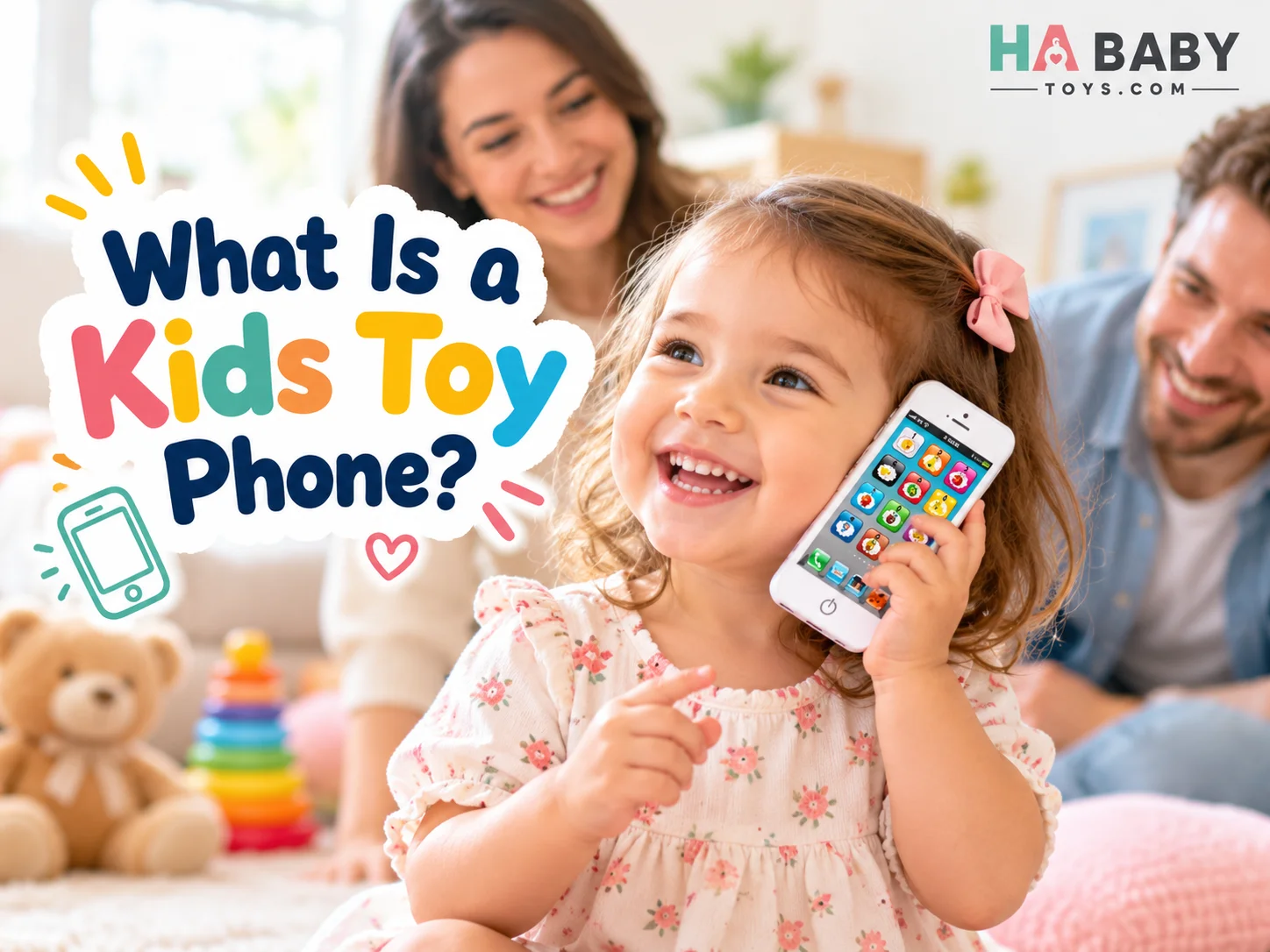
A kids toy phone is a child-friendly pretend-play device designed to imitate some of the familiar features of a real phone without giving children access to calls, apps, social media, or the internet. Depending on the model, it may include buttons, music, lights, recorded phrases, pretend calling sounds, or other interactive activities.
If you have seen these toys online and are not sure whether they are simply plastic pretend phones or actually interactive, this guide explains it clearly. The HA Baby Toys Kids Toy Phone is a good example of the category — a pretend-play phone with buttons, lights, and sound features.
What Is a Kids Toy Phone?
A kids toy phone is typically:
- A pretend-play version of a mobile phone
- Designed for toddlers or young children according to manufacturer guidance
- Built with simple buttons or controls
- Sometimes fitted with lights
- Sometimes fitted with music or sound
- Designed for role-play rather than real communication
- Often used for pretend calling and everyday-life imitation
Toy phone: pretend calling, buttons, sounds, music, role-play
Press → Hear → Pretend → Talk → Repeat
The five-stage play cycle behind every session
Kids Toy Phone
Pretend play, buttons, and sounds
Press
The child interacts with a button or control.
Hear
The toy may respond with a sound, phrase, or music.
Pretend
The child imitates familiar phone behaviour.
Talk
They can pretend to call parents, friends, or toy characters.
Repeat
The same interactions can be used in many play scenarios.
Press → Hear → Pretend → Talk → Repeat
What Exactly Is a Kids Toy Phone?
A kids toy phone is designed to resemble something children already see adults use. The typical play pattern is:
- Pick up the phone
- Press buttons
- Pretend to call
- Listen to sounds
- Talk into it
- Hand it to someone else
Parents who want practical activity ideas can read the guide on how to use a toy phone for toddlers.
How Is It Different From a Real Smartphone?
This is one of the most important sections for confused buyers. A toy phone is primarily a play object, not a substitute smartphone.
| Feature | Kids Toy Phone | Real Smartphone |
|---|---|---|
| Real calling | No | Yes |
| Internet | Usually no | Yes |
| Apps | No or limited toy functions | Yes |
| Pretend play | Strong | Possible |
| Child-focused controls | Usually | Not primarily |
| Social media | No | Possible |
| Simple sounds and music | Often | Yes |
| Screen exposure | Depends on model | Usually higher |
Toy Phone vs Real Phone
A quick side-by-side to resolve buyer confusion
Toy Phone
- Pretend call
- Sound
- Music
- Light
- Role-play
Real Phone
- Communication
- Apps
- Internet
- Messaging
- Media
Why Do Kids Like Toy Phones?
Children often imitate everyday behaviour they observe. Possible reasons a toy phone appeals:
- They see adults using phones
- Pretend calls are easy to understand
- Buttons provide immediate response
- Sound makes the toy feel interactive
- Role-play can involve family members
A toy phone gives children a simple prop for copying familiar everyday routines during pretend play. The National Association for the Education of Young Children (NAEYC) highlights pretend play as a core part of early learning, and everyday-life props are a natural fit for that.
Is It a Pretend-Play Toy?
Yes, and this is one of the strongest use cases. Possible pretend-play scenes:
Calling Grandma
Child pretends to make a family call.
Ordering Food
Pretend restaurant game.
Doctor Appointment
Role-play making an appointment.
Calling a Friend
Child creates a social scenario.
Pretend Emergency Play
Use only as fictional role-play, without confusing it with real emergency communication.
Goodnight Call
Use it in a bedtime role-play routine.
What Makes a Toy Phone “Interactive”?
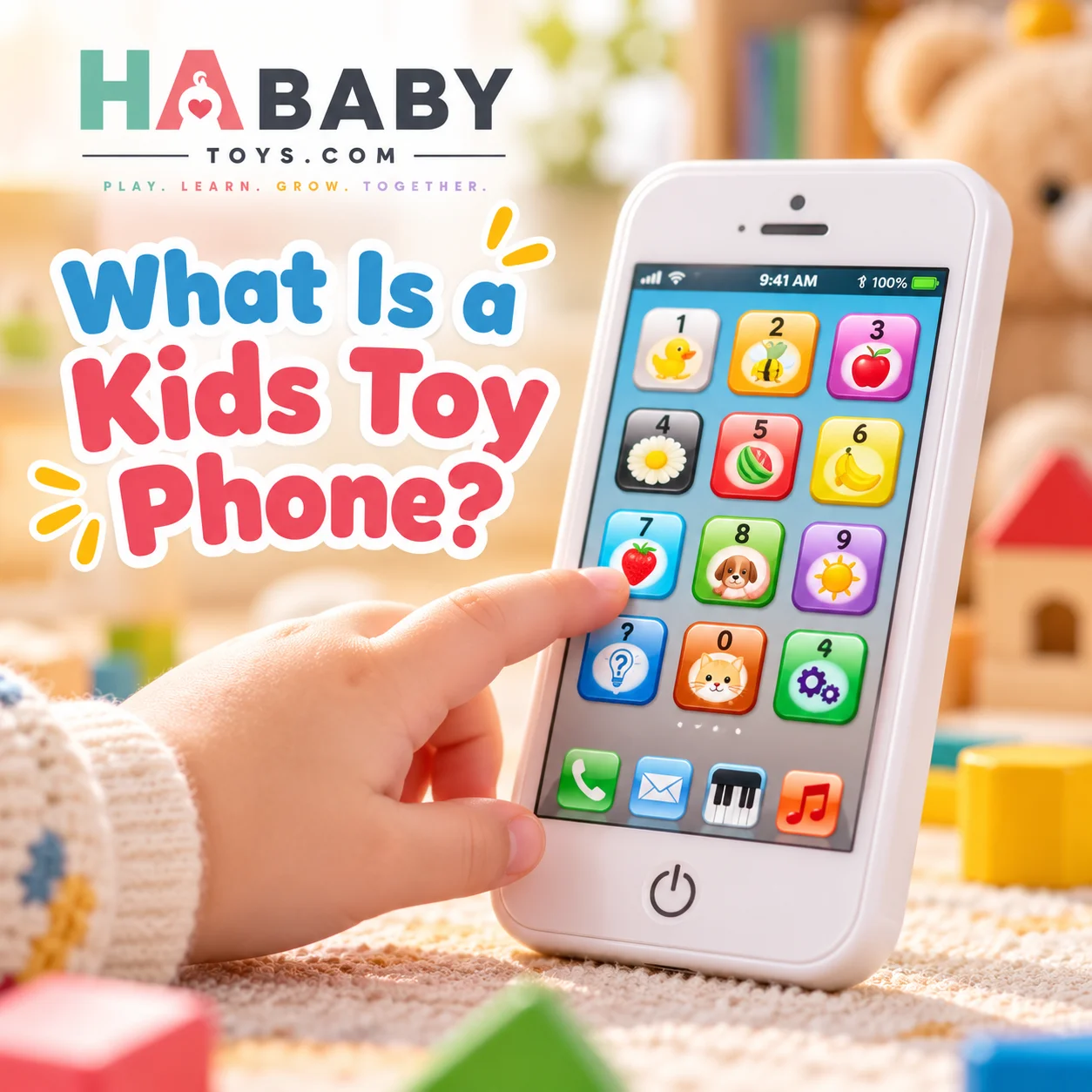
Interactive can mean:
- Buttons respond
- Sounds play
- Music starts
- Lights activate
- Recorded phrases play
- Pretend numbers or icons trigger effects
Exact interactive features depend on the model. Do not assume every toy phone includes the same functions.
What Is a Talking Toy Phone?
A talking toy phone is a model that plays recorded phrases, words, sounds, or voice-like responses when children press certain buttons.
Possible examples:
- Greetings
- Pretend dialing
- Simple phrases
- Animal sounds
- Music
Only mention exact content if the product listing confirms it. Feature sets vary by model.
What Is a Musical Toy Phone?
A musical toy phone adds songs, melodies, or sound effects to pretend-phone play.
Potential appeal:
- More immediate feedback
- More variety
- Useful for simple movement or sing-along play
Music is mainly an entertainment feature. Avoid claiming that music automatically improves learning.
Is It an Educational Toy Phone?
A toy phone may offer opportunities for:
- Button recognition
- Number familiarity
- Turn-taking
- Listening
- Pretend conversation
- Simple role-play
It can support play-based opportunities to practice familiar symbols, sounds, and conversational routines, depending on the features included. It should not be presented as a teaching device with guaranteed outcomes.
What Kids Can Do With It
Eight play modes with one toy phone
Pretend Call
Call family members or characters.
Music
Listen to songs and melodies.
Numbers
Practice number names and buttons.
Sounds
Explore sound effects and phrases.
Family Role-Play
Imitate everyday family calls.
Story Game
Invent stories around the phone.
Parent-Child Talk
Practice hello, goodbye, and turn-taking.
Travel Activity
Compact pretend play for outings.
Can Toddlers Use a Toy Phone?
Suitability depends on the manufacturer’s stated age guidance, button size, battery compartment design, sound level, and any detachable parts.
For younger users, parents should check:
- Small parts
- Button size
- Battery cover
- Volume level
- Sharp edges
- Overall size
Do not assume all toy phones are suitable for babies. The American Academy of Pediatrics’ HealthyChildren.org publishes guidance on choosing safe, age-appropriate toys.
Toy Phone vs Screen-Based Kids Phone
Simple toy phone
- Physical buttons
- Sound and light responses
- No real apps
- Pretend play focus
Screen-based kids device
- May include digital games
- More screen exposure
- More menus and features
- Different type of engagement
Both have their place. A simple toy phone is more like a pretend-play prop; a screen-based device is more like a digital learning toy.
Toy Phone vs Toy Tablet
Toy phone
- More role-play focused
- Easier pretend calling
- Compact
- Familiar everyday object
Toy tablet
- Often larger
- More game and learning focused
- Less realistic for pretend calling
This helps buyers compare categories. A phone is about imitation; a tablet is about activity.
Can It Encourage Conversation?
A toy phone can create opportunities for:
- Saying hello
- Asking questions
- Taking turns
- Pretending to answer
- Ending calls
Because the toy naturally creates “your turn / my turn” conversations, parents can use it as a simple role-play prop for talking together. It is a prompt for language, not a teaching device.
Reading Rockets offers practical guidance on how talking about everyday activities supports early language, and simple role-play props like a toy phone fit that pattern well.
Parent-Child Play Ideas
Call Me
Parent pretends to answer on another toy phone.
Who Are You Calling?
Child chooses a family member or character.
Restaurant Call
Pretend to order food together.
Animal Call
Pretend to call an animal and make its sound.
Goodnight Call
Use it in a bedtime role-play routine.
Story Call
Call a character from a favourite book.
Sibling Play
If more than one child is involved:
- One pretends to call
- One answers
- Switch roles
- Create a pretend office
- Create a pretend shop
Turn-taking is a natural fit for this kind of play. The National Association for the Education of Young Children (NAEYC) highlights shared play as a core part of early group activity.
Can It Help Reduce Interest in a Parent’s Real Phone?
Some families may use a toy phone as an alternative pretend-play object when a child wants to imitate adults using smartphones, but it may not completely remove interest in the real device.
If your child is drawn to your phone because of the buttons, the sounds, or simply because it is a familiar object in your hand, a toy phone offers a similar experience without the apps, messaging, and internet access.
For broader guidance on screen use, Common Sense Media publishes age-based media recommendations, and the American Academy of Pediatrics offers family media guidance for young children.
What About Screen-Free Play?
If the model does not use a conventional screen, this is a useful buyer point. A non-screen toy phone can give children a phone-themed play experience without access to apps, social media, or internet content.
Do not assume screen-free if the product has a screen-like interface unless the product listing confirms it. Some toy phones include a printed display or digital icons that are not a screen; others include small displays.
What Parents Should Check Before Buying
Look for:
- Manufacturer age guidance
- Number and size of buttons
- Sound volume
- Music or speech features
- Light effects
- Battery compartment security
- On and off switch
- Auto-off feature, if available
- Build quality
- Smooth edges
- Whether the toy has a real screen or printed display
- Whether sounds can be controlled
For broader toy safety guidance, the U.S. Consumer Product Safety Commission publishes age labeling and recall information. Safe Kids Worldwide also offers injury-prevention resources that apply to electronic toys.
Battery Safety for Toy Phones
- Use manufacturer-specified batteries
- Secure the battery compartment
- Keep loose batteries away from children
- Remove leaking batteries
- Follow storage guidance
- Do not mix battery types unless permitted
Button batteries and small round batteries are especially dangerous if swallowed. Check the CPSC and Safe Kids Worldwide for battery safety guidance.
Sound and Volume Considerations
Parents may care about noise. Recommended checks:
- Whether volume is adjustable
- Whether music can be muted
- Whether sound is overly loud
- Whether the toy has an automatic shutoff
Do not assume those controls exist on every model. Check the product listing for the specific audio features of your toy phone.
What the Toy Is Not
A kids toy phone is not:
- A real phone
- A replacement for caregiver conversation
- An educational device with guaranteed outcomes
- Suitable for every age
- An emergency device
- Safe to use if damaged
What it can offer:
- Pretend-play value
- Cause-and-effect exploration
- Simple button and sound play
- Role-play prompts for conversation
- A compact alternative to a real phone
Who Is This Product Best For?
Families with children in the right age range can also explore the 3+ Years category for related toys.
Who Might Prefer Something Else?
Another toy may be better if:
- You want a completely silent toy
- You prefer no batteries
- Your child does not enjoy pretend play
- You want an outdoor toy
- You want a real learning tablet
- Your child is below the manufacturer’s age guidance
This is not a weakness of the product — it is simply a boundary of when it is most useful.
Choose a Kids Toy Phone If:
- Your child enjoys pretend play
- They like buttons and sounds
- You want a child-focused alternative to a real phone
- You want a compact indoor toy
- Music or talking features appeal to you
- You are comfortable with battery-powered toys
- The manufacturer’s age guidance fits
- The battery compartment is secure
If that sounds like the kind of toy you need, explore the HA Baby Toys Kids Toy Phone.
Ready to bring a pretend-play phone home?
Explore the HA Baby Toys Shop →Frequently Asked Questions
What is a kids toy phone?
It is a pretend-play version of a mobile phone, designed for toddlers or young children. Depending on the model, it may include buttons, lights, sounds, music, or recorded phrases — but not real calling, apps, or internet access.
How is a toy phone different from a real smartphone?
A real smartphone makes calls, runs apps, connects to the internet, and shows messages. A toy phone is a pretend-play object with simple buttons, sounds, and lights. It cannot make real calls or access online content.
Does a kids toy phone make real calls?
No. A toy phone is designed for pretend play. It does not connect to a network or make real calls. If a product claims to make calls, check the listing carefully to understand what it actually does.
What does an interactive toy phone do?
Interactive toy phones typically respond to button presses with sounds, phrases, music, lights, or pretend dialing effects. The exact features depend on the model.
What is a talking toy phone?
It is a model that plays recorded phrases, words, sounds, or voice-like responses when children press certain buttons. Content varies by product, so check the listing for details.
Does a musical toy phone play songs?
Some models include songs, melodies, or sound effects. Check the product listing for the specific audio features on your toy phone.
Can toddlers use a toy phone?
Suitability depends on the manufacturer’s stated age guidance, button size, battery compartment design, sound level, and any detachable parts. The American Academy of Pediatrics’ HealthyChildren.org covers choosing age-appropriate toys in more detail.
Is a toy phone educational?
It can support play-based opportunities to practice button recognition, number familiarity, turn-taking, listening, and pretend conversation. It should not be presented as a teaching device with guaranteed outcomes.
Can it be used for pretend play?
Yes, and this is one of its strongest uses. Pretend calling family, ordering food, making doctor appointments, and bedtime goodnight calls are all simple role-play scenarios that fit naturally.
Can siblings use it together?
Yes. One child can pretend to call while the other answers, then they switch roles. Creating a pretend office or shop extends the play further. The National Association for the Education of Young Children (NAEYC) highlights shared play as a core part of early group activity.
Can a toy phone replace screen time?
Not entirely. A toy phone can give children a pretend-play experience without apps or internet, but it does not replace caregiver interaction. For broader guidance, see Common Sense Media and the American Academy of Pediatrics.
Does it need batteries?
Most interactive toy phones are battery-powered, but the exact battery type and count vary by model. Check the product listing or manual for the correct batteries and replacement guidance.
What should parents check before buying one?
Check the manufacturer’s age guidance, button size, sound volume, music or speech features, light effects, battery compartment security, on and off switch, auto-off feature, build quality, and whether the toy has a real screen or printed display. The HA Baby Toys FAQ also answers common product and ordering questions.
Is it a good gift for toddlers?
It can be a good gift for toddlers who enjoy pretend play, buttons, and sounds. Match the toy to the child’s age and interests, and follow the manufacturer’s age guidance.
Where can I buy the HA Baby Toys kids toy phone?
Visit the HA Baby Toys shop to see the kids toy phone and other pretend-play toys. Families can also browse the 3+ Years category for related products. Retailers and larger buyers can request a quote from HA Baby Toys.
The Short Version for Busy Parents
A kids toy phone is a pretend-play object, not a real phone. It gives children a way to imitate everyday phone behaviour with buttons, sounds, and lights, without access to calls, apps, or the internet.
If your child enjoys pretend play, if buttons and sounds keep them engaged, and if you want a child-focused alternative to a real phone, it can be a genuinely useful addition to the toy cupboard. If you want a completely silent toy, a battery-free option, or a proper learning tablet, another choice will serve better.
For more family-friendly pretend-play toys and parent guides, HA Baby Toys offers products designed around everyday play. You can also browse the HA Baby Toys blog for more ideas on pretend play and screen-free activities.
One Response