
You have seen the 3D water bird whistle, and you are curious. How can a small, bird-shaped toy produce such a realistic chirping sound? It looks simple, but the mechanism inside is fascinating. A 3D water bird whistle produces bird-like sounds when air moves through its specially shaped internal chamber while water changes the way the air vibrates. To use it, add a small amount of clean water as directed, blow gently through the mouthpiece, and adjust the water level gradually to explore different sounds. This guide explains the science behind the toy, how to use it step by step, what children can learn, common troubleshooting tips, and how to choose the right one. For a broader selection of educational toys, explore our HaBabyToys collection.
Table of Contents
- The Science Behind a 3D Water Bird Whistle
- How to Use a 3D Water Bird Whistle Step by Step
- How Water Changes the Sound
- What Can Children Learn From a Water Bird Whistle?
- Common Water Bird Whistle Problems and How to Fix Them
- Is a 3D Water Bird Whistle Worth Buying?
- Cleaning, Storage, and Safe Use
- Frequently Asked Questions
A 3D water bird whistle produces bird-like sounds when air moves through its specially shaped internal chamber while water changes the way the air vibrates. To use it, add a small amount of clean water as directed, blow gently through the mouthpiece, and adjust the water level gradually to explore different sounds.
The Science Behind a 3D Water Bird Whistle
The 3D water bird whistle is a small, bird-shaped toy that produces a warbling, chirping sound. But how does it work? The secret lies in the physics of sound, airflow, and resonance.
Sound is a vibration that travels through the air. When you blow into the whistle, you create a stream of air. This air passes through a specially shaped opening and into a chamber. The shape and volume of this chamber affect how the air vibrates, which in turn affects the sound produced.
Sound as Vibration
Everything that makes a sound is vibrating. When you blow into the whistle, the air inside begins to vibrate. This vibration is what we hear as sound. The Physics Classroom provides a great explanation of sound waves and frequency.
Resonance and Air Cavity
The chamber inside the whistle acts as a resonator. It amplifies certain frequencies of vibration and suppresses others. The size and shape of the chamber determine which frequencies are amplified. This is why different whistles produce different sounds.
How Water Changes Things
Water plays a crucial role. When you add water to the whistle, it changes the shape and volume of the air cavity. As the water moves and oscillates, it creates a warbling effect. The FYFD explanation of whistle physics provides a detailed look at this phenomenon.
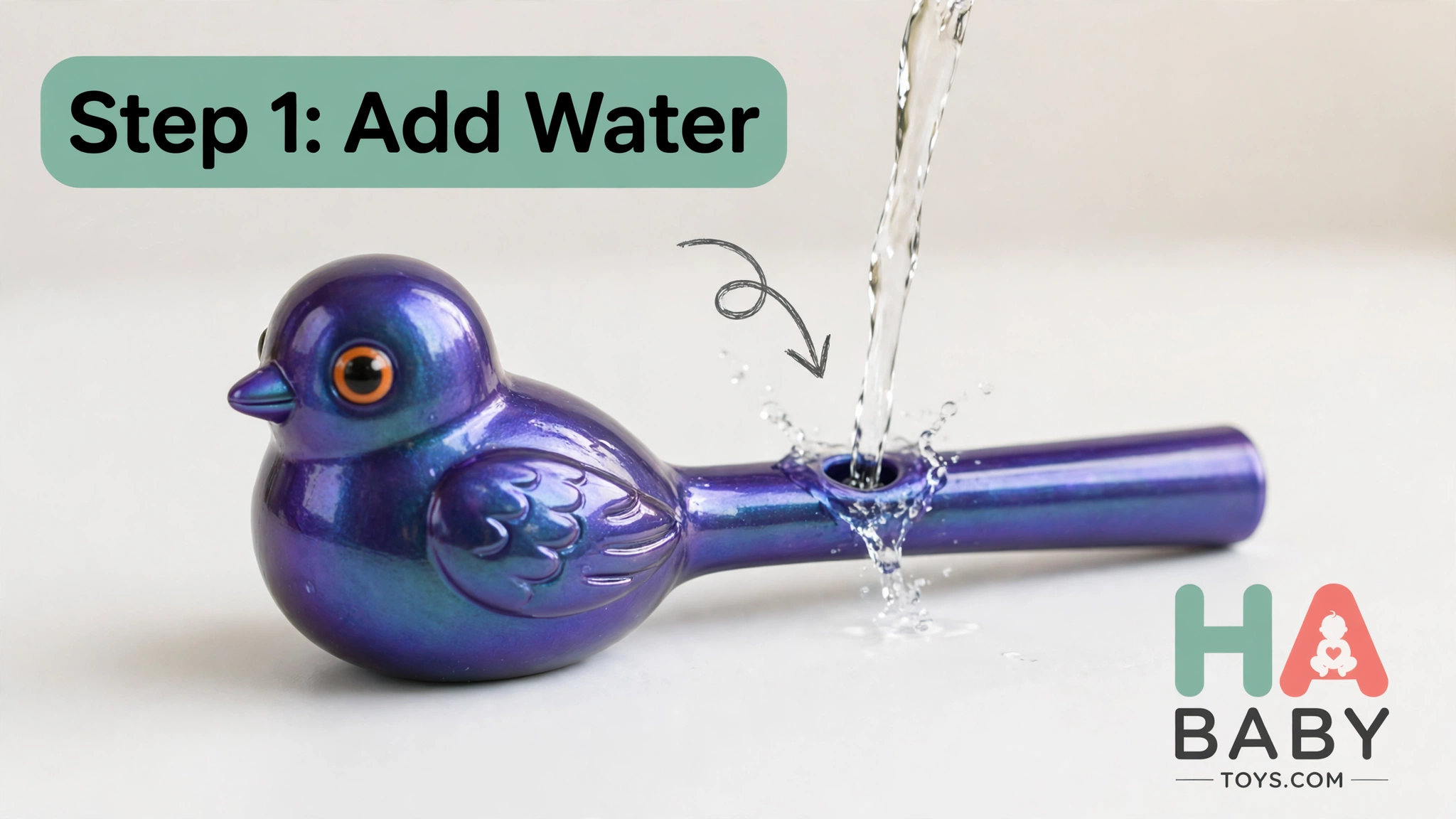
How to Use a 3D Water Bird Whistle Step by Step
Using a water bird whistle is straightforward. Follow these steps to get the best results.
If the first attempt produces no sound, do not worry. It may take a few tries to get the water level right. The Smithsonian Learning Lab has a great resource on wind instruments and sound.
How Water Changes the Sound
Water is the key to the warbling, bird-like sound. When you add water, you change the shape and volume of the air cavity inside the whistle. As the water moves, it creates a fluctuating cavity that causes the sound to warble.
Changing the water level can change the pitch and the quality of the sound. However, the exact effect depends on the design of the whistle. The NASA Science resource explains how mechanical waves travel and interact with matter.
A Simple Experiment
Try a simple experiment with your child. Fill the whistle with a small amount of water, blow gently, and listen. Then add a little more water and repeat. Ask your child to describe the difference. Is the sound higher or lower? Clearer or more warbling?
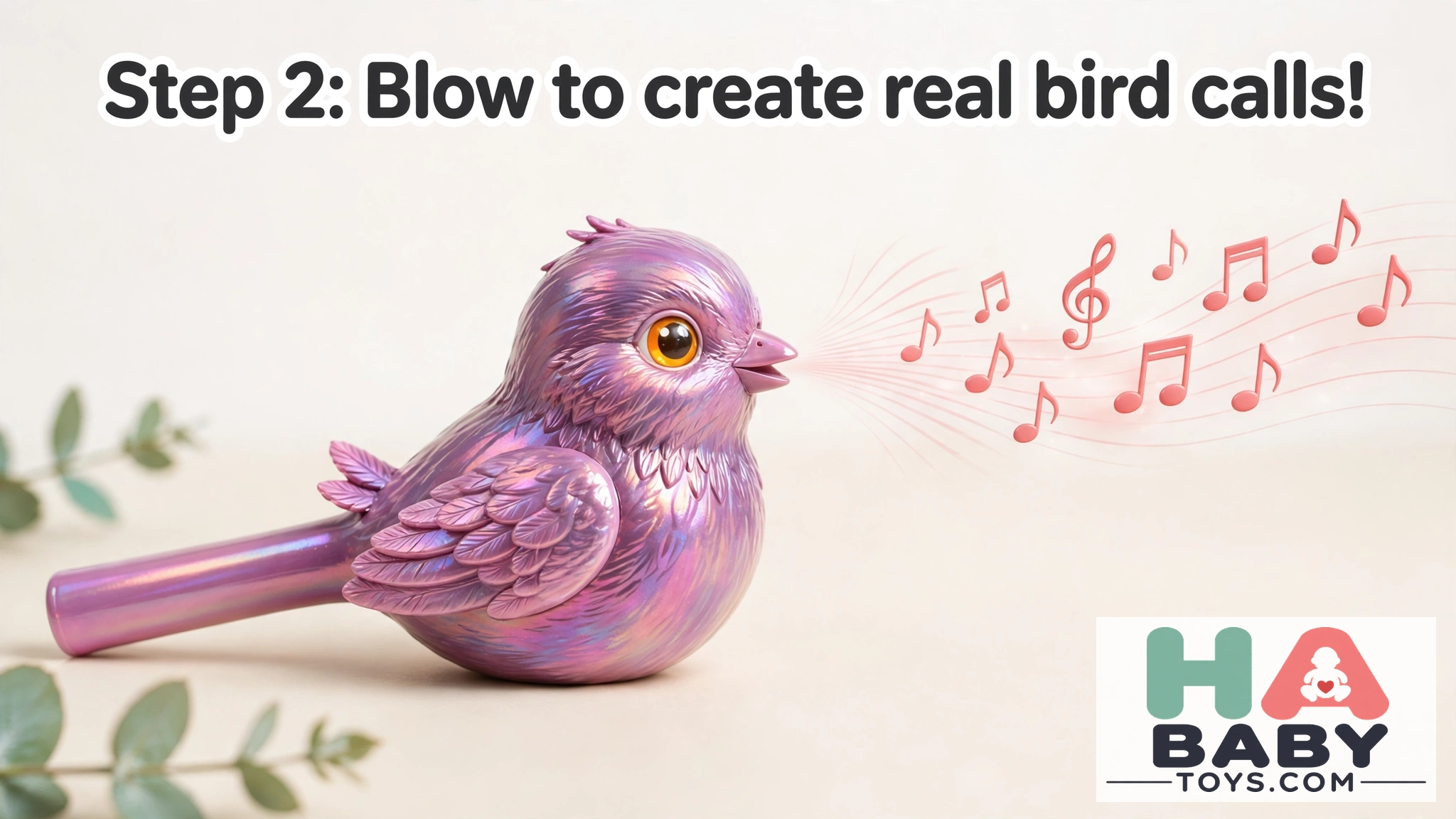
Inside the Water Bird Whistle
Select a step to see how the sound is produced.
What Can Children Learn From a Water Bird Whistle?
A water bird whistle is more than just a noisy toy. It offers opportunities for learning and exploration. The American Academy of Pediatrics emphasizes the value of play for child development.
Sound Exploration
Children can explore different sounds by changing the water level. This builds cause-and-effect understanding and auditory discrimination.
Listening and Imitation
Children can try to imitate the bird sounds. This builds listening skills and vocal control. The Cornell Lab of Ornithology has resources for learning bird songs and calls.
Imaginative Play
The whistle can be part of a bird-themed imaginative play session. This encourages creativity and storytelling.
Turn-Taking
Playing with the whistle in a group encourages turn-taking and social skills.
Common Water Bird Whistle Problems and How to Fix Them
If your whistle is not working as expected, try these troubleshooting steps.
| Problem | Possible Cause | Solution |
|---|---|---|
| No sound | Not enough water, or water level is incorrect. | Check the instructions. Add or remove water gradually. |
| Weak or inconsistent chirp | Blowing too hard or not holding the whistle correctly. | Blow gently and steadily. Ensure the mouthpiece is positioned correctly. |
| Water comes out when blowing | Too much water. | Empty some water and try again. |
| Blocked opening | Debris or dirt in the opening. | Clean the opening as directed by the manufacturer. Do not insert sharp objects. |
If the whistle is cracked or damaged, stop using it. The U.S. Consumer Product Safety Commission provides general toy safety guidance.
What Parents Say About HaBabyToys
“My son loves this whistle. He spent hours experimenting with different water levels. It’s a great way to teach him about sound.”
“My daughter is obsessed with birds. This whistle is a perfect toy for her. She loves trying to imitate the sounds.”
“It’s well-made and easy to clean. I feel safe letting my child play with it.”
Is a 3D Water Bird Whistle Worth Buying?
Whether a 3D water bird whistle is worth buying depends on your child’s interests and your expectations.
Who May Enjoy It
A child who loves birds, nature, or sound-making toys may enjoy this whistle. It is also a great toy for parents who want to encourage curiosity and learning.
Things to Consider
Some children may find the whistle difficult to use at first. It requires a gentle blowing technique and some experimentation. The American Academy of Pediatrics recommends considering age-appropriate toys.
The HA’BABY 3D Water Bird Whistle Toy is a well-designed option to consider. Check the product page for current details.
Cleaning, Storage, and Safe Use
Proper care ensures the whistle lasts and stays hygienic.
Cleaning
Empty the water after each use. Clean the whistle as directed by the manufacturer. Do not allow standing water to remain inside the toy.
Storage
Store the whistle in a dry place. Avoid leaving it in damp environments, which can cause mold or damage.
Safety
Always supervise children during play. Check the whistle regularly for cracks or damage. The CPSC small parts guidance is relevant for younger children.
Ready to Explore the 3D Water Bird Whistle?
If you are looking for a fun and educational toy that introduces children to the science of sound, the 3D water bird whistle is a great choice. It is simple to use, fun to experiment with, and offers opportunities for learning and imaginative play. Explore the HA’BABY 3D Water Bird Whistle Toy to see if it is right for your family.
View the 3D Water Bird Whistle Browse All ToysFrequently Asked Questions
It produces sound through a combination of airflow and water movement. Blowing into the whistle creates a stream of air that passes through a shaped chamber. The water changes the shape and volume of the cavity, creating a warbling sound.
Water is essential because it creates the warbling effect. It changes the resonance of the air cavity, producing the bird-like chirp.
Yes, it can. Different water levels change the shape and volume of the air cavity, affecting the pitch and quality of the sound. Experiment with different levels to see what works.
Follow the steps in our guide: inspect the toy, add a small amount of water, blow gently, and adjust the water level as needed.
It may be due to incorrect water level or blowing too hard. Check the instructions, adjust the water level, and try blowing gently.
Yes, it can be a great learning toy. It introduces children to sound, airflow, and cause-and-effect. Always supervise play.
Empty the water after each use. Clean the whistle as directed by the manufacturer. Do not allow standing water to remain inside.
Check the age recommendation, materials, care instructions, and product details. Ensure the toy is appropriate for the child’s age and abilities.
Check the product page for specific age recommendations and details. Compare these with your child’s needs and abilities.
Conclusion: A Simple Toy, A World of Discovery
The 3D water bird whistle is a simple toy with a fascinating mechanism. It introduces children to the science of sound, encourages experimentation, and offers hours of fun. By understanding how it works and how to use it correctly, you can help your child get the most out of this educational toy. For more educational toys and play ideas, explore the HaBabyToys blog and browse our full collection.
One Response