
Floating Ball Game: Parent-Child Learning & Play
What happens when a lightweight ball appears to float in mid-air? For a child, it can look like magic. For a parent, it is an opportunity to turn that moment of surprise into a shared learning experience.
Expertly reviewed by the HA’BABY Child Development Team. We combine educational play insights with a passion for making science accessible to young minds.
Table of Contents
- 1. Hero — Turn a Simple Floating Ball into Family Learning Time
- 2. What Is a Floating Ball Game?
- 3. Why Parent-Child Play Matters
- 4. Seven Parent-Child Floating Ball Games
- 5. What Can Children Explore Through the Floating Ball Game?
- 6. How Parents Can Make the Game More Educational
- 7. Floating Ball Game vs. Other Parent-Child Activities
- 8. The Science Behind the Floating Ball
- 9. How to Enjoy a Floating Ball Game at Home
- 10. Common Mistakes Parents Should Avoid
- 11. Is a Floating Ball Toy Suitable for Your Family?
- 12. Introducing the HA’BABY Wooden Suspension Ball Blower
- 13. Safety Tips for Parent-Child Play
- 14. Frequently Asked Questions
- 15. Conclusion — Make Learning a Shared Experience
A floating ball game is a simple educational activity in which a lightweight ball stays suspended in moving air. Parents can play alongside children by encouraging predictions, observing movement, asking questions, and discussing basic science concepts. It turns a fascinating visual demonstration into an enjoyable opportunity for shared learning.
Hero — Turn a Simple Floating Ball into Family Learning Time
Parents often look for activities that keep children interested while offering something more meaningful than passive screen time. But educational activities do not always need complicated equipment, expensive materials, or lengthy preparation. Sometimes, the simplest demonstration can become the most memorable shared experience.
The Floating Ball Game is exactly that. It is a simple way to bring curiosity and interaction into everyday play. Instead of simply handing a toy to a child, parents can participate, ask questions, and discover the answers together. When you explore HA’BABY educational toys, you will find options that support this kind of meaningful parent-child interaction.
This guide focuses on the shared experience. We will explore seven parent-child games, discuss why parent participation matters, and show how a simple demonstration can lead to questions, predictions, and discovery. If you want the deeper science, you can read our article on how a Montessori floating ball toy works. Let’s turn a simple floating ball into family learning time.
What Is a Floating Ball Game?
A floating ball game is a simple educational activity in which a lightweight ball is kept suspended by moving air. The game typically involves a blower (or air outlet) and a ball. When the blower is activated, the upward airflow supports the ball, making it appear to float.
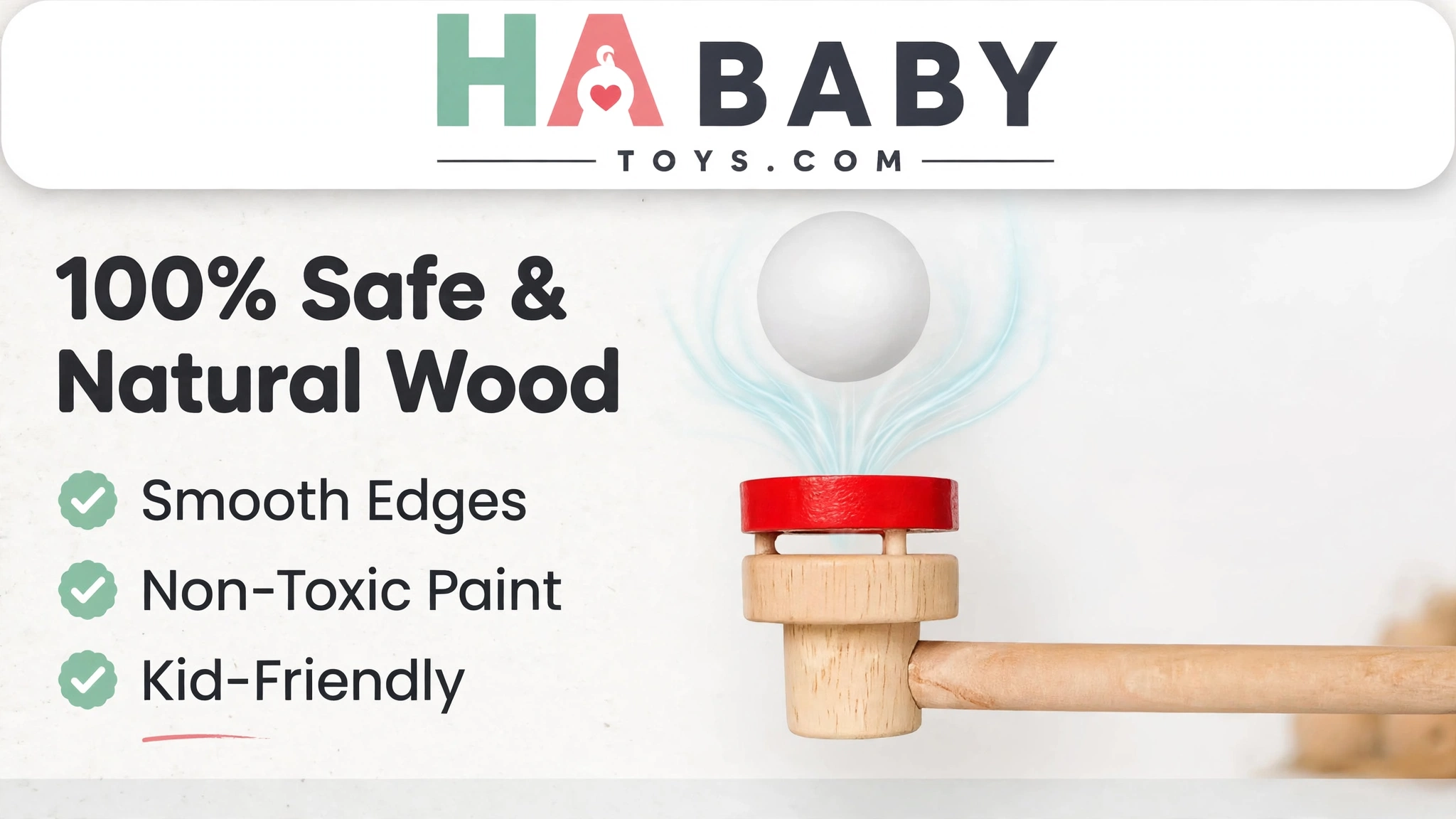
What makes it different from ordinary ball games is the element of wonder. The ball does not simply bounce or roll; it hovers. This unexpected behaviour catches children’s attention and invites them to ask questions. Parents can introduce the activity by demonstrating the floating effect, then inviting the child to observe, predict, and describe what they see.
The exact movement and stability depend on the airflow and the design of the toy. If you are curious about the forces at play, the Harvard Natural Sciences Lecture Demonstrations provide an excellent visual explanation.
Why Parent-Child Play Matters
This is one of the article’s most important sections. Participating together can make an ordinary activity more engaging and meaningful. Here is why:
Communication
Parents can ask children what they notice, what they expect to happen, and why the ball moves. These simple questions open the door to rich conversation.
Curiosity
A surprising visual experience can encourage children to ask questions and investigate. When a parent shows genuine interest, the child’s curiosity is validated and amplified.
Shared Attention
Both parent and child focus on the same activity, creating opportunities for conversation and cooperation. This shared attention is a powerful driver of learning.
Confidence
Children can make predictions, explain their observations, and feel comfortable sharing ideas without worrying about getting every answer right. The goal is exploration, not perfection.
Positive Family Interaction
Short, enjoyable activities can create opportunities for parents and children to spend focused time together. These small moments build lasting memories.
Keep claims measured. A single toy will not improve intelligence or guarantee stronger parent-child bonds. But it can provide a wonderful context for connection and discovery. For more ideas, you can read about fun floating ball activities.
Seven Parent-Child Floating Ball Games
This is the most practical section. Here are seven games you can play together.
Game 1: Guess Before You Try
What parents need: The toy and a curious child.
How to play: Ask the child what they think will happen before starting the toy. Will the ball rise, fall, or move sideways? Try it and discuss the result.
Example questions: “What do you think will happen?” “Were you right?”
What the child observes: The connection between prediction and outcome.
Game 2: Watch and Describe
What parents need: The toy in operation.
How to play: Take turns describing what the ball does. Is it moving up and down, staying in one place, or drifting?
Example questions: “What is the ball doing now?” “Is it moving fast or slow?”
What the child observes: The details of the ball’s movement and stability.
Game 3: Parent vs. Child Predictions
What parents need: The toy and a sense of friendly competition.
How to play: Both participants make a prediction about the ball’s movement. Compare the predictions after watching the demonstration.
Example questions: “What is your guess?” “What is mine?” “Who was closer?”
What the child observes: That predictions can be tested and discussed.
Game 4: Draw What You Saw
What parents need: Paper and crayons.
How to play: After the demonstration, invite the child to draw the floating ball. Ask them to show where the air is moving.
Example questions: “Where is the air?” “Can you draw the ball floating?”
What the child observes: Connecting observation with creative expression.
Game 5: Count and Compare
What parents need: A timer or a counting voice.
How to play: Count how many seconds the ball stays suspended during different demonstrations. Treat it as observation rather than a competition.
Example questions: “How long did it stay up?” “Was it longer this time?”
What the child observes: The relationship between airflow and duration.
Game 6: Ask a Little Scientist
What parents need: An open mind and a willingness to explore.
How to play: Let the child ask questions. Parents can respond with simple explanations or explore the answers together.
Example questions: “Why does it float?” “What happens if we stop the air?”
What the child observes: That their questions are valued and can lead to discovery.
Game 7: Teach the Parent
What parents need: A willingness to be the learner.
How to play: Invite the child to explain how the floating ball works. Parents can pretend to be learners and ask follow-up questions.
Example questions: “How does it work?” “Can you teach me?”
What the child observes: The opportunity to articulate their understanding and build confidence.
What Can Children Explore Through the Floating Ball Game?
The learning opportunities are rich and varied, without requiring exaggerated developmental claims.
| Learning area | Example during play |
|---|---|
| Observation | Watching the ball’s movement |
| Prediction | Guessing what will happen next |
| Communication | Describing what they see |
| Early science | Exploring moving air and gravity |
| Counting | Measuring how long the ball stays suspended |
| Creativity | Drawing or inventing a new game |
| Problem-solving | Discussing why the ball moves differently |
This is learning through play in its purest form. An adult’s questions can make a simple demonstration more meaningful, turning observation into conversation and conversation into understanding.
How Parents Can Make the Game More Educational
You do not need to be a science teacher. Follow this simple five-step routine.
- Introduce: Show the floating ball and let the child observe.
- Ask: Invite the child to predict what will happen.
- Explore: Start the demonstration and watch carefully.
- Discuss: Talk about what happened and compare it with the prediction.
- Create: Let the child draw, describe, or invent a new challenge.
Parents do not need to know every scientific answer. Saying “Let’s find out together” is a useful way to encourage curiosity and model lifelong learning. For a deeper dive into the physics, refer to the University of Iowa’s Coanda Effect demonstration.
Floating Ball Game vs. Other Parent-Child Activities
It is helpful to compare different types of shared activities.
| Activity | Main experience | Parent involvement |
|---|---|---|
| Floating ball game | Visual science demonstration | High potential for discussion |
| Building blocks | Construction and creativity | Collaborative building |
| Drawing | Artistic expression | Shared creative time |
| Puzzles | Problem-solving | Hints and teamwork |
| Board games | Rules and turn-taking | Playing together |
| Outdoor ball games | Movement and coordination | Active participation |
These activities are complementary. A floating ball game does not replace outdoor play, reading, building, or creative activities. It simply offers another way to learn together.
The Science Behind the Floating Ball
The science can be explained in accessible language.
- Air moves from the blower and interacts with the lightweight ball.
- The upward aerodynamic force helps counteract gravity.
- Airflow around the ball can help keep it within the stream.
- Changes in the ball’s position can make the demonstration interesting to observe.
For a university-level demonstration, you can refer to the Colorado State University’s Floating Ball demonstration.
How to Enjoy a Floating Ball Game at Home
Follow this practical setup guide for a smooth experience.
- Choose a suitable, uncluttered surface.
- Read and follow the toy’s instructions.
- Set up the toy according to the manufacturer’s guidance.
- Invite the child to watch before explaining anything.
- Try a prediction game.
- Discuss the result together.
- Store the toy safely after play.
Adult supervision and age suitability matter. Do not assume a specific power source or operating method until verified against the product instructions. For safety guidance, refer to the CPSC Toy Safety guidelines.
Common Mistakes Parents Should Avoid
Avoid these common pitfalls to keep the experience positive.
- Turning every activity into a competition.
- Giving children the answer before they can explore.
- Expecting every child to respond in the same way.
- Making the activity too long.
- Correcting every small mistake.
- Using complicated scientific vocabulary too early.
- Ignoring the manufacturer’s safety instructions.
The central message: let children explore at their own pace. The goal is enjoyment, not a test.
Is a Floating Ball Toy Suitable for Your Family?
This toy may appeal to a range of families.
- Parents looking for indoor parent-child activities.
- Families interested in simple science demonstrations.
- Preschool and early-learning environments.
- Adults searching for an educational gift.
- Children who enjoy visual demonstrations and hands-on exploration.
Check the manufacturer’s age guidance, supervision requirements, and any small-parts warnings before purchasing. The CPSC Small Parts and Choking Hazard guidance is a useful reference.
Introducing the HA’BABY Wooden Suspension Ball Blower
If you are looking for a practical way to explore the floating ball demonstration together, the HA’BABY Wooden Suspension Ball Blower is an excellent option. It is designed to bring the magic of moving air into your family’s playtime.
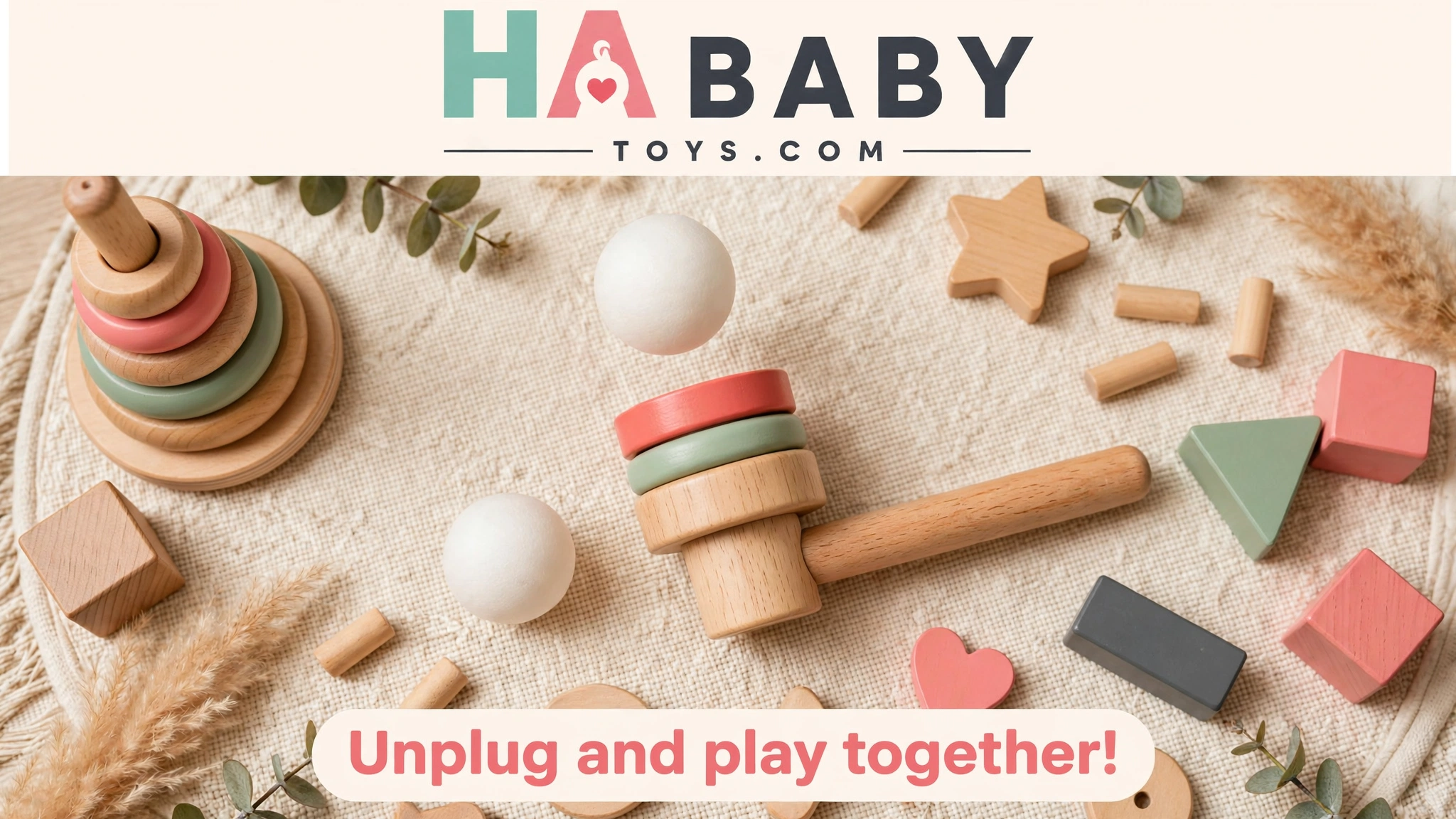
It fits naturally into the games described above: predicting, describing, counting, drawing, and explaining. Parents can use it as a starting point for conversations and shared discovery.
What to check before ordering: Review the product page for actual specifications, age guidance, included components, and operating instructions. If you have questions, visit the HA’BABY frequently asked questions page.
Note: Always verify the actual product features and safety details on the live listing before purchasing.
Bring Curiosity into PlaytimeSafety Tips for Parent-Child Play
Safety is essential for a positive experience.
- Follow the manufacturer’s age recommendations.
- Supervise children during use.
- Check for loose or damaged parts before play.
- Keep small components away from younger children when they pose a choking risk.
- Use the toy according to its intended purpose.
- Keep the play area clear.
- Store the toy appropriately after use.
Use authoritative safety references: the U.S. Consumer Product Safety Commission — Toy Safety, the CPSC — Toy Safety FAQs, and the CPSC — Small Parts and Choking Hazard Guidance.
Parent-Child Learning: Five Simple Steps
1. Introduce
Show the floating ball and let the child observe.
2. Ask
Invite the child to predict what will happen.
3. Explore
Start the demonstration and watch carefully together.
4. Discuss
Talk about what happened and compare it with the prediction.
5. Create
Let the child draw, describe, or invent a new challenge.
Frequently Asked Questions
What is a floating ball game?
A floating ball game is an activity in which a lightweight ball is kept suspended by moving air. Children can watch the ball, make predictions, and explore the science behind its movement.
How can parents play a floating ball game with children?
Parents can take turns predicting what will happen, describing the ball’s movement, counting, drawing observations, and discussing why the ball stays in the air.
What can children learn from a floating ball toy?
Children can explore observation, prediction, cause and effect, communication, counting, and basic science concepts such as airflow and gravity.
Is a floating ball game suitable for indoor play?
It can be an indoor activity when the toy is used on a suitable surface and according to the manufacturer’s instructions. Adult supervision is important.
Does a floating ball game help children understand science?
It provides a visual demonstration that can introduce ideas about moving air, gravity, and forces. Parents can make the experience more educational by asking questions and discussing observations.
Can parents and children play together with a wooden ball blower?
Yes. Parents can guide the demonstration, ask questions, encourage predictions, and let children explain what they observe.
Where can I find a wooden suspension ball blower?
You can explore the HA’BABY Wooden Suspension Ball Blower product page for available product details. You can also visit the HA’BABY FAQ page for more information.
Conclusion — Make Learning a Shared Experience
Children do not always need elaborate lessons to explore new ideas. Sometimes a simple demonstration, a few thoughtful questions, and an interested parent are enough to turn playtime into an opportunity for discovery. The floating ball game is a perfect example of how shared curiosity can become a powerful learning experience.
Ready to bring this experience home? Explore educational toys to compare options, or contact HA’BABY for product enquiries if you have specific questions. For more educational play ideas, visit the HA’BABY blog.
Explore the HA’BABY Wooden Suspension Ball Blower
One Response