
As your baby grows from newborn to toddler, their needs and abilities change rapidly. You want to provide engaging, age-appropriate activities but may feel unsure about which toys are suitable at each stage. Baby sensory cards are a versatile tool that can adapt as your child develops. From birth to 36 months, activities can gradually change from looking at bold patterns to naming pictures, matching images, telling stories, and learning simple concepts. This guide provides a practical 0–36-month play roadmap, explaining what to try, how to adapt the activity, what to look for in your child’s response, and when to move on. For a broader selection of baby learning toys, explore our HaBabyToys collection.
Table of Contents
- What Are Baby Sensory Cards and How Do They Support Early Learning?
- Baby Sensory Cards from 0–3 Months: Gentle Visual Exploration
- Baby Sensory Cards from 3–6 Months: Looking, Listening, and Interaction
- Baby Sensory Cards from 6–12 Months: Exploring Pictures and Meaning
- Baby Sensory Cards from 12–24 Months: Words, Matching, and Simple Games
- Baby Sensory Cards from 24–36 Months: Stories, Categories, and Imagination
- Black-and-White vs. Colorful Cards vs. Picture Books
- How to Choose Baby Sensory Cards for Ages 0–36 Months
- Common Sensory Card Mistakes Parents Can Avoid
- Are Baby Sensory Cards Worth Buying?
- Frequently Asked Questions
Baby sensory cards are picture or pattern cards that parents can use to encourage visual exploration, communication, and interactive play. From birth to 36 months, activities can gradually change from looking at bold patterns to naming pictures, matching images, telling stories, and learning simple concepts. Choose age-appropriate cards and follow your child’s interests.
What Are Baby Sensory Cards and How Do They Support Early Learning?
Baby sensory cards are simple picture or pattern cards used during parent-led play. They are not a formal teaching tool; they are a way to engage your child’s senses and encourage interaction. Depending on the child’s age and interests, visual exploration, listening, naming, and shared attention can all be part of a card activity.
What Makes a Card a Sensory Card?
A sensory card is designed to stimulate the senses. High-contrast patterns stimulate vision, while colorful pictures can engage attention and curiosity.
How Visual Exploration Fits Into Everyday Play
Visual exploration is a natural part of play. Cards can be used during calm, awake moments to encourage looking and attention.
Why Interaction Matters More Than the Number of Cards
The value of the cards comes from the interaction. Talking, responding, and following the child’s cues are more important than owning a large set. The American Academy of Pediatrics supports age-appropriate play and interaction.
Baby Sensory Cards from 0–3 Months: Gentle Visual Exploration
For newborns, simple, bold patterns may be useful. Their vision is still developing, and high-contrast images are easier to process.
Choosing Simple High-Contrast Patterns
Start with simple, bold patterns. Avoid complex images that may be overwhelming.
Introducing a Card During Calm, Awake Moments
Choose a calm, awake moment. Hold the card still and allow time for looking.
Keeping Early Play Brief and Responsive
Keep early play brief. Stop when the baby looks away. Talk softly and respond to cues. The CDC developmental milestones provide a useful reference.
What to Do When a Newborn Doesn’t Seem Interested
Do not force it. Try again later. Newborns learn through faces, voices, touch, and ordinary caregiving.
Baby Sensory Cards from 3–6 Months: Looking, Listening, and Interaction
At this stage, babies may show more interest in images and begin to respond to voices. Simple back-and-forth games can be introduced.
Follow-the-Picture Games
Move the card slowly and encourage the baby to follow it with their eyes. This builds visual tracking.
Naming Shapes and Familiar Objects
Name the shapes and objects on the card. This builds vocabulary and recognition.
Combining Cards With Facial Expressions and Conversation
Add facial expressions and conversation. This makes the activity more engaging.
Using Cards During Awake, Supervised Floor Play
Use cards during supervised floor play. This encourages exploration and interaction.
One Set of Cards, Different Ways to Play
Select an age stage to see how activities evolve.
Baby Sensory Cards from 6–12 Months: Exploring Pictures and Meaning
At this stage, babies may begin to explore objects with their mouths. Keep loose paper cards out of reach unless the product is specifically designed and labeled for safe handling by that age.
Naming Familiar Objects and Animals
Name familiar objects and animals. This builds vocabulary and recognition.
Playing “Where Is the …?” With Caregiver Help
Play simple games like “Where is the duck?” This encourages shared attention.
Encouraging Shared Attention Without Testing the Baby
Encourage shared attention without testing. The goal is interaction, not performance. The CDC six-month milestones provide useful context.
Understanding Mouthing and Product-Safety Considerations
Be aware of mouthing. Choose cards that are safe for the child’s age and handling behavior. The CPSC toy safety guidance is a useful resource.
Baby Sensory Cards from 12–24 Months: Words, Matching, and Simple Games
At this stage, the focus shifts from simply looking to interacting with pictures. Parents can name familiar objects, imitate animal sounds, and invite the child to find a matching picture.
Picture Naming and Sound Imitation
Name pictures and imitate sounds. This builds language skills.
Simple Matching With Adult Guidance
Encourage simple matching. Start with two cards and gradually increase.
Building Vocabulary Through Repetition
Repeat words often. Repetition builds vocabulary.
Turning Everyday Pictures Into Playful Conversations
Turn pictures into conversations. Ask simple questions and respond to the child’s answers.
Baby Sensory Cards from 24–36 Months: Stories, Categories, and Imagination
Older toddlers may use suitable cards for simple sorting, describing pictures, telling short stories, and spotting similarities.
Sort Pictures Into Simple Groups
Sort pictures by category (animals, food, vehicles). This builds cognitive skills.
Make Up a Story From Two or Three Cards
Encourage storytelling. Let the child create a story using the cards.
Find Similarities and Differences
Ask the child to find similarities and differences. This builds observation skills.
Follow the Toddler’s Curiosity Rather Than Forcing Answers
Follow the child’s curiosity. Do not force answers. The UNICEF early childhood development resources emphasize responsive caregiving.
What Parents Say About HaBabyToys
“I love that these cards can be used from newborn to toddler. We started with high-contrast patterns and now we’re matching and sorting.”
“The cards are thick and durable. The patterns are clear and bold. Very pleased with this purchase.”
“We use these for naming games and storytelling. It’s a great way to build vocabulary and imagination.”
Black-and-White Cards vs. Colorful Cards vs. Picture Books
The best choice depends on the child’s age, interest, safety, and how the caregiver uses the materials.
| Format | Benefits | Considerations |
|---|---|---|
| Black-and-white cards | Bold visual contrast, simple patterns | Useful early on, but not a requirement for every stage |
| Colorful cards | Varied imagery, engages attention | Introduce when the child shows interest |
| Picture books | Shared reading, longer conversations | Important for language and literacy development |
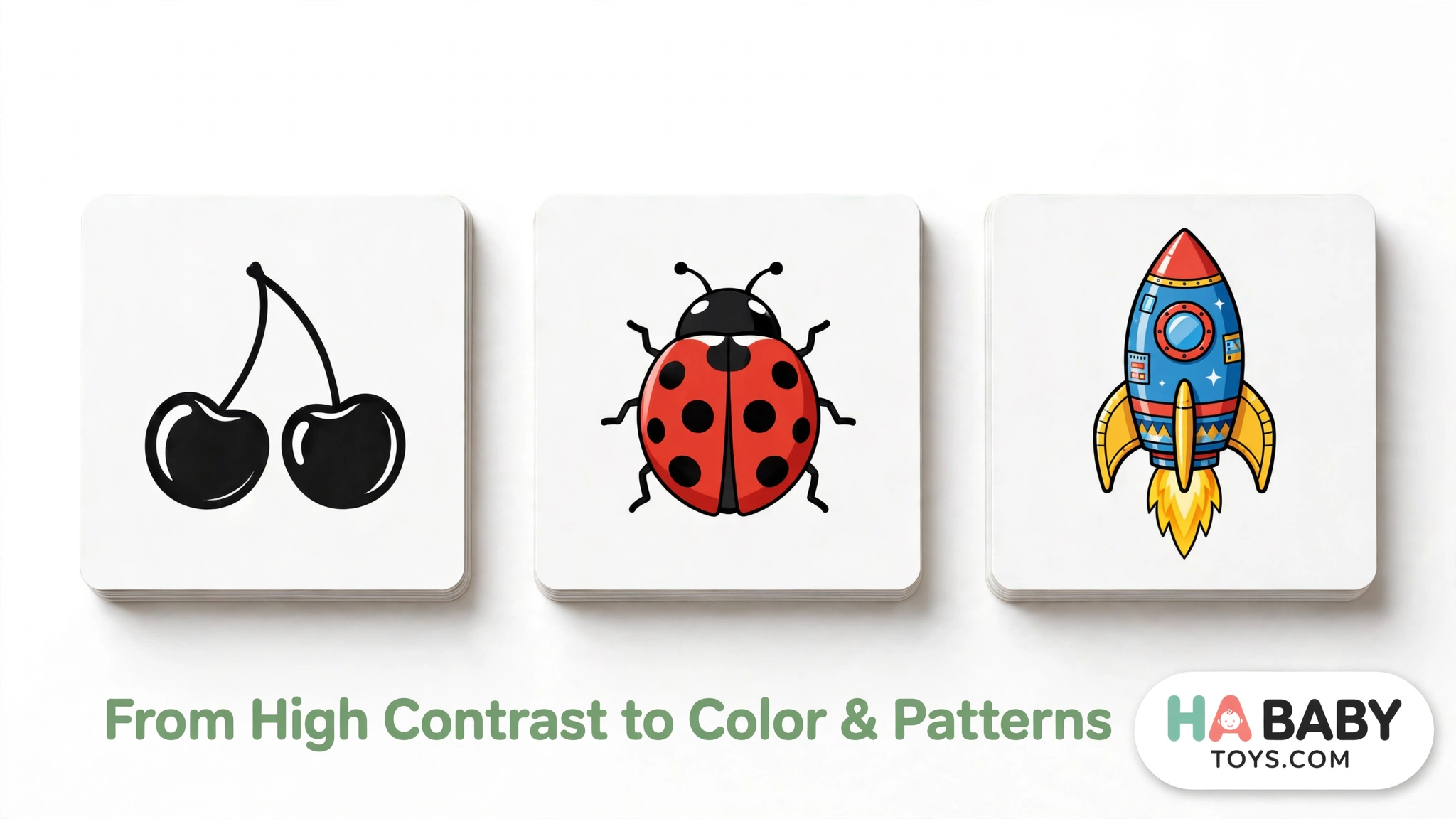
Black-and-white cards can be a useful starting point. Colorful cards and picture books can be introduced as the child’s vision develops. Books, conversation, and hands-on play remain important.
How to Choose Baby Sensory Cards for Ages 0–36 Months
Before buying, check these features.
| Feature | What to Check |
|---|---|
| Age label | Does the age recommendation match the child? |
| Material | Are the cards made from safe, durable materials? |
| Print quality | Are the images clear and bold? |
| Card size | Are the cards easy to handle? |
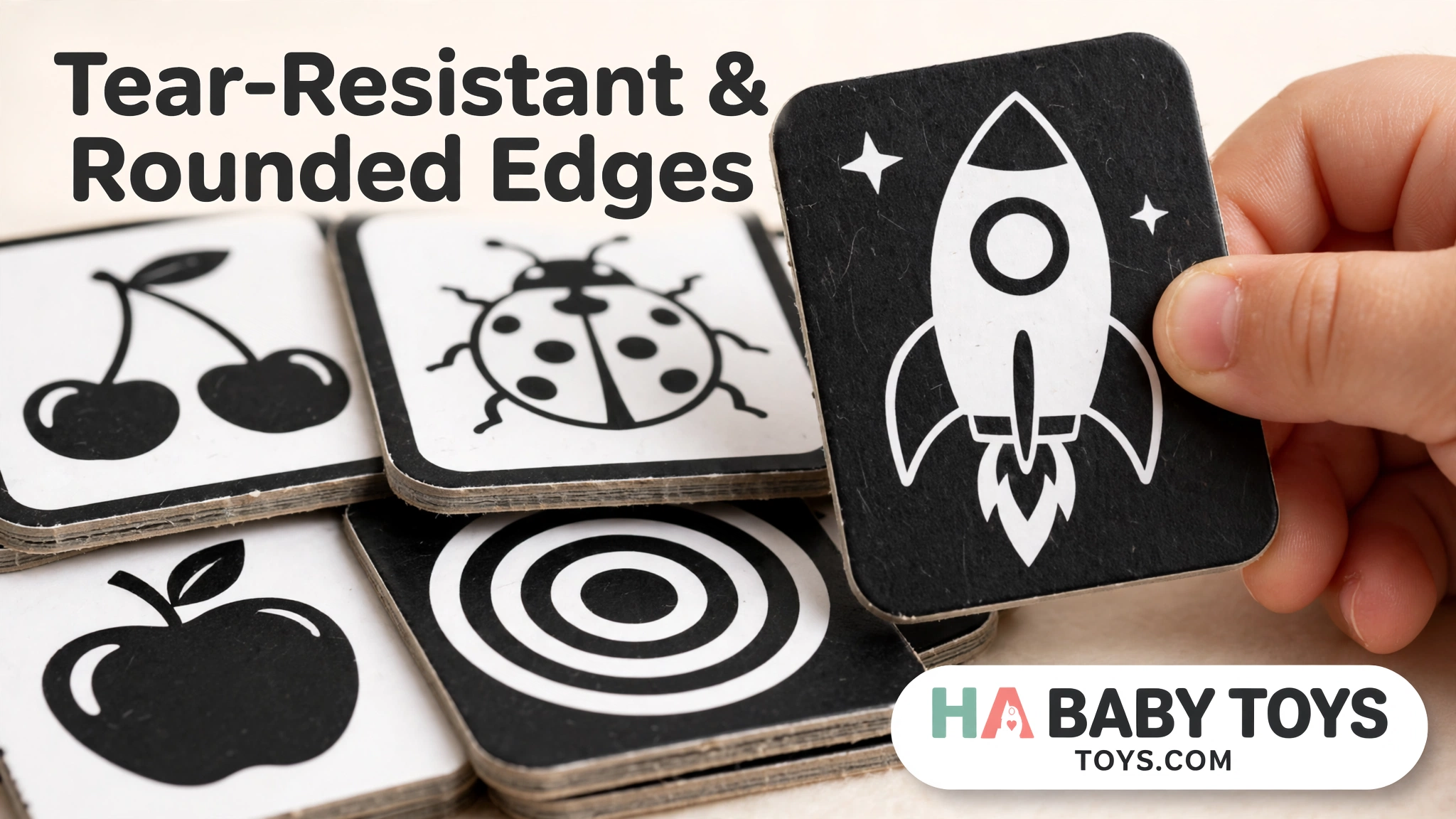
| Finish and edges | Are the edges rounded and safe? |
| Cleaning guidance | Can the cards be wiped clean? |
| Handling behavior | Are the cards suitable for the child’s likely handling behavior? |
A product described as suitable for ages 0–36 months still requires checking its actual instructions and warnings. The American Academy of Pediatrics recommends matching toys to developmental abilities.
Common Sensory Card Mistakes Parents Can Avoid
Avoid these mistakes to ensure a positive experience.
Are Baby Sensory Cards Worth Buying?
Baby sensory cards can be worth buying if you are looking for a versatile, low-pressure activity that grows with your child. They are especially useful for parents who want a single resource that can be adapted across different stages.
Who May Find Sensory Cards Useful?
Parents of newborns through toddlers may find these cards useful. They are also a great gift for new parents.
What Makes a Card Set Practical for Everyday Use?
Durability, clarity, and ease of cleaning are important. The HA’BABY FAQ page may answer additional questions.
Explore HA’BABY’s Baby Sensory Card Options
The HA’BABY black-and-white baby flash cards are a well-designed option. Check the product page for current details.
Support Your Child’s Learning at Every Stage
Baby sensory cards offer a simple way to engage your child’s senses and support learning from newborn to toddler. If you are looking for a versatile activity that grows with your child, these cards are a great choice. Explore the HA’BABY black-and-white baby flash cards to see if they suit your family’s needs.
View the Black & White Cards Browse All ToysFrequently Asked Questions
They are used for visual exploration, picture recognition, interaction, and simple games. They can support early learning through play.
Yes, but use simple high-contrast patterns and always supervise. Follow the product’s age guidance and instructions.
Use brief, calm, responsive interactions. Hold the card still, allow time for looking, and stop when the baby looks away.
Naming pictures can create language-rich interaction. However, cards alone do not cause speech development. Conversation and responsive interaction are key.
Introduce colorful images according to the child’s interests and age. Monochrome cards are not a requirement for every stage.
Young infants need close supervision. Loose cards may be unsuitable for babies who mouth objects.
Yes, suitable cards can be adapted for naming, sorting, matching, and storytelling. Choose cards appropriate for the child’s age and interests.
Follow the child’s engagement rather than imposing a strict duration. Stop when the child loses interest.
Check age guidance, construction, materials, cleaning, and storage. Ensure the cards are safe for the child’s handling behavior.
No. They are an optional addition to books, conversation, movement, and everyday play. The UNICEF early childhood development resources emphasize the importance of responsive caregiving.
Conclusion: A Versatile Tool for Early Learning
Baby sensory cards are a versatile tool that can adapt as your child grows from newborn to toddler. They offer opportunities for visual exploration, communication, and interactive play. They are not a guarantee of developmental milestones, but they can be a valuable addition to your child’s play routine. For more educational toys and play ideas, explore the HaBabyToys blog and browse our full collection.
One Response