
Description
Black and White Baby Flash Cards – High Contrast Visual Stimulation for Ages 0-36 Months
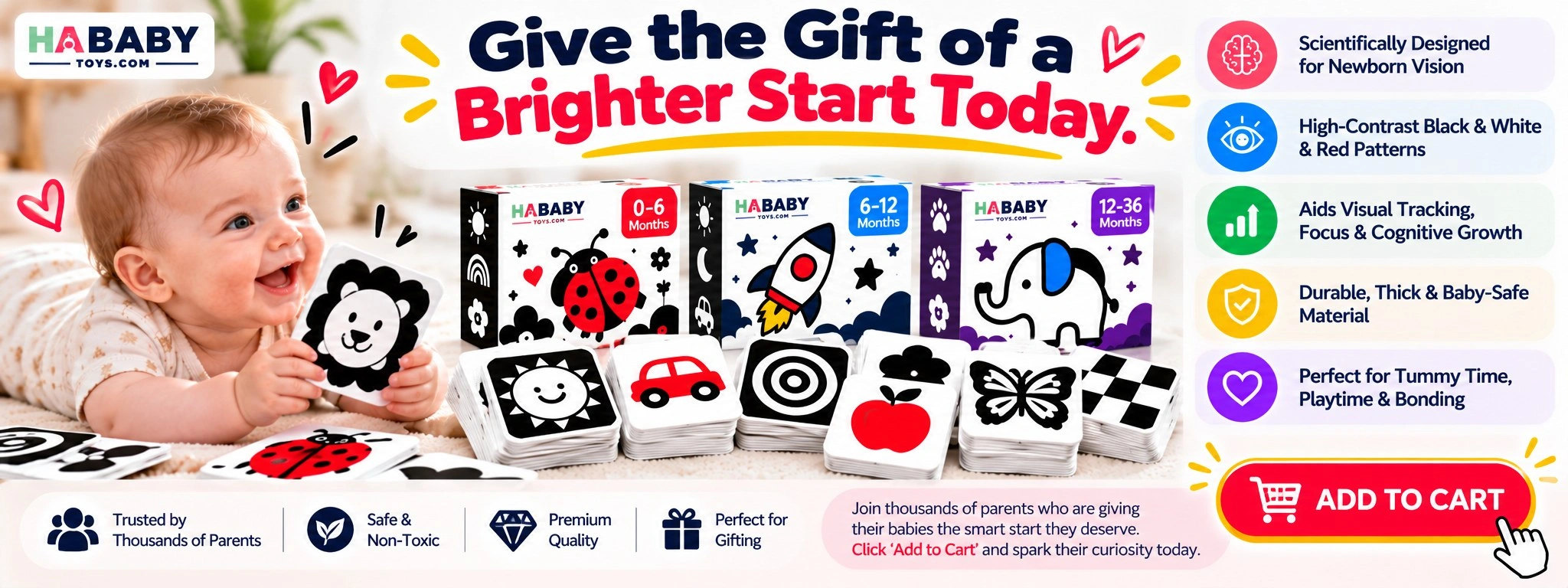
Black and White Baby Flash Cards vs Traditional Baby Learning Toys
Choosing an appropriate sensory toy for a newborn can feel challenging. The Black and White Baby Flash Cards from HA Baby Toys offer a simple, screen-free way to introduce bold patterns, familiar shapes and visual exploration into daily routines.
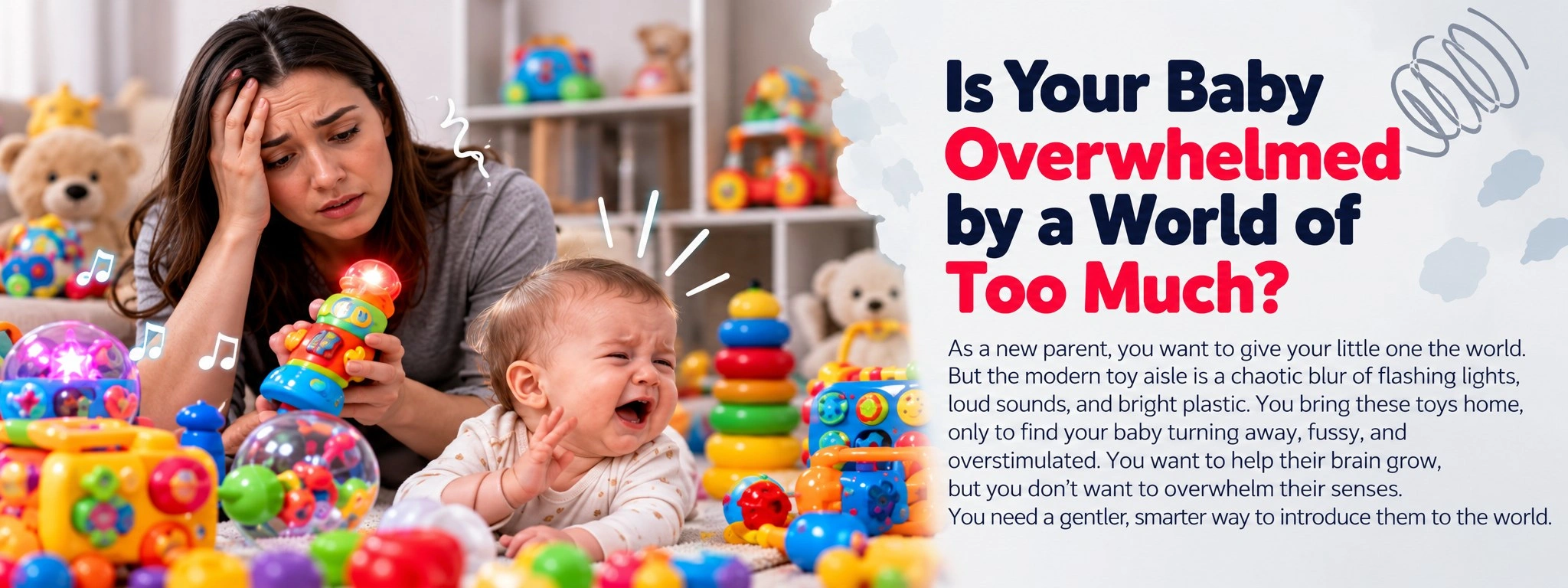
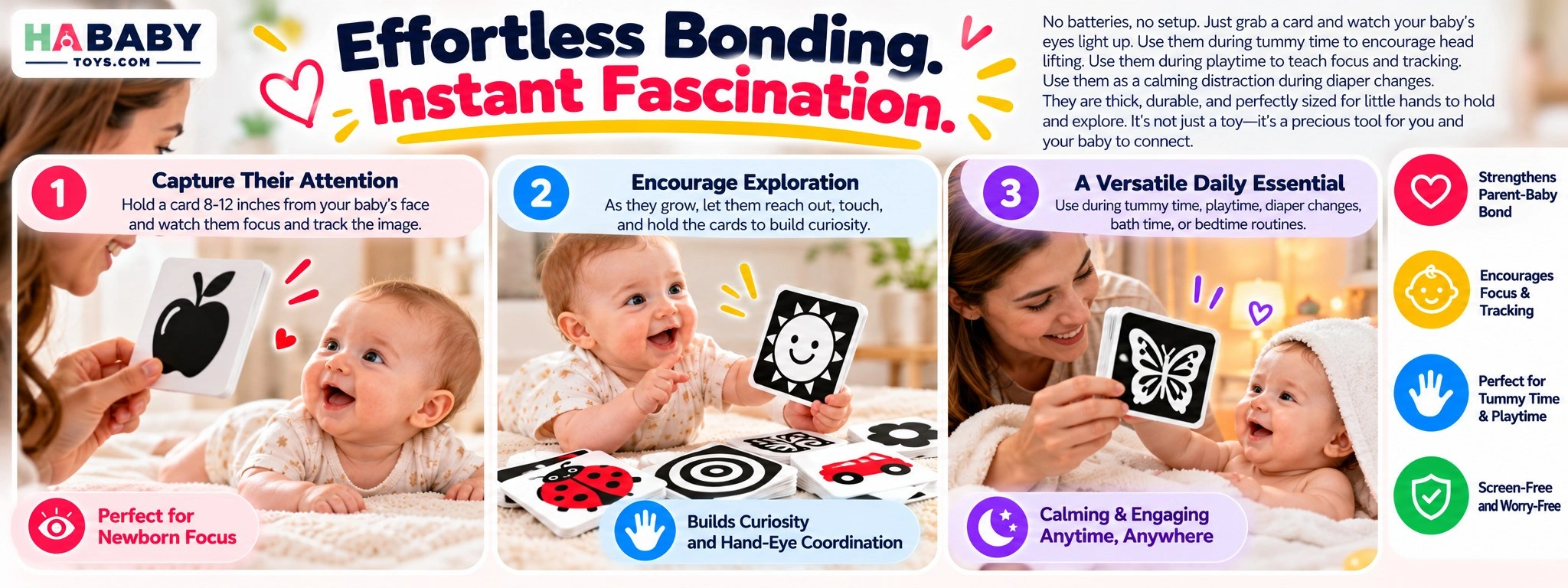
Unlike many electronic toys, these high contrast baby cards require no batteries or charging. Parents can use them during supervised tummy time, quiet play and short visual tracking activities.
| Features | HA Baby Toys High Contrast Cards | Ordinary Picture Flash Cards | Electronic Baby Toys |
|---|---|---|---|
| Primary Visual Design | Bold black and white patterns with selected color designs | Often colorful illustrations | Lights, colors and moving displays |
| Newborn Visual Interest | High contrast patterns suitable for early visual exploration | Depends on illustration contrast | Depends on brightness and design |
| Age-Based Activities | Activities can be adapted from 0 to 36 months | Depends on card content | Depends on model |
| Battery Required | No | No | Often required |
| Screen-Free | Yes | Yes | Depends on product |
| Tummy Time Activities | Suitable for supervised visual engagement | Possible depending on designs | Depends on model |
| Parent-Baby Interaction | Holding, describing and moving cards together | Picture recognition and conversation | Varies by features |
| Portability | Compact card format | Generally portable | Depends on size |
| Sound and Flashing Lights | None | None | Often included |
| Gift Appeal | Early sensory learning gift | General educational gift | Interactive electronic gift |
Comparison Note: This comparison describes general toy categories rather than independently tested competing brands. Actual features depend on the individual product.
Black and White Baby Flash Cards Product Specifications
| Product Name | Black and White Baby Flash Cards |
|---|---|
| Brand | HA Baby Toys |
| Product Category | Infant Sensory and Early Learning Cards |
| Recommended Activity Range | 0-36 Months with Age-Appropriate Adult Supervision |
| Primary Colors | Black and White |
| Additional Colors | Red and Other Colors Depending on Selected Cards |
| Visual Designs | Geometric Patterns, Animals, Objects and Familiar Shapes |
| Learning Approach | High Contrast Visual Exploration |
| Educational Style | Montessori-Inspired Sensory Activities |
| Power Requirements | No Batteries Required |
| Card Material | Confirm Exact Cardboard and Coating Specifications |
| Card Finish | Confirm Matte or Other Finish |
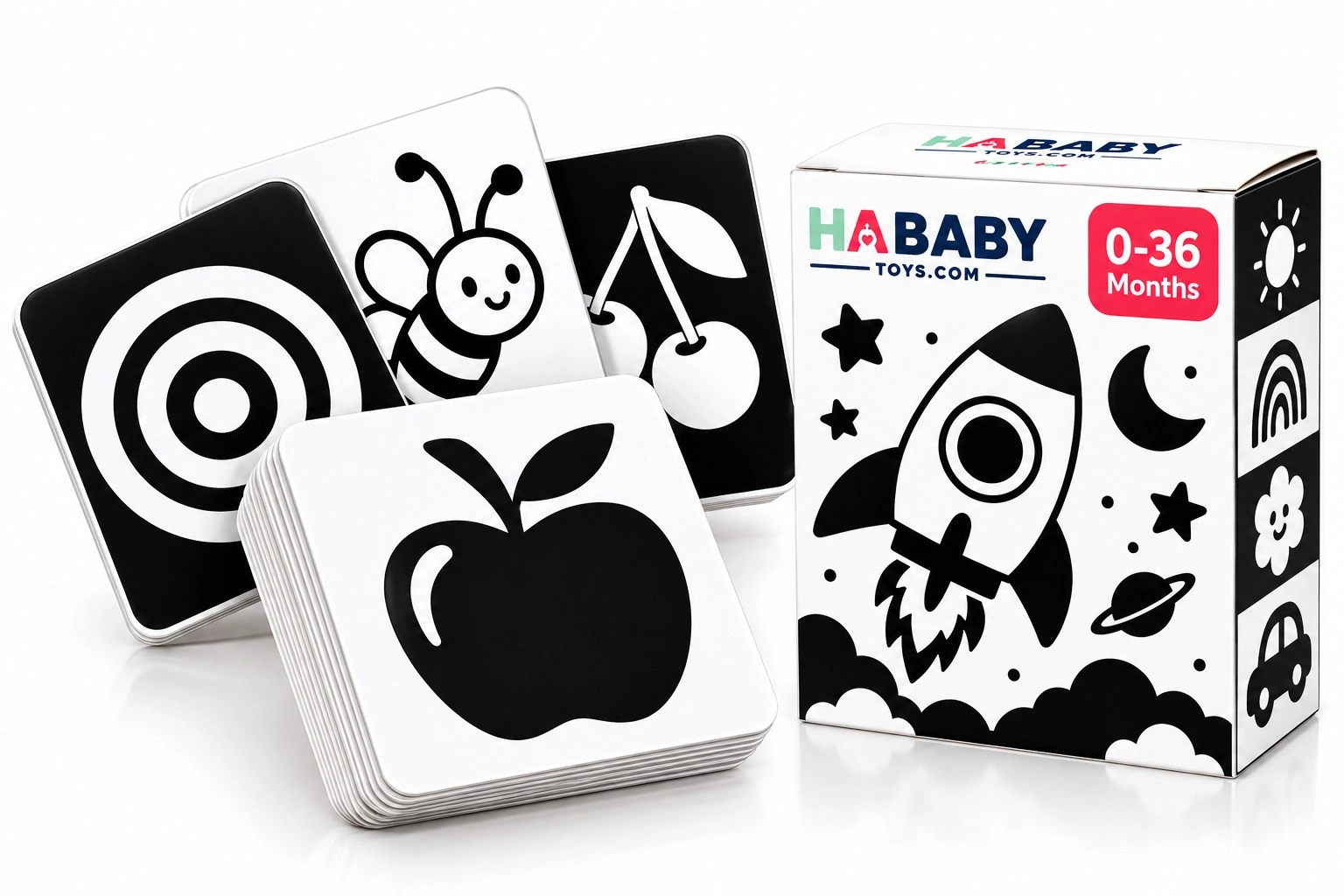
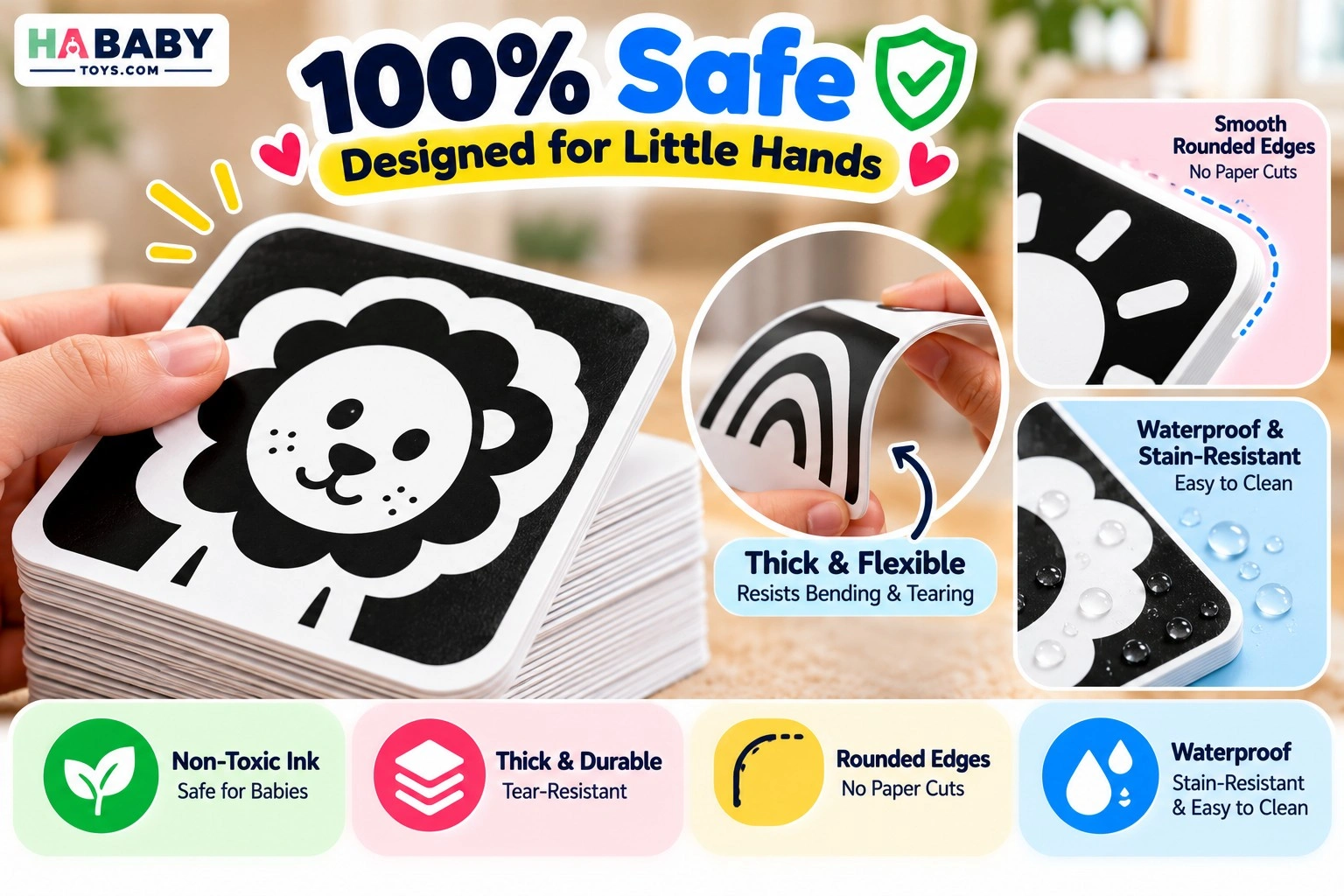
| Corner Design | Rounded Corners Shown in Product Presentation |
| Water Resistance | Not Verified |
| Number of Cards | Confirm Quantity for Selected Package |
| Card Dimensions | Confirm Exact Measurements |
| Package Options | Confirm Available Age-Stage Sets and Bundles |
| Intended Activities | Visual Tracking, Tummy Time, Object Recognition and Parent-Baby Play |
| Safety Certification | Confirm Applicable Manufacturer Testing and Documentation |
Important: The exact number of cards, materials, dimensions, included boxes and safety certifications must be checked against the physical product before publication.
High Contrast Baby Cards Features and Benefits
Bold Black and White Patterns for Newborn Visual Exploration
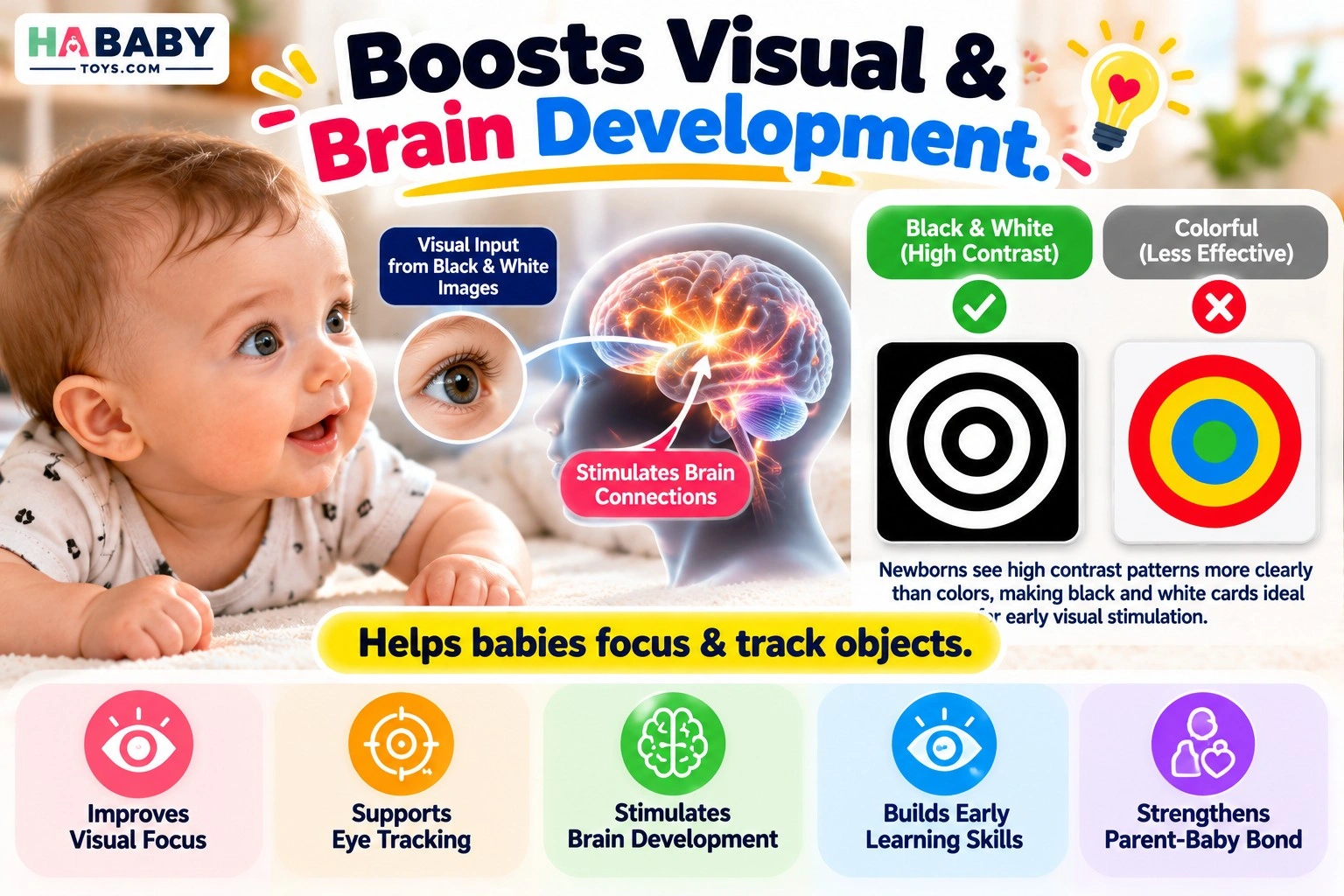
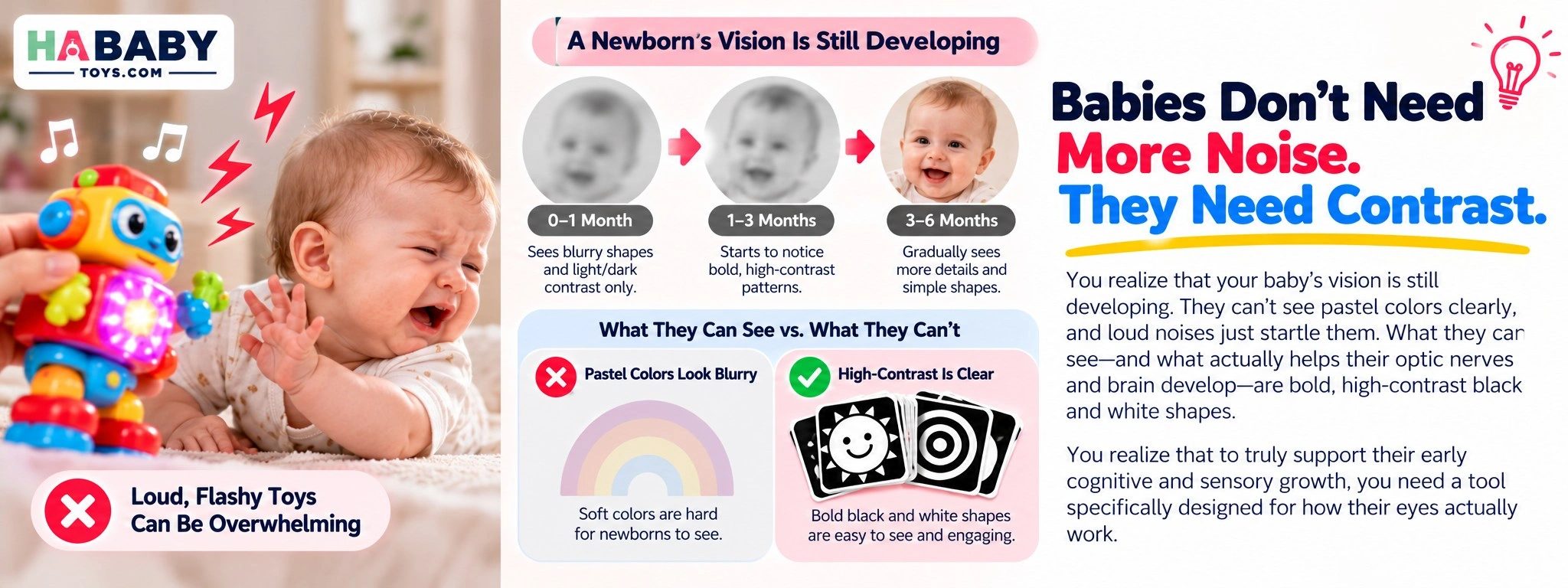
Newborn vision is still developing during the first months of life. Babies often respond to strong visual contrast, making bold black and white patterns useful targets for early visual attention.
These high contrast baby cards feature clear shapes and patterns that parents can introduce during short, supervised activities.
Discover more about the role of contrasting patterns in our guide to black and white baby cards and visual learning benefits.
Montessori-Inspired Early Sensory Learning
The flash cards can be used in Montessori-inspired activities that emphasize simple materials, observation and interaction with the environment.
Parents can present one card at a time, allowing their baby to look at the image without competing visual distractions.
As children grow, the same cards can become part of naming games, picture matching and early vocabulary activities.
Visual Tracking and Attention Activities
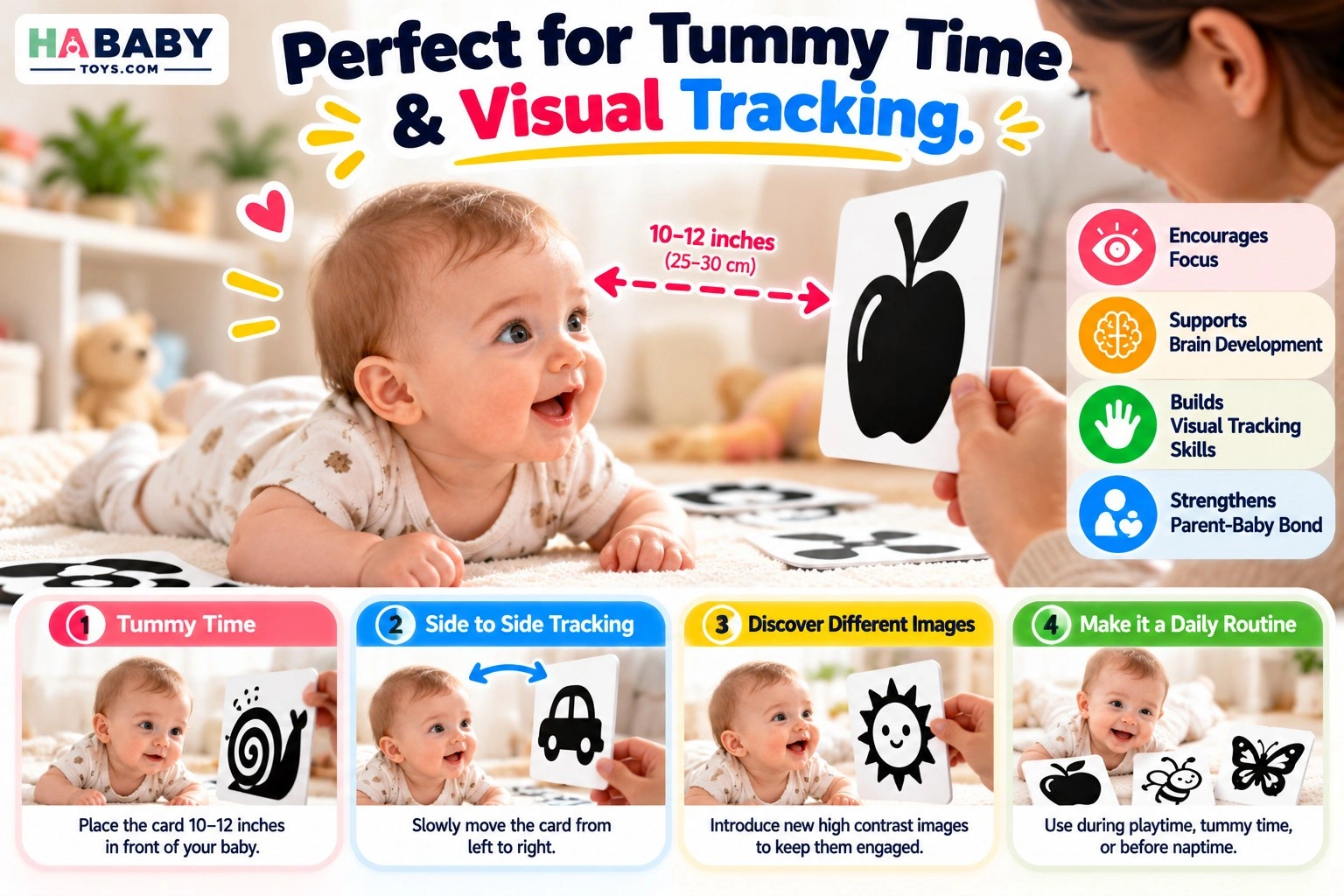
Visual tracking is the ability to follow an object with the eyes. During early infancy, caregivers can encourage visual engagement by presenting a high contrast image within the baby’s comfortable viewing distance.
When the baby is attentive, move the card slowly from side to side and observe whether their eyes follow it. Do not force the movement or continue when the baby looks away.
Learn more in our article about high contrast cards for newborn focus and tracking.
Designed for Different Stages of Early Learning
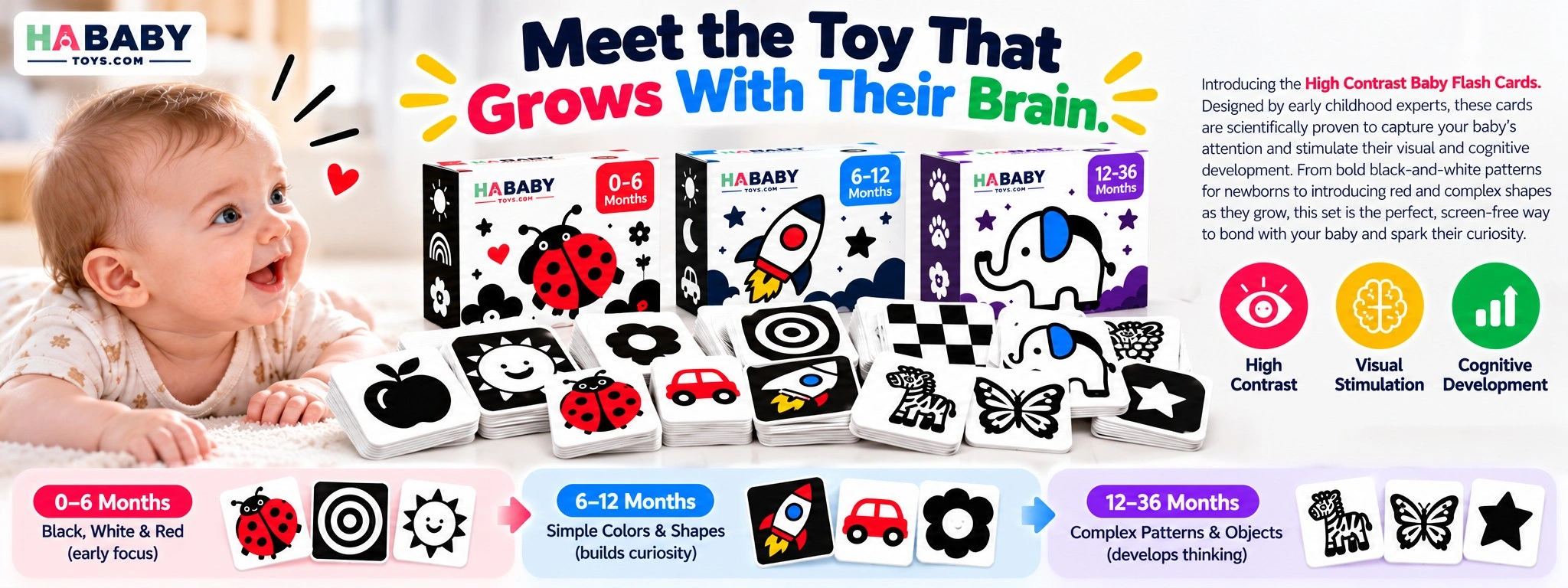
Baby sensory activities naturally change as children grow. The same collection can be introduced in different ways, from simple visual observation to picture identification and language games.
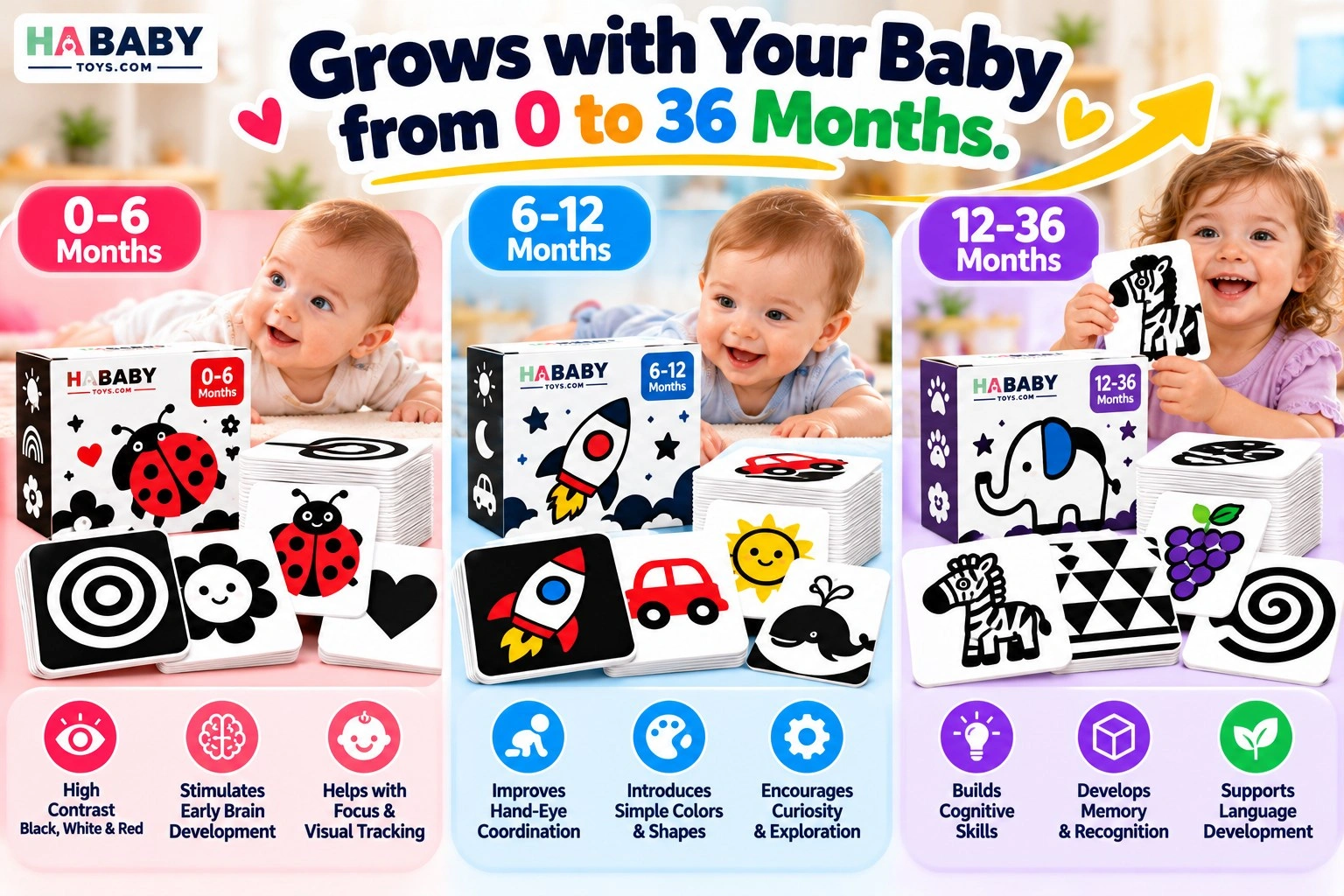
Stage 1: 0-6 Months – Early Visual Attention
Introduce simple black and white patterns, large shapes and familiar outlines. Hold the cards at a comfortable distance and allow your baby time to look.
Stage 2: 6-12 Months – Reaching and Exploration
Introduce additional shapes, objects and selected colorful designs. Older babies may begin reaching toward cards and showing interest in familiar pictures.
Stage 3: 12-36 Months – Recognition and Language Play
Use the cards for naming familiar objects, identifying animals, finding matching pictures and practicing simple words.
These are suggested activity stages, not guaranteed developmental outcomes or confirmation of the contents of a particular package.
Simple Screen-Free Learning
The cards provide a screen-free activity that does not require batteries, apps, electronic sounds or flashing lights.
Caregivers can use them during short play sessions at home, while traveling or during supervised floor activities.
Parent and Baby Bonding Activities
Holding a flash card, naming the picture and responding to a baby’s expressions can create opportunities for warm interaction.
The cards are most useful as part of responsive play, where the caregiver observes the baby’s interest and adjusts the activity accordingly.
Animal and Geometric Learning Patterns
The product presentation includes high contrast patterns and recognizable images such as animals, fruit, targets and geometric designs.
These illustrations can be used for early visual exploration and later for naming and identification games.
Compact and Portable Sensory Cards
Flash cards are easy to incorporate into daily routines. A caregiver can select a few cards for a short activity without setting up a large play area.
Keep unused cards stored safely and away from the baby’s sleeping area.
Baby Shower and Newborn Gift Idea
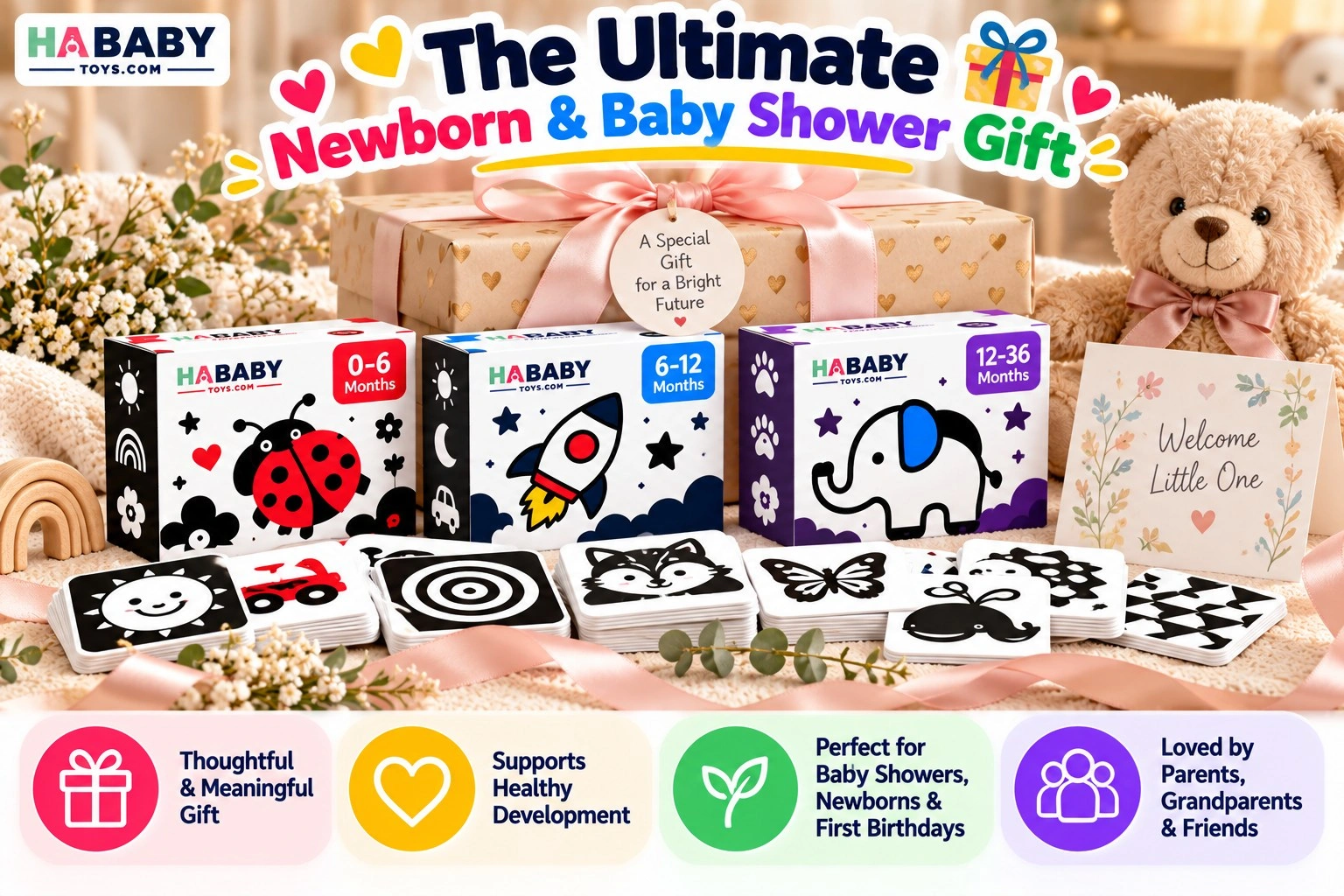
High contrast flash cards make a thoughtful gift for families interested in simple, interactive early learning materials.
They can be included in newborn gift collections, baby shower presents and age-appropriate educational gift sets.
What Is Included in the Package?
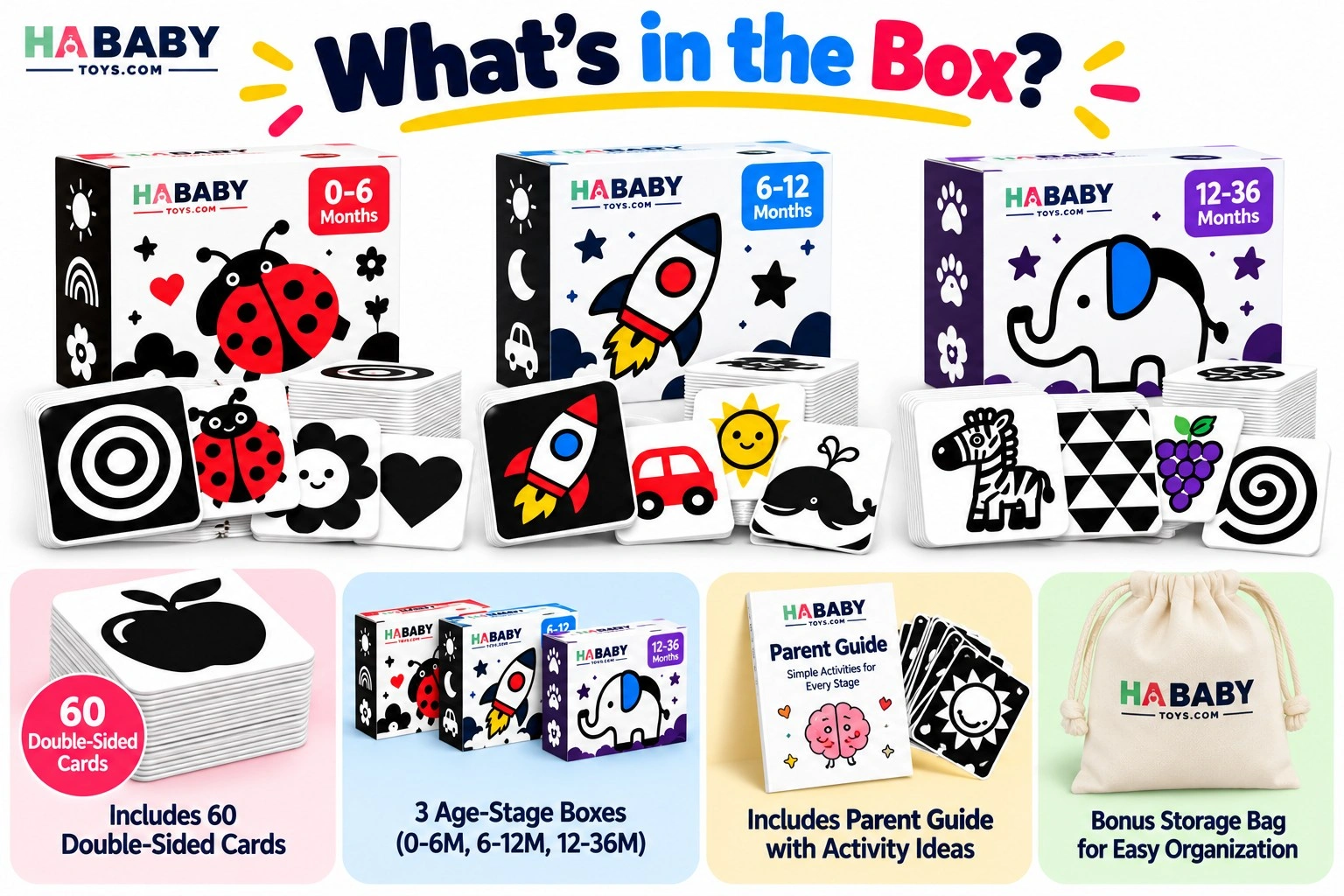
The exact package contents depend on the selected product variation. Product presentations may show different age-stage boxes and multiple card designs.
Before ordering, confirm the selected set, number of cards and included packaging on the product page.
Only items explicitly listed in the selected package are included. Display accessories and additional sets are not automatically part of the purchase.
How to Use Black and White Baby Flash Cards – Parent Guide
Step 1: Choose an Age-Appropriate Card
For younger babies, begin with a simple black and white pattern containing large, clearly defined shapes.
For older babies and toddlers, introduce familiar animals, objects and more detailed illustrations.
Step 2: Position the Card Comfortably
During the newborn period, try holding the card approximately 8-12 inches (20-30 cm) from the baby’s face as a starting point.
Adjust the distance according to your baby’s response and comfort. Babies develop at different rates, and there is no need to force them to focus.
Step 3: Allow Time for Visual Attention
Hold the card still and allow the baby time to notice the pattern.
Some babies may look briefly before turning away. Follow the baby’s cues and keep the activity relaxed.
Step 4: Introduce Gentle Visual Tracking
If the baby is attentive, slowly move the card a short distance from side to side.
Watch for eye movements or head turns toward the card. Stop if the baby appears tired, fussy or uninterested.
Step 5: Add Tummy Time Activities
During supervised tummy time, position a card where the baby can comfortably see it.
Use the card as an interesting visual target while encouraging the baby to explore their surroundings.
Always place babies on their backs for sleep. Tummy time is for awake, supervised periods only.
Step 6: Introduce Names and Simple Words
As your child grows, point to the pictures and name them using simple language.
For example, show an apple illustration and say “apple,” or show a bird and make a gentle bird sound.
Step 7: Practice Picture Recognition
With older babies and toddlers, place two or three cards in view and ask the child to find a familiar picture.
Keep the activity playful and avoid treating the cards as a formal test.
Step 8: Store Cards Safely
After each activity, return the cards to their storage box or another clean, dry location.
Keep loose cards out of cribs and other infant sleep spaces.
Cleaning and Maintenance
- Inspect cards regularly for damage, peeling layers or torn edges.
- Follow the manufacturer’s cleaning instructions.
- Do not soak cards unless the manufacturer confirms they are waterproof.
- Avoid harsh cleaning chemicals and abrasive materials.
- Allow cards to dry fully before storage if the material permits damp cleaning.
- Replace cards that become damaged or develop loose pieces.
Important Safety Instructions
- Use the cards under adult supervision.
- Do not leave loose flash cards in a crib or infant sleep area.
- Do not allow babies to chew or swallow card materials.
- Inspect corners and edges before use.
- Remove damaged cards immediately.
- Follow the manufacturer’s recommended age range and warnings.
- Do not assume the cards are waterproof, non-toxic or tear-proof without verified documentation.
- Keep packaging materials away from babies and young children.
For additional guidance about toy safety, visit the U.S. Consumer Product Safety Commission.
Why Choose Black and White Baby Flash Cards from HA Baby Toys?
The Black and White Baby Flash Cards from HA Baby Toys offer a simple way for parents to introduce visual patterns, early picture recognition and interactive sensory activities into everyday play.
With bold designs and age-adaptable activities, these cards can be used from the newborn period through toddlerhood, according to the child’s abilities and the manufacturer’s instructions.
Understanding Newborn Vision
A newborn’s visual system is still developing. During the early months, babies generally see best at relatively close distances and often show interest in bold contrast.
High contrast images can provide clear visual targets while babies gradually develop visual attention and tracking abilities.
For general information about infant health and development, visit HealthyChildren.org from the American Academy of Pediatrics.
Why Are Black and White Patterns Useful?
Black and white designs create strong differences between light and dark areas. These patterns can be easier for young babies to notice than some low-contrast illustrations.
Presenting simple shapes gives caregivers a way to encourage observation without requiring a complex toy.
However, flash cards do not guarantee improved intelligence, faster brain growth or specific developmental milestones.
High Contrast Visual Stimulation for Everyday Play
Visual stimulation does not need to involve flashing lights or electronic displays. Everyday objects, faces and bold patterns can all provide opportunities for babies to explore their surroundings.
The cards offer a convenient way to introduce clear images during supervised play.
Encouraging Visual Tracking Through Gentle Movement
Visual tracking develops gradually as babies learn to coordinate their eyes and follow moving objects.
Caregivers can introduce slow card movements when their baby is awake and interested. These activities should be short, gentle and responsive to the baby’s behavior.
For additional activity ideas, read our article about newborn focus and visual tracking with high contrast cards.
Making Tummy Time More Engaging
Tummy time is an important awake, supervised activity for infants. It provides opportunities to practice lifting the head and exploring the environment from a different position.
Positioning a high contrast card within view may give a baby something interesting to look at during these sessions.
Always supervise tummy time closely and follow pediatric guidance appropriate to your baby’s age and development.
Early Object Recognition and Familiar Pictures
As babies grow, caregivers can introduce pictures of familiar objects such as fruit, animals and everyday items.
Pointing to the images and naming them creates opportunities for shared attention and early language exposure.
Learning Through Parent-Baby Interaction
One of the most valuable ways to use flash cards is through responsive interaction.
Parents can smile, talk, name pictures and observe their baby’s expressions while presenting the cards.
These activities encourage shared moments rather than passive entertainment.
Age-Appropriate Activities from 0 to 36 Months
Although newborns and toddlers have very different abilities, picture cards can be adapted to suit different stages of early learning.
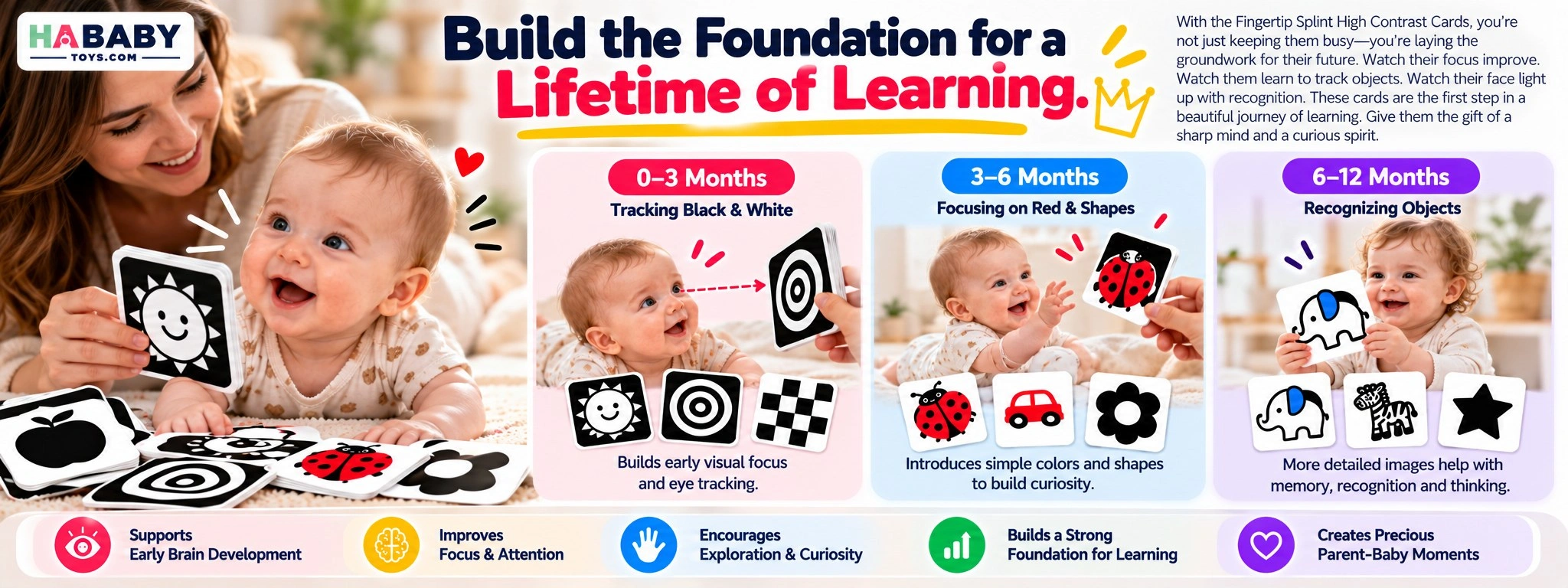
0-3 Months: Look and Observe
Show one bold black and white card at a time during calm, awake periods. Allow the baby to look without rushing the activity.
3-6 Months: Follow and Explore
Introduce gentle tracking activities and additional patterns as your baby’s visual attention develops.
6-12 Months: Reach and Recognize
Show familiar shapes and objects. Older babies may reach toward cards, look between pictures and respond to familiar images.
12-24 Months: Name and Identify
Use picture cards to introduce simple words, animal names, colors and familiar objects.
24-36 Months: Match and Describe
Encourage toddlers to match similar pictures, identify shapes and describe what they see.
Explore more stage-based activity ideas in our guide to baby sensory cards for ages 0 to 36 months.
Montessori-Inspired Sensory Activities at Home
Montessori-inspired activities often emphasize simple materials, child-led exploration and opportunities to observe the environment.
Parents can use these cards by presenting a limited number of images and following the child’s natural interest.
Encourage Curiosity Without Screens
The flash cards can be used during short play sessions without electronic devices or batteries.
They are easy to combine with reading, singing, talking and other age-appropriate activities.
Build Familiar Daily Learning Routines
Caregivers can include the cards in morning playtime, supervised floor activities or other calm moments throughout the day.
Consistency and positive interaction are more important than completing a fixed number of cards.
Supporting Early Language Experiences
Older babies and toddlers can enjoy hearing caregivers name objects, repeat familiar words and describe simple pictures.
The cards provide visual prompts for conversations, storytelling and playful naming activities.
Simple Picture Matching Games
As toddlers become more familiar with the images, parents can introduce basic matching and sorting games.
For example, children can group animal pictures together or find two cards with similar shapes.
A Thoughtful Baby Shower Gift
Black and white baby cards are a practical gift idea for parents interested in screen-free play and early learning activities.
Their compact format makes them easy to include in newborn gift baskets and baby shower presents.
Discover More Educational Toys
Explore the HA Baby Toys shop for additional sensory toys, baby learning products and gift ideas.
For educational articles and practical play inspiration, visit the HA Baby Toys blog.
Frequently Asked Questions About Black and White Baby Flash Cards
What are black and white baby flash cards?
Black and white baby flash cards are picture cards featuring bold, high contrast patterns designed for visual exploration and age-appropriate early learning activities.
Why do newborns like high contrast patterns?
Newborn vision is still developing, and strong differences between light and dark can make some patterns easier to notice.
When can I start showing black and white cards to my baby?
Caregivers can introduce simple high contrast images during the newborn period when the baby is awake, comfortable and supervised.
Are high contrast cards suitable for a 0-month-old baby?
Simple visual observation activities can be appropriate for newborns. Adults should hold the cards and keep them away from the baby’s mouth and sleeping area.
How far should I hold flash cards from my newborn?
Approximately 8-12 inches (20-30 cm) is a reasonable starting distance for early visual activities. Adjust according to the baby’s comfort and response.
How long should I show flash cards to my baby?
Start with brief activities and follow the baby’s cues. Stop when the baby looks away, becomes fussy or shows signs of tiredness.
Can baby flash cards help with visual tracking?
They can be used as visual targets during gentle tracking activities. They do not replace professional assessment or treatment of visual concerns.
Do black and white cards improve brain development?
They provide opportunities for visual exploration and interaction, but claims that flash cards independently increase intelligence or accelerate brain development are not established.
Are these Montessori baby flash cards?
The cards can be used in Montessori-inspired activities emphasizing simple visuals, observation and child-led interaction.
Can I use high contrast cards during tummy time?
Yes. During awake, supervised tummy time, a caregiver can position a card within the baby’s comfortable viewing area.
Are black and white cards better than colorful cards?
High contrast patterns can be particularly useful for early visual attention. Colorful pictures also become interesting as babies’ vision develops.
When should I introduce red and other colors?
Color perception develops during infancy. Parents can gradually introduce colorful designs according to their baby’s interest and developmental stage.
Can babies hold the cards themselves?
Only when the manufacturer’s age rating and material specifications permit handling. Adult supervision is necessary, particularly for babies who put objects in their mouths.
Are the flash cards waterproof?
Waterproof performance has not been verified. Follow the manufacturer’s care instructions and avoid soaking the cards unless water resistance is confirmed.
Are the baby cards tear-resistant?
The exact durability depends on the card material and construction. Confirm tear-resistance claims with the supplier before purchase or publication.
Are the cards made with non-toxic ink?
The ink composition and relevant safety testing must be verified through manufacturer documentation before making a non-toxic claim.
How many flash cards are included?
The exact quantity depends on the selected product package. Check the product variation and package contents for the confirmed card count.
Does the product include three age-stage boxes?
Different age-stage boxes may appear in product images, but the number included depends on the selected SKU or bundle.
Can toddlers use these flash cards?
Yes. Toddlers can use age-appropriate picture cards for object recognition, naming, matching and simple language games.
Are black and white flash cards good baby shower gifts?
They can be a thoughtful gift for families interested in simple early learning activities and supervised sensory play.
Can the cards be used during bedtime?
Caregivers may show cards during calm, awake periods before bedtime. Remove all cards from the infant sleep environment before sleep.
How do I clean the baby flash cards?
Follow the manufacturer’s instructions. Do not use water or cleaning products that could damage the card material or printed surfaces.
Where can I find more baby learning toys?
Browse the HA Baby Toys collection for sensory play products, educational toys and gift ideas.
Can I request a bulk order or wholesale quote?
Yes. Visit the HA Baby Toys Request a Quote page to submit an inquiry about quantities, available variations and purchasing requirements.
Where can I find more product information?
Visit the HA Baby Toys FAQ page for additional shopping and product information.
Related Blog Articles About High Contrast Baby Cards
Black and White Baby Cards – Visual Learning Benefits
Discover how bold patterns can be incorporated into early sensory activities in our guide to black and white baby cards and visual learning benefits. Learn about newborn visual attention, pattern exploration and simple parent-led activities.
High Contrast Cards for Newborns – Focus and Tracking
Explore practical ways to introduce high contrast images during supervised play in our article about newborn focus and visual tracking activities.
Baby Sensory Cards 0-36 Months – Early Learning and Play
Find activity ideas for different stages of early childhood in our guide to baby sensory cards for ages 0 to 36 months. Explore visual games, object recognition and interactive learning ideas.
More Parenting and Toy Guides
Visit the HA Baby Toys blog for additional baby sensory play activities, toy guides and gift inspiration.
Helpful Resources for Baby Vision and Early Development
For additional information about infant development, visual health and safe play, explore these educational resources.
- American Academy of Pediatrics – HealthyChildren.org – Infant development, parenting and baby safety guidance.
- CDC Learn the Signs Act Early – Childhood developmental milestones and early learning information.
- National Eye Institute – Eye health and vision information.
- American Academy of Ophthalmology – Eye health and vision education.
- U.S. Consumer Product Safety Commission – Children’s product safety information.
- Harvard Center on the Developing Child – Research and educational resources about early childhood development.
Give Your Baby a Wonderful Start to Visual Discovery
Introduce your little one to bold patterns, familiar shapes and enjoyable sensory activities with Black and White Baby Flash Cards from HA Baby Toys.
Whether you are exploring simple newborn visual activities, encouraging supervised tummy time or introducing picture recognition games to a growing toddler, these cards provide flexible opportunities for parent-child interaction.
Why Families Choose High Contrast Baby Cards
- Bold black and white visual patterns
- Simple screen-free sensory activities
- Opportunities for visual attention and tracking play
- Age-adaptable activities from newborn to toddlerhood
- Useful for supervised tummy time and parent-baby interaction
- Compact format for everyday learning activities
- Thoughtful newborn and baby shower gift idea
Explore More HA Baby Toys Products
Browse the HA Baby Toys online shop for baby sensory toys, Montessori-inspired learning materials and creative gift ideas.
Request a Quote for Wholesale or Bulk Orders
Looking for black and white baby flash cards for retail, gift collections or larger purchasing quantities? Contact HA Baby Toys to discuss available sets, packaging, quantities and pricing.
Have more questions? Visit our Frequently Asked Questions or explore the HA Baby Toys homepage.
HA Baby Toys – Bringing Joy to Every Little Moment.
Reviews
There are no reviews yet.