
You want to play a game with four people, but you are not sure how the 10-number shutter game works with a group. You may have bought the board, or you are thinking about buying one, and you want to know how to organize turns, keep scores fair, and make it fun for everyone. The 10-number shutter game is a dice-based tabletop game in which players use dice totals to close numbered shutters according to the rules of their version. With four players, take turns, reset the board when required, record each score consistently, and compare results to determine the winner. This guide explains the setup, rules, scoring, strategies, variations, and buyer’s checklist for the four-player experience. For a broader selection of family games, explore our HaBabyToys collection.
Table of Contents
- What Is a 10-Number Shutter Game?
- How to Set Up for Four Players
- Rules: How to Play Step by Step
- A Realistic Four-Player Example Round
- How Scoring Works
- Why Four Players Make the Game More Enjoyable
- Fun Four-Player Challenges and House Rules
- Beginner Strategies
- Common Mistakes When Four People Play
- What to Check Before Buying
- Frequently Asked Questions
The 10-number shutter game is a dice-based tabletop game in which players use dice totals to close numbered shutters according to the rules of their version. With four players, take turns, reset the board when required, record each score consistently, and compare results to determine the winner.
What Is a 10-Number Shutter Game?
A 10-number shutter game is a dice-based tabletop game. The board has numbered shutters (usually 1 through 10) that players close as they play. Players roll the dice and close shutters that match the total rolled. The aim is to reduce the numbers left open.
The game is simple to learn but offers opportunities for decision-making. Players must choose which shutters to close based on the dice total and the remaining open numbers.
What Makes the 10-Number Version Different
The 10-number version has ten shutters. This offers more combinations and choices than versions with fewer numbers.
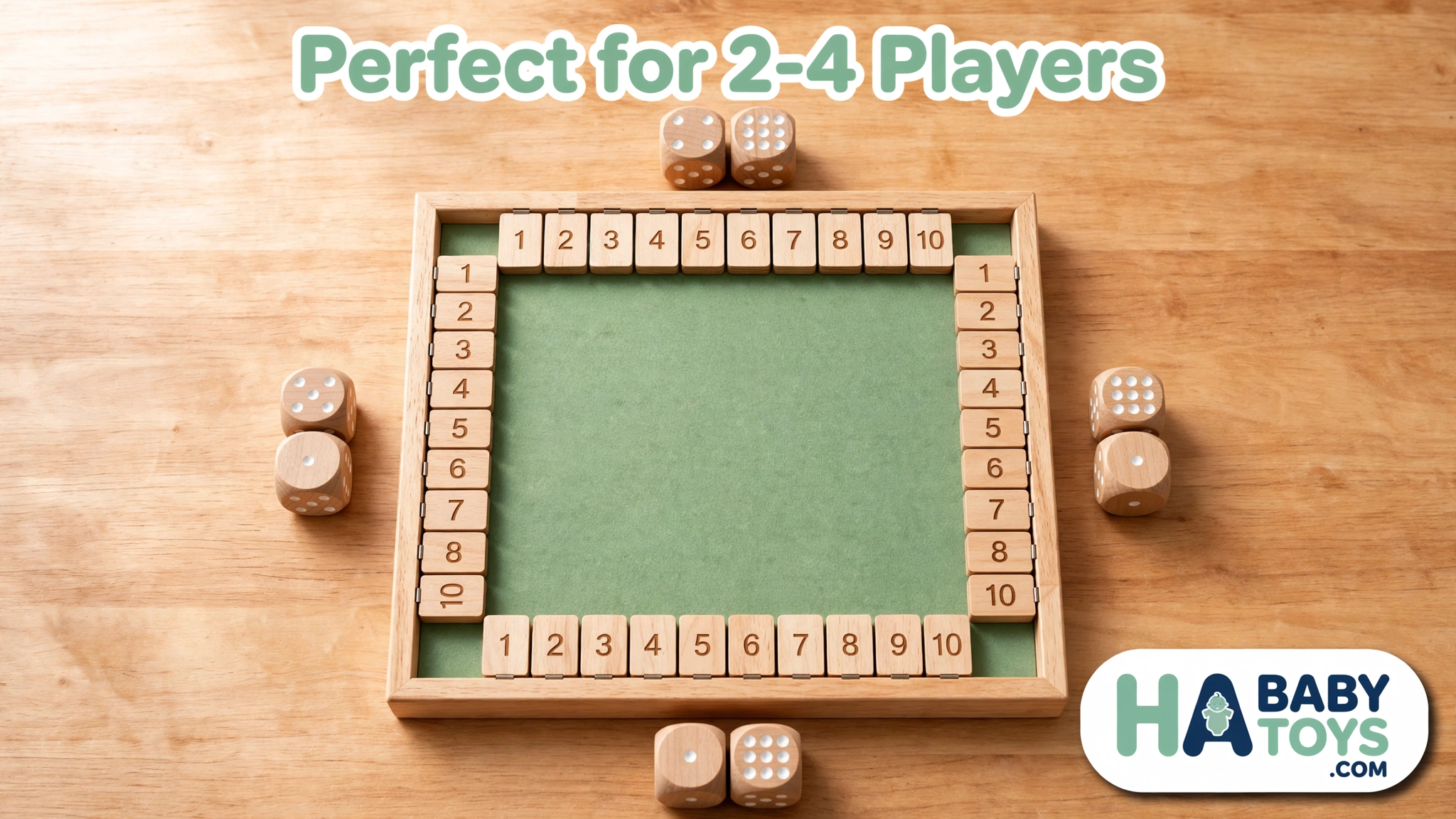
How a Four-Sided Board Works
If the board has four separate sides, each player can use their own numbered row. This allows all four players to play simultaneously. Check the product’s instructions to confirm the setup.
Why Players Enjoy the Mix of Chance and Decision-Making
The game combines luck (the dice roll) with strategy (the choice of which shutters to close). This makes it engaging for a wide range of players.
How to Set Up the 10-Number Shutter Game for Four Players
Setting up for four players is straightforward. Follow these steps.
Prepare the Board
Place the board on a stable table. Raise all the required number shutters before the round begins.
Give Each Player a Playing Area
If the board has four separate sides, seat players around it and identify their own numbered row. If it uses a shared board, explain how players will take turns.
Prepare the Dice and Scoring Sheet
Confirm whether the set provides separate dice for each side or uses shared dice. Use a scoring sheet to track results consistently. The ChildCare.gov resource on learning through play emphasizes the value of structured games.
10-Number Shutter Game Rules: How to Play Step by Step
Follow these steps to play the game.
How Four Players Play the 10-Number Shutter Game
Select a stage to see how the game works.
A Realistic Four-Player Example Round
Let’s walk through a mini game with four fictional players: Aisha, Bilal, Sara, and Hamza.
Aisha’s Turn
Aisha rolls a 3 and a 4. Total is 7. She chooses to close the 7 tile. Open tiles remain: 1, 2, 3, 4, 5, 6, 8, 9, 10.
Bilal’s Turn
Bilal rolls a 2 and a 6. Total is 8. He chooses to close 8. Open tiles remain: 1, 2, 3, 4, 5, 6, 9, 10.
Sara’s Turn
Sara rolls a 5 and a 5. Total is 10. She closes 10. Open tiles remain: 1, 2, 3, 4, 5, 6, 9.
Hamza’s Turn
Hamza rolls a 1 and a 2. Total is 3. He closes 3. Open tiles remain: 1, 2, 4, 5, 6, 9.
Play continues. The winner is determined by the agreed scoring method. The University of Cambridge NRICH Shut the Box activity is a useful educational reference for number combinations.
How Scoring Works in a 10-Number Shutter Game
Scoring should be clear and consistent. Follow these guidelines.
Count the Shutters Remaining Open
Add up the values of the tiles that remain open. This is the most common scoring method.
If the Rules Require It, Add the Values
Some versions count the number of open tiles. Others add their values. Agree on one method before play.
Compare Players Using the Same Method
Use the same scoring method for all players. This ensures fair comparison.
How Ties Are Resolved
Decide in advance how ties will be resolved. One option is to play an additional round.
Closing All Ten Shutters
If a player closes all ten shutters, this may be an instant win in some versions. Check the specific rules.
What Parents Say About HaBabyToys
“We play this with our two kids and it’s perfect. Everyone has their own side and we can all play at once.”
“The rules were easy to understand. My kids picked it up quickly. It’s a great way to practice math skills.”
“We’ve had hours of fun with this game. It’s a great alternative to screen time.”
Why Four Players Make the Game More Enjoyable
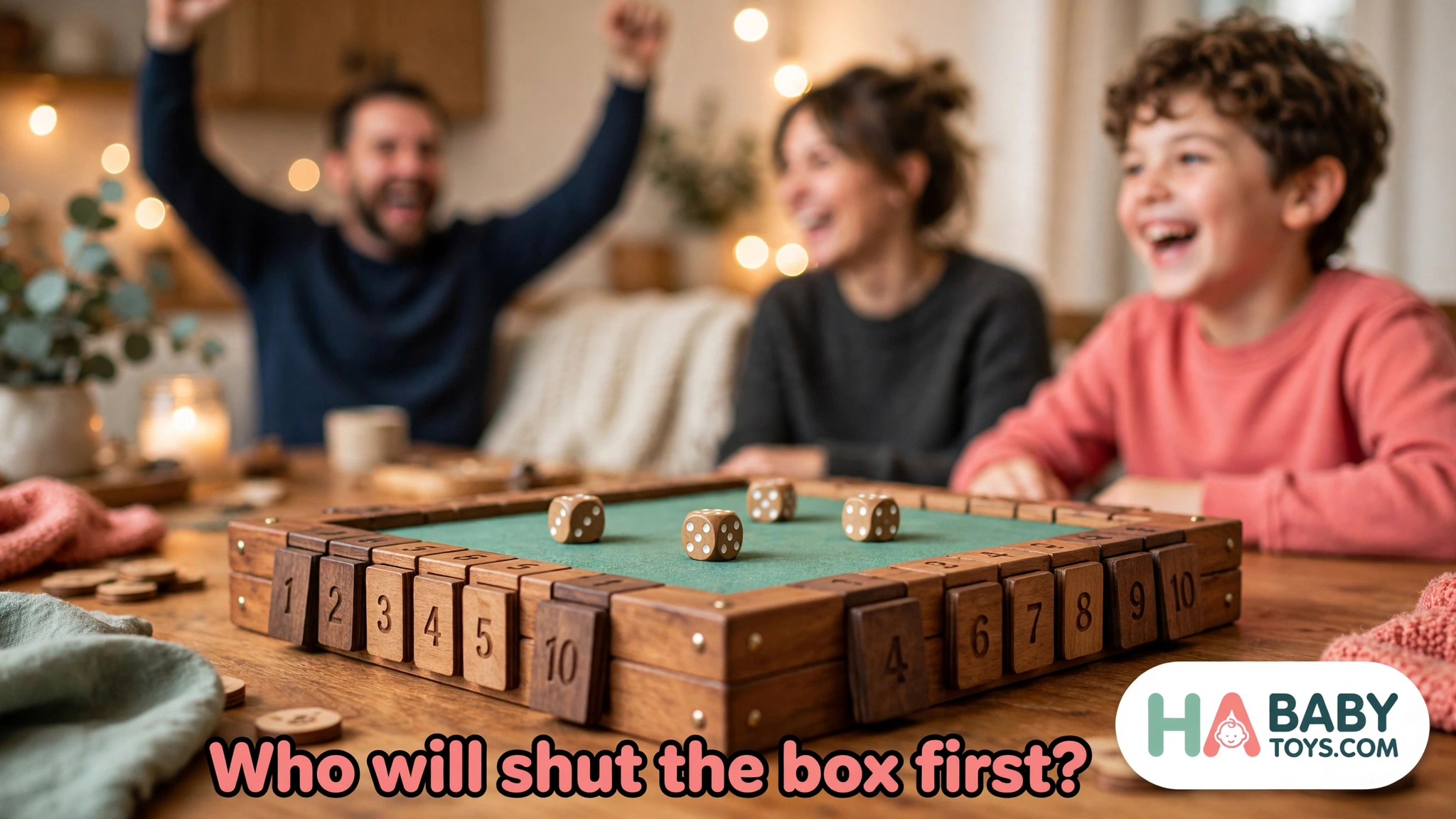
Four players turn a simple game into a social activity. Everyone has a role in the same activity. Short rounds make it easy to start again.
Everyone Has a Role in the Same Activity
Four players means more interaction and more discussion. Players can compare decisions and discuss different combinations.
Short Rounds Make It Easy to Start Again
Short rounds keep the game moving. This is especially useful for families with younger children.
Adults Can Help Younger Players
Adults can help younger players understand addition and strategy. This makes the game accessible for a wide range of ages.
A Shared Screen-Free Activity
The game offers a screen-free activity that everyone can enjoy together. The American Academy of Pediatrics emphasizes the importance of safe, age-appropriate play materials.
Fun Four-Player Challenges and House Rules
These variations are optional house rules. They are not official product rules.
Best-of-Three Tournament
Each player completes three rounds. The winner is decided using the same scoring rule throughout.
Family Team Challenge
Pair an adult and child for friendly collaboration. This encourages teamwork and learning.
Explain-Your-Move Round
Players briefly explain why they chose a number combination. Keep it fun rather than turning every turn into a lesson.
Friendly Leaderboard
Use a paper score sheet to track results over several rounds. This adds a sense of progress and achievement. For more group play ideas, see our family dice game party fun and group challenges guide.
Beginner Strategies for the 10-Number Shutter Game
While dice rolls are based on chance, strategic choices can improve your outcomes.
Common Mistakes When Four People Play
Avoid these mistakes to ensure a smooth game.
What to Check Before Buying a Four-Player Shutter Game
Before buying, check these features.
| Feature | What to Check |
|---|---|
| Playing sides | Does the board have four separate playing sides? |
| Shutters per side | Are ten shutters available on each side? |
| Dice | How many dice are included? |
| Board size | Is the board large enough for comfortable group play? |
| Materials and finish | Are the materials and finish clearly described? |
| Instructions | Is there an instruction sheet? |
| Age guidance and warnings | What age guidance and small-part warnings apply? |
| Delivery and returns | What are the delivery and return conditions? |
The HA’BABY wooden dice board game set is a well-designed option. Check the product page for current details. For the full rules guide, see our complete wooden dice board game rules.
Bring Everyone Together for Game Night
A quick rules explanation and a consistent scoring method make it easier for everyone to join in. Explore the HA’BABY wooden dice board game set to see if it suits your group.
View the Wooden Dice Board Game Browse All GamesFrequently Asked Questions
Set up the board with ten shutters per player. Players take turns or play simultaneously, depending on the board format. Roll the dice, close matching shutters, and score based on the remaining open tiles.
This depends on the board. If each player has a separate numbered row and dice, all four can play simultaneously. If the board is shared, players take turns.
The turn ends. The player’s score is calculated based on the remaining open tiles.
Some versions count the sum of the remaining open tiles. Others count the number of open tiles. Agree on one method before play.
Yes, with supervision. Check the manufacturer’s age guidance and keep small pieces away from children who may choke on them.
Check legal combinations, pay attention to the remaining numbers, and remember that dice outcomes cannot be controlled.
Yes. A short rules introduction, consistent scoring, and optional team challenges can help a group get started.
Conclusion: Fun for Four, Fun for All
The 10-number shutter game is a simple, screen-free activity that four people can enjoy together. By understanding the setup, rules, scoring, and variations, you can create a fun and engaging game night for everyone. For more family game ideas, explore the HaBabyToys blog and browse our full collection.
One Response