
You bought a wooden dice board game, opened the box, and realised the rules are not obvious. Or you are thinking about buying one but want to understand how it works first. A wooden dice board game is easy to learn when you understand the setup, dice combinations, turns, and scoring. In a number-shutter version, players roll the dice and close numbered tiles that match the total. The goal is usually to finish with the lowest score or close every tile. This guide provides a step-by-step tutorial, worked examples, scoring rules, beginner strategies, variations for family game night, and a buyer’s checklist. For a broader selection of family games, explore our HaBabyToys collection.
Table of Contents
- What Is It and How Does It Work?
- What You Need Before Starting
- Rules Explained Step by Step
- Example Round
- Scoring: How Do You Win?
- Strategy: Tips for Beginners
- How to Play With 2, 3, or 4 Players
- Fun Variations for Family Game Night
- Common Mistakes to Avoid
- Is a Wooden Dice Board Game Worth Buying?
- Frequently Asked Questions
A wooden dice board game is easy to learn when you understand the setup, dice combinations, turns, and scoring. In a number-shutter version, players roll the dice and close numbered tiles that match the total. The goal is usually to finish with the lowest score or close every tile.
Wooden Dice Board Game: What Is It and How Does It Work?
A wooden dice board game is a tabletop game that typically features a wooden board with numbered tiles or shutters and a set of dice. Players roll the dice and close numbered tiles that match the total rolled. The game is simple to learn but offers opportunities for strategy and decision-making.
The game is often called a “number-shutter” game because players shut the numbered tiles as they play. It differs from a conventional board game because it does not require a track or tokens. The focus is on numbers, combinations, and scoring.
What the Board, Numbered Shutters, and Dice Do
The board holds the numbered shutters. The dice generate the numbers. The shutters track which numbers remain available.
What Players Are Trying to Achieve
Players aim to close as many tiles as possible. The goal is usually to finish with the lowest score (the sum of the remaining open tiles) or to close every tile.
Who Might Enjoy It
Families, friends, casual players, and game-night hosts may enjoy it. It is a simple, screen-free activity. The University of Cambridge NRICH Shut the Box activity is an educational reference for a related version.
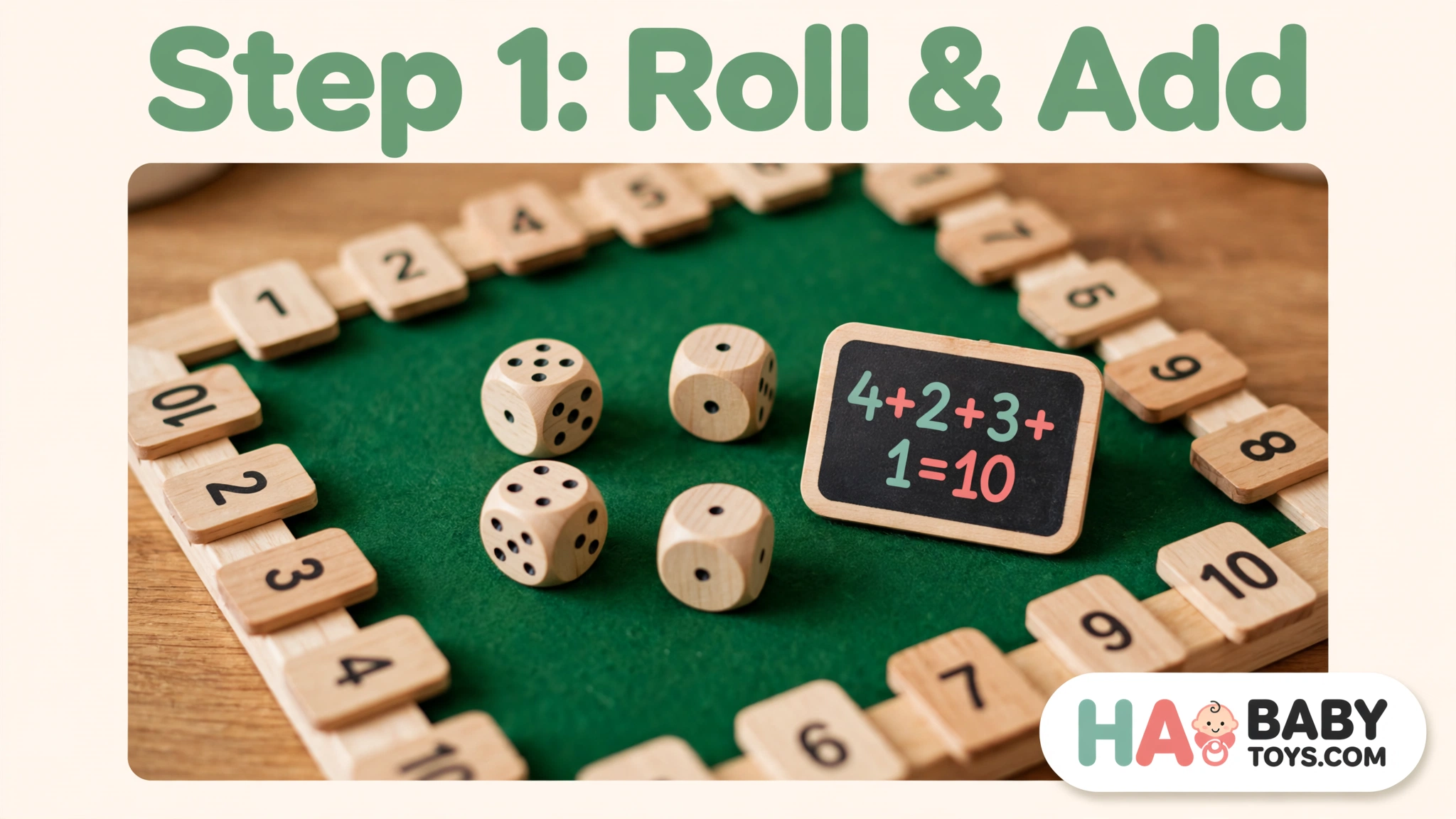
What You Need Before Starting the Game
Before the first roll, ensure you have all the necessary equipment and have agreed on the rules.
The Wooden Board and Numbered Tiles
Check that all numbered tiles are present and move freely. The tiles should be in their starting positions.
The Dice
Check the number of dice included with the product. Most versions use two dice, but this can vary. The Museum of Dufferin game rules reference provides additional context on scoring variations.
Positioning the Board
Position the board so all players can see and reach it comfortably.
Deciding Who Goes First
Decide who goes first. Some families roll the dice to determine the order. Others go clockwise.
Agreeing on Scoring
Agree on the scoring rule before the first roll. This avoids confusion later. The ChildCare.gov resource on learning through play emphasizes the value of structured games.
Wooden Dice Board Game Rules Explained Step by Step
Follow these steps to play the game.
Wooden Dice Board Game Example Round
Let’s walk through an example round to make the rules practical.
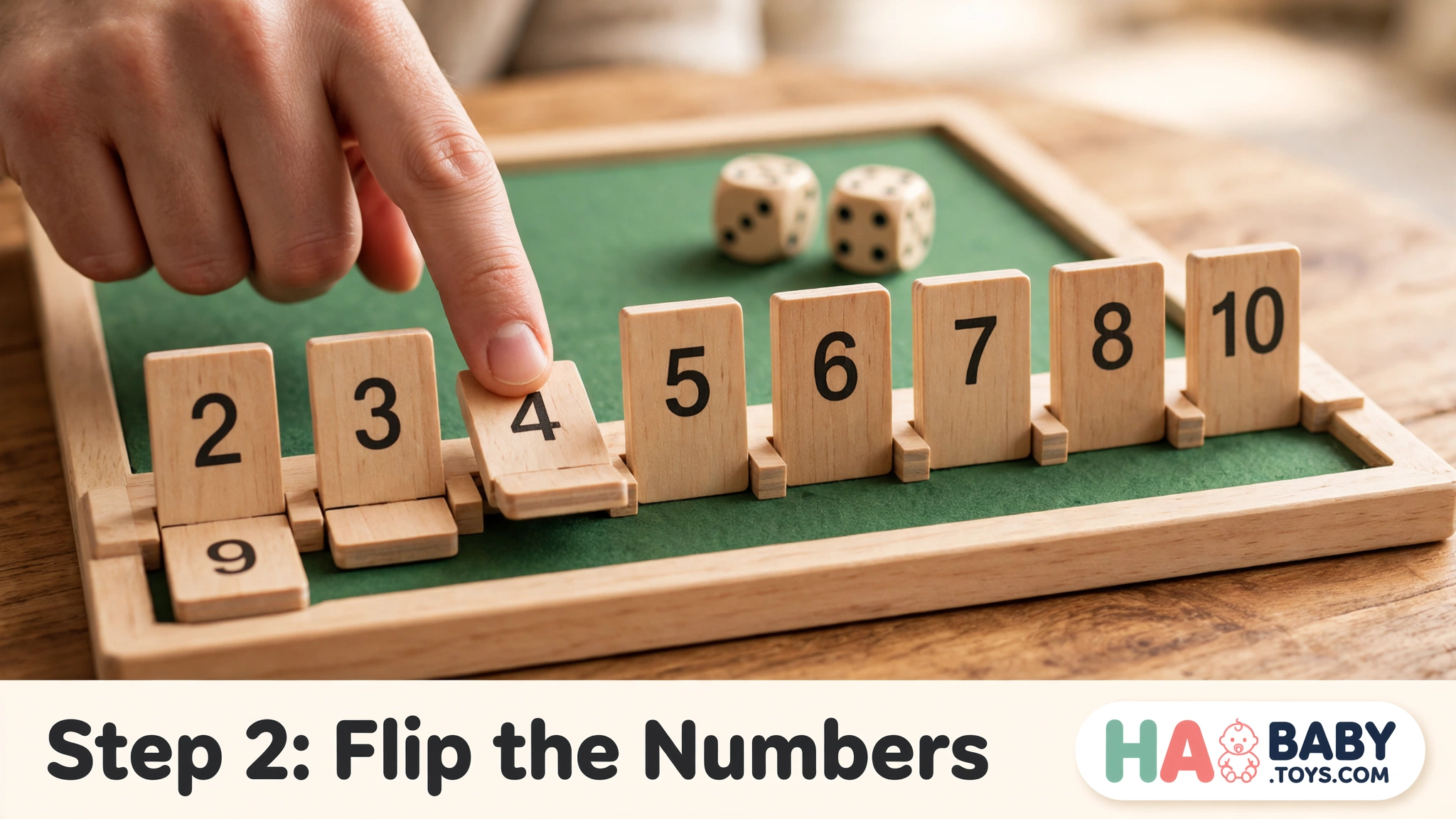
Example: A Roll of 3 and 4
You roll the dice and get 3 and 4. The total is 7. You could close the 7 tile. If the 3 and 4 tiles are open, you could close them together instead. Your choice depends on the remaining numbers and your strategy.
Example: A Total of 9
You roll a total of 9. You might close the 9 tile, or a combination such as 4 and 5, or 2, 3, and 4, depending on what is available.
Example: No Legal Combination
If no combination of open tiles matches your total, your turn ends. You calculate your score based on the remaining open tiles.
How to Play a Wooden Dice Board Game in 5 Steps
Select a step to see how the game works.
Wooden Dice Board Game Scoring: How Do You Win?
Scoring should be clear and consistent. Follow these guidelines.
How to Count the Numbers Left Open
Add up the values of the tiles that remain open. This is the most common scoring method.
The Difference Between Counting Open Tiles and Adding Their Values
Some versions count the number of open tiles. Others add their values. These are not interchangeable. Agree on one method before play.
Instant Win
Some versions award an instant win if a player closes every tile. Check the specific rules.
Comparing Results Fairly
Compare scores using the same method. The Harvard Center on the Developing Child highlights the value of interactive play for attention and self-control.
What Parents Say About HaBabyToys
“We play this every weekend. It’s simple to learn and fun for all ages. The wooden board is high quality.”
“The rules were easy to understand. My kids picked it up quickly. It’s a great way to practice math skills.”
“We’ve had hours of fun with this game. It’s a great alternative to screen time.”
Wooden Dice Board Game Strategy: Tips for Beginners
While dice rolls are based on chance, strategic choices can improve your outcomes.
How to Play the Game with 2, 3, or 4 Players
The game can be played with multiple players. The rules for turn-taking and resetting the board may vary.
Turn-Taking
Players take turns rolling the dice and closing tiles. If the product has four numbered sides, each player may use their own side. If it uses a shared board, players reset the board between turns.
Resetting the Board
Reset the board between players or rounds, depending on the rules you have chosen.
Keeping Scores Consistent
Use the same scoring method for all players. For group play ideas, see our 10-number shutter game for four players.
Fun Wooden Dice Board Game Variations for Family Game Night
These variations are optional house rules. They are not official product rules.
For more group play ideas, see our family dice game party fun and group challenges guide.
Common Wooden Dice Board Game Mistakes to Avoid
Avoid these common mistakes to ensure a smooth game.
Is a Wooden Dice Board Game Worth Buying?
A wooden dice board game can be a worthwhile purchase for families who enjoy shared, screen-free entertainment. It is simple to learn and offers opportunities for strategy and interaction.
What to Check Before Ordering
Check player capacity, board layout, included dice, age suitability, finish and construction, storage, price, and return terms. The NAEYC toy guidance supports matching play materials to age and abilities.
Explore the HA’BABY Wooden Dice Board Game Set
The HA’BABY wooden dice board game set is a well-designed option. Check the product page for current details. For the full rules guide, see our step-by-step wooden dice board game rules.
Ready for Your Next Game Night?
If you are looking for a simple tabletop activity that brings people together, a wooden dice board game is a great choice. Explore the HA’BABY wooden dice board game set to see if it suits your household.
View the Wooden Dice Board Game Browse All GamesFrequently Asked Questions
The basic rules involve setting up the numbered tiles, rolling the dice, closing tiles that match the total, and scoring based on the remaining open tiles. Check the specific product instructions for details.
Roll the dice, calculate the total, and close the tile or combination of tiles that matches. Continue rolling until no legal combination is available.
Yes, the game can be played with two players. Players take turns. The board is reset between turns or rounds, depending on the rules you choose.
Most versions use two dice, but this can vary. Check the product listing for the exact number of dice included.
Some versions count the sum of the remaining open tiles. Others count the number of open tiles. Agree on one scoring method before play.
Check the remaining legal combinations, understand the scoring system, and remember that luck still affects the result. Treat each roll as a new decision.
Check the specific product’s age guidance and warnings. Small dice and tiles can be choking hazards for younger children and should be stored safely. Always supervise play.
Conclusion: Simple Rules, Endless Fun
A wooden dice board game is a simple, screen-free activity that can bring the whole family together. By understanding the rules, practicing the strategy, and trying a few variations, you can enjoy hours of entertainment. For more family game ideas, explore the HaBabyToys blog and browse our full collection.