
Flying Orb Toy: LED Lights & Spinning Fun
Does a flying orb toy really fly, or does it simply spin? How do its LED lights work? Can children control it with their hands? Discover the answers to your questions and learn how to choose the right flying orb toy.
Expertly reviewed by the HA’BABY Child Development Team. We combine practical product guidance with a focus on safe, interactive play.
Table of Contents
- 1. Quick Answer: What Is a Flying Orb Toy?
- 2. What Is a Flying Orb Toy and How Is It Different from a Regular Ball?
- 3. How Does a Flying Orb Toy Work?
- 4. LED Lights and Spinning Motion: What Makes the Experience Fun?
- 5. Flying Orb Toy Features: What Should Buyers Look For?
- 6. How to Use a Flying Orb Toy: Step-by-Step Beginner Guide
- 7. Beginner-Friendly Flying Orb Tricks and Play Ideas
- 8. Flying Orb Toy for Indoor vs Outdoor Play
- 9. Safety and Charging: What Parents Should Know
- 10. Flying Orb Toy vs Other Popular Flying Toys
- 11. Common Flying Orb Problems and How to Troubleshoot Them
- 12. Common Mistakes to Avoid When Using a Flying Orb
- 13. Who Should Consider Buying a Flying Orb Toy?
- 14. How to Choose the Best Flying Orb Toy: A Practical Buyer Guide
- 15. HA’BABY Flying Orb Ball: A Product Worth Exploring
- 16. Is a Flying Orb Toy a Good Gift? Occasions and Buying Ideas
- 17. Frequently Asked Questions About Flying Orb Toys
- 18. Final CTA — Bring a Different Kind of Playtime Home
A flying orb toy is a battery-powered spinning toy designed to move through the air using an internal motor and propeller system. Many models feature colourful LED lights that create a glowing effect during play. Depending on the design, users may launch, toss, guide, or perform simple tricks with the orb.
What Is a Flying Orb Toy and How Is It Different from a Regular Ball?
A flying orb toy is a compact, powered toy designed to create a visual flying effect. Unlike a regular ball that moves when thrown or kicked, a flying orb contains a powered mechanism that creates movement through spinning airflow. Many models also feature LED lights that make the toy easier to see and more visually exciting.
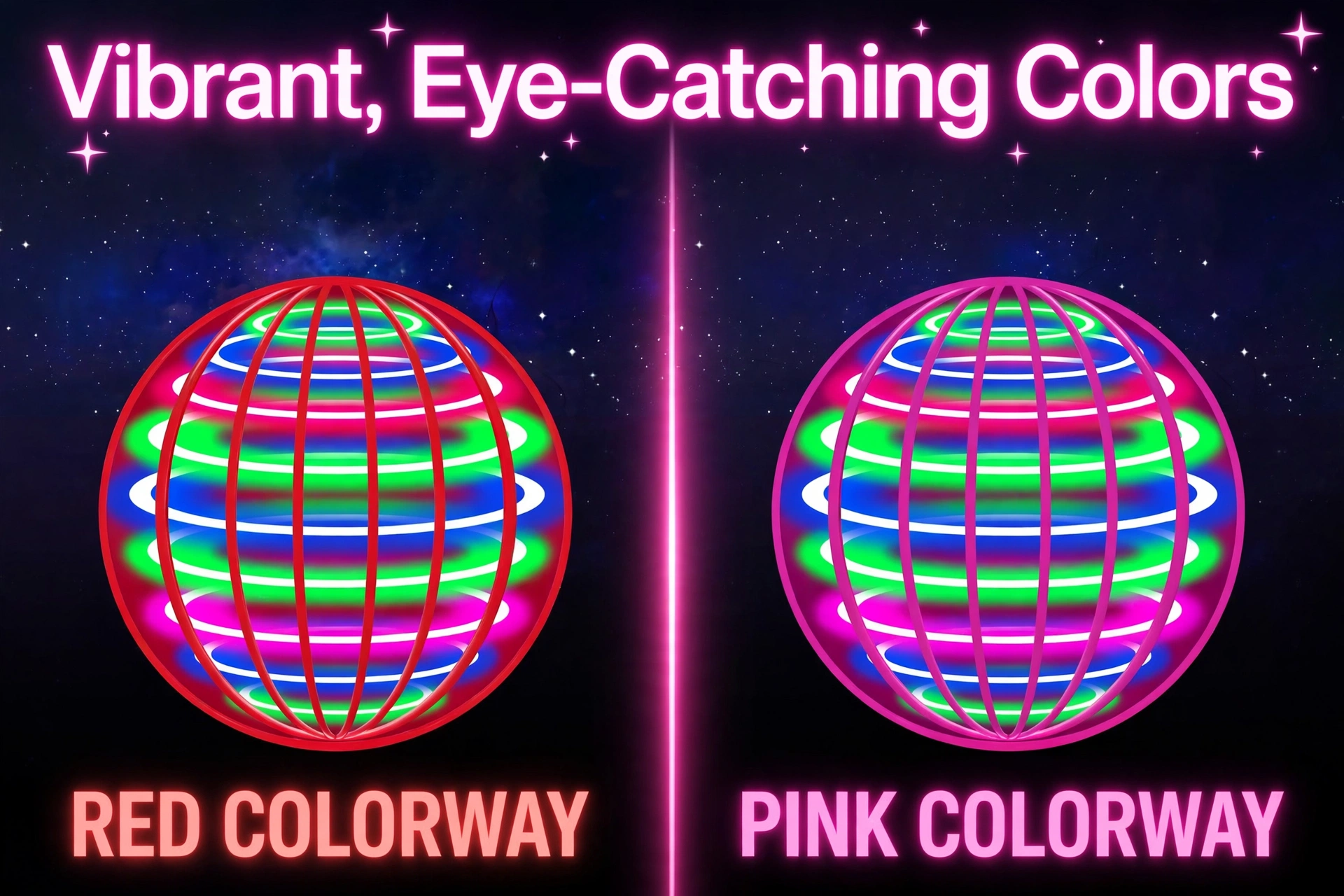
What makes it different? A regular ball moves when someone throws, kicks, or rolls it. A flying orb contains a powered mechanism that creates movement through spinning airflow. Depending on the model, it may include a motor-powered movement system, a spinning propeller or rotor, a protective outer shell, a rechargeable battery, LED lighting, and different flight patterns.
| Feature | Ordinary Ball | Flying Orb Toy |
|---|---|---|
| Movement | Manual throw or kick | Powered spinning mechanism |
| Light effects | Usually none | LED lights on many models |
| Play style | Rolling, throwing, catching | Launching and flight-based play |
| Learning experience | Familiar and simple | Requires learning the model’s controls |
| Charging | Not required | Required for rechargeable models |
The combination of movement, light, and the challenge of learning to control a new toy is what attracts attention. For a deeper look at how to play, you can read about the UFO flying ball and how to play with the magic toy.
How Does a Flying Orb Toy Work?
This is one of the most educational sections. Let’s break down the working principle without making it overly technical.
Step 1: Power Source
A rechargeable battery supplies power to the internal motor. Battery capacity and operating time vary by product.
Step 2: Motor and Spinning Mechanism
The motor drives a spinning mechanism that moves air and produces the force needed for flight.
Step 3: Direction and Movement
Launch angle, speed, and orientation can affect the flight pattern on models designed for directional or boomerang-style movement.
Step 4: LED Lighting
The LEDs provide a visual effect. They do not create the flying force; the motor and spinning mechanism do that.
Step 5: Landing or Stopping
Users should follow the model’s instructions for stopping the toy, rather than trying to grab a moving rotor.
For a broader look at the technology and play experience, you can read about the flying orb toy with LED lights. The CPSC toy safety guidance explains toy safety standards and certification requirements for children’s toys.
LED Lights and Spinning Motion: What Makes the Experience Fun?
The two most recognisable features are the LED lights and the spinning motion.
Colourful LED Effects
Illuminated movement can make the toy more noticeable and visually appealing, especially in dimmer environments.
Spinning Motion
The spinning mechanism gives the orb its unusual movement compared with a regular ball.
Visual Play Experience
Children and families can enjoy watching the orb move, learning to launch it, and practising simple tricks.
Do not claim the lights are brighter, safer, or more powerful than competing products unless you have test evidence. Use the toy in a normally lit, clear play area rather than making darkness a safety feature.
Flying Orb Toy Features: What Should Buyers Look For?
Explain the features buyers should inspect before purchasing.
| Feature | Why it matters | What to verify |
|---|---|---|
| LED lights | Adds visual appeal | Colour and lighting behaviour |
| Spinning mechanism | Creates powered movement | Product design and operation |
| Outer shell | Helps separate users from moving parts | Construction and damage resistance |
| Battery | Powers the toy | Capacity and battery type |
| Charging | Determines how it is recharged | Cable and charging instructions |
| Controls | Affects ease of use | Power button and launch method |
| Size | Affects handling and storage | Actual dimensions |
| Age guidance | Helps determine suitability | Manufacturer’s recommended age |
A long feature list is not enough. A buyer should also understand how the toy is operated and maintained.
How to Use a Flying Orb Toy: Step-by-Step Beginner Guide
Make this section practical and easy to follow.
- Read the instructions: Check the exact model’s power, charging, launch, and stopping instructions.
- Charge the toy: Use only the charging method and power source recommended by the manufacturer. Do not assume every flying orb uses the same cable or charging time.
- Inspect before switching on: Check the outer shell for cracks, loose sections, or exposed moving parts. Do not use a damaged orb.
- Choose a clear play area: Move away fragile objects, glass, ceiling fans, pets, and people who are not participating.
- Switch on the toy: Follow the model’s actual power-on instructions. Some flying orb designs use a button followed by a shake or movement to activate the motor, but do not assume this applies to every model.
- Practise the basic launch: Follow the manufacturer’s recommended launch position and movement. Start with simple, controlled attempts rather than forceful throws.
- Learn to stop it: Use the specified stop or power-off method. Keep fingers away from moving components.
- Switch off and store: Turn the toy off after play and store it in a clean, dry place.
Beginner-Friendly Flying Orb Tricks and Play Ideas
Give readers reasons to use the toy beyond switching it on and watching it spin.
- First Flight Practice: Learn the basic launch and observe the flight path.
- Gentle Direction Practice: Practise controlled movement according to the product instructions.
- Target Zone Game: Aim toward a large, clear, safe play zone rather than fragile objects.
- Partner Passing: Take turns passing the orb only if the model’s instructions permit this and participants can maintain a safe distance.
- LED Observation: Watch how the lights appear during movement.
- Trick Practice: Gradually practise manufacturer-approved tricks.
- Family Challenge: Give each participant a turn to perform a simple controlled launch.
Do not encourage throwing the orb directly at faces, chasing it near roads, or catching it while the mechanism is still spinning.
Flying Orb Toy for Indoor vs Outdoor Play
Help buyers understand where the toy can realistically be used.
| Consideration | Indoor Play | Outdoor Play |
|---|---|---|
| Space | Clear room with enough overhead space | Open area away from roads and people |
| Obstacles | Fans, lamps, glass, furniture | Trees, wires, buildings, water |
| Weather | Not affected by wind | Wind may affect flight |
| Visibility | LED lights are visible, but keep room lighting adequate | Daylight may reduce the visual impact |
| Supervision | Adult supervision as appropriate | Adult supervision as appropriate |
A spacious indoor area may be the easiest place for beginners to practise if the product instructions allow indoor use. For outdoor use, avoid windy, wet, or crowded areas. For more ideas, you can read about LED flying ball indoor fun ideas.
Safety and Charging: What Parents Should Know
This section should be practical, clear, and responsible.
- Follow the manufacturer’s age recommendation.
- Supervise children according to their age and ability.
- Keep fingers, hair, and loose clothing away from moving parts.
- Do not use the toy if the outer shell is cracked or damaged.
- Never touch or attempt to stop a moving rotor by hand.
- Keep the toy away from water.
- Do not disassemble the battery or motor.
- Charge under adult supervision where required by the instructions.
- Use only the specified charging cable and compatible power source.
- Stop charging if the toy becomes unusually hot, swollen, or damaged.
- Disconnect it when charging is complete, following the manufacturer’s instructions.
Use these references naturally: the CPSC Toy Safety FAQ for toy standards and certification, the CPSC Battery-Operated Toy Requirements for battery-operated toy considerations, Health Canada Toy Safety Tips for age labels, construction, batteries, and online buying, and GOV.UK Toys Safety Regulations for toy warnings and safety information.
A particularly useful real-world lesson comes from a UK product safety report involving a specific flying-ball model that presented choking and injury risks. Make clear that this report concerns that identified product, not every flying orb. It demonstrates why buyers should check battery access, product construction, and safety information before purchasing. Read the product safety report.
Flying Orb Toy vs Other Popular Flying Toys
Help readers understand what they are buying instead of treating every flying toy as the same product.
| Toy type | Main play experience | Main difference |
|---|---|---|
| Flying orb | Spinning, powered flight | Ball-shaped design with internal powered movement |
| Remote-control helicopter | Controlled flight | Usually uses a dedicated controller |
| Mini drone | Aerial movement and steering | Often uses multiple rotors and a controller |
| Boomerang | Throw-and-return movement | Usually relies on throwing force and shape |
| Ordinary ball | Throwing and catching | No powered flight mechanism |
A flying orb is appealing to buyers who want a different kind of interactive toy without necessarily buying a conventional remote-control aircraft. Do not promise that it is easier to control than every drone or helicopter. Ease of use depends on the model and the person learning it.
Common Flying Orb Problems and How to Troubleshoot Them
Target people who have purchased the toy or are worried about potential problems.
| Problem | Possible reason | What to try |
|---|---|---|
| Orb does not turn on | Battery is depleted or power sequence is incorrect | Recharge and follow the manual |
| Lights do not appear | Battery, LED, or connection issue | Check charging and manufacturer instructions |
| Orb does not fly as expected | Incorrect launch position or unsuitable space | Review the model’s launch instructions |
| Toy stops quickly | Low charge or possible malfunction | Recharge as directed and inspect for damage |
| Unusual noise | Loose or damaged internal component | Stop using it and contact the seller |
| Charging does not work | Cable, power source, or charging-port issue | Check the specified charging setup |
| Orb becomes unusually hot | Possible battery or electrical issue | Stop use and do not continue charging |
Troubleshooting should never involve opening the toy, touching the internal mechanism, or attempting to repair the battery. If the product is damaged, overheats, smells unusual, or shows battery swelling, stop using it and contact the seller or manufacturer.
Common Mistakes to Avoid When Using a Flying Orb
Discuss the mistakes that can frustrate beginners or damage the toy.
- Launching without reading the instructions: Different models can have different launch methods.
- Using too much force: Begin with the recommended gentle technique.
- Practising in a crowded room: Choose a clear play area.
- Flying near ceiling fans: Moving blades can damage the toy.
- Grabbing the spinning mechanism: Wait until the toy has stopped.
- Charging with an unsuitable adapter: Follow the manufacturer’s specified charging requirements.
- Leaving it charging unattended: Follow the supplied charging precautions.
- Ignoring cracks or damage: Do not continue using a damaged protective shell.
- Assuming it is waterproof: Keep it away from water unless the manufacturer explicitly confirms water resistance.
- Expecting every trick to work immediately: Learn the basic launch before trying advanced movements.
A little preparation can make the first play session easier and more enjoyable.
Who Should Consider Buying a Flying Orb Toy?
Explain the types of buyers who may enjoy this product.
Children Who Enjoy Active Toys
Children who like movement-based games may enjoy learning how to launch and guide a flying orb, provided they meet the manufacturer’s age recommendation.
Parents Looking for an Interactive Gift
It can be an interesting alternative to a conventional ball or static toy.
Families Who Enjoy Group Activities
Some models may support turn-taking or partner play, provided the instructions and play space allow it.
Buyers Looking for a Novelty Gift
The combination of spinning movement and LED effects can make the toy visually distinctive.
It may not be suitable for very young children, children who cannot follow the safety instructions, or users who cannot safely keep their hands away from moving parts. The exact age guidance must come from the manufacturer.
How to Choose the Best Flying Orb Toy: A Practical Buyer Guide
This is a key commercial section. Help readers make a decision without relying on exaggerated sales language.
- Is the recommended age clearly stated?
- Are the operating instructions available?
- Does the product have an intact protective outer structure?
- Are the battery and charging details provided?
- Is the charging cable included?
- Are the LED features explained accurately?
- Are dimensions and product images available?
- Is the seller identifiable and contactable?
- Are returns, warranty, and support policies clear?
- Are product claims supported by actual specifications?
Buyers should be cautious when listings use impressive claims but provide no details about battery, charging, age suitability, or operation. Health Canada’s toy-buying advice recommends checking age labels, warnings, construction, battery safety, and product information when shopping online.
HA’BABY Flying Orb Ball: A Product Worth Exploring
If you are looking for a flying orb toy, the HA’BABY Flying Orb Ball is an option to consider. It combines movement with visual lighting effects for an engaging play experience.
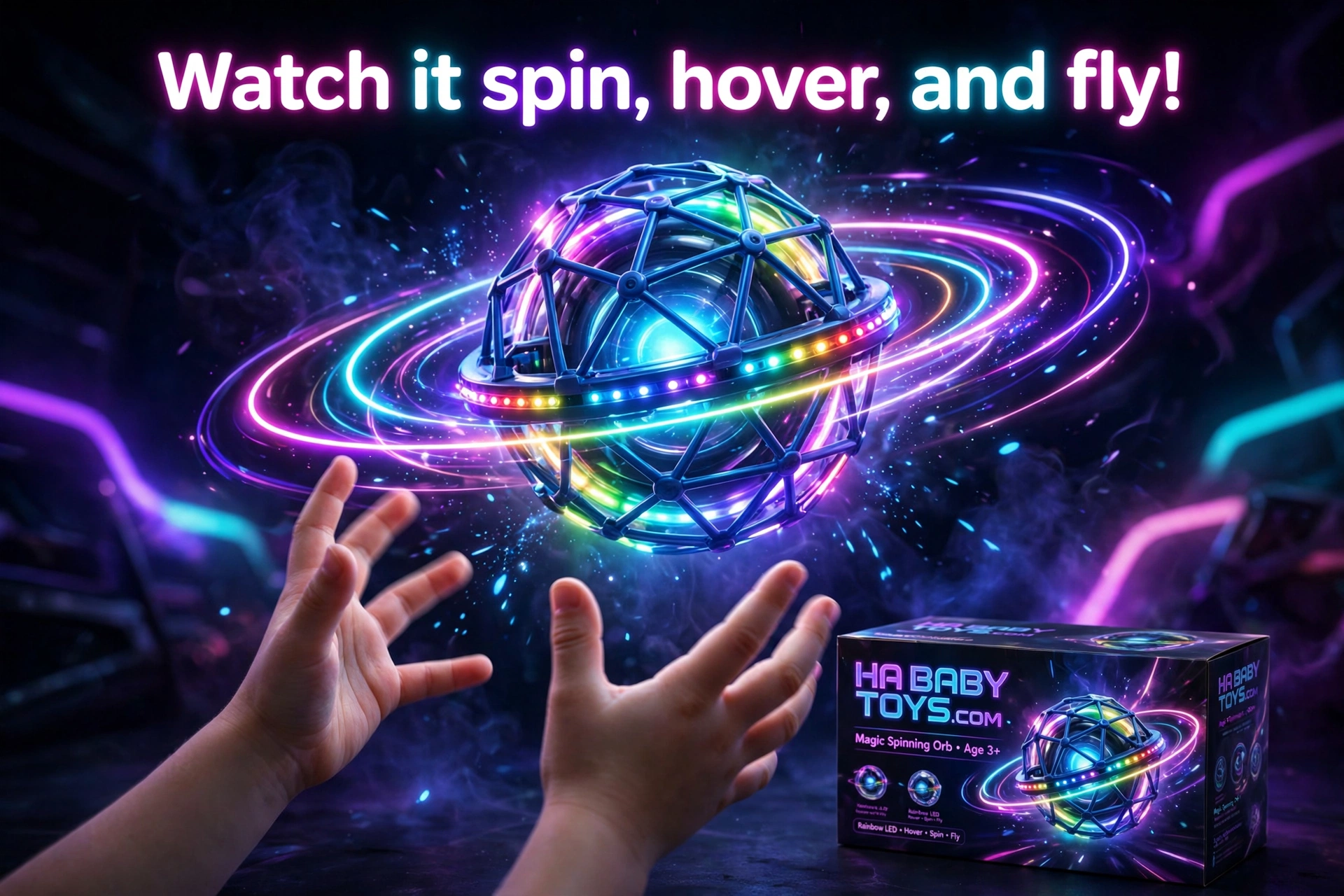
What should customers check? Review the verified product details, including actual product dimensions, LED lighting details, battery type and capacity, charging method, included accessories, operating instructions, recommended age, material and construction, and available warranty or return information.
How can families use it? A realistic first play session involves inspecting the toy, charging it according to instructions, choosing a clear play area, learning the basic launch, and gradually practising approved movements.
Note: Always verify the actual product features and safety details on the live listing before purchasing. Do not rely on generic videos or assume features that are not confirmed.
Explore the HA’BABY Flying Orb BallIs a Flying Orb Toy a Good Gift? Occasions and Buying Ideas
Target gift buyers who want a quick, confident decision.
- Birthday gifts.
- Children’s reward gifts.
- Holiday gifts.
- Family game nights.
- Surprise gifts for children who enjoy interactive toys.
The combination of movement and LED lighting may make the toy feel different from a traditional ball.
| Gift consideration | What to check |
|---|---|
| Child’s age | Manufacturer’s age recommendation |
| Interests | Enjoys movement-based or interactive toys |
| Play environment | Enough clear space |
| Gift presentation | Packaging and included accessories |
| Practicality | Charging and storage requirements |
Do not claim that the toy is suitable for all ages.
How a Flying Orb Works
Outer Shell
Protects the internal components and separates users from moving parts.
Motor
Powers the spinning mechanism that creates movement.
Rotor/Propeller
Moves air to produce the force needed for flight.
Battery
Supplies power to the motor and LED lights.
LED Lights
Create a visual effect during movement.
Charging Port
Used to recharge the battery using the specified cable.
Frequently Asked Questions About Flying Orb Toys
What is a flying orb toy?
A flying orb toy is a powered toy that uses an internal motor and spinning mechanism to create movement through the air. Many models also include LED lights for a colourful visual effect. Its exact operation depends on the manufacturer’s design and instructions.
How does a flying orb toy fly?
The internal motor powers a spinning mechanism that moves air and produces thrust. The resulting movement depends on the design, launch position, and operating technique. LED lights add visual appeal but do not generate the flying force.
How do you control a flying orb toy?
Control methods vary by model. Some are operated through a specific hand-launch technique, while others may use additional controls. Read the instructions for the exact product before attempting tricks.
Does a flying orb toy return like a boomerang?
Some models are designed to perform a boomerang-style return when launched at the correct angle. However, the return is not guaranteed on every attempt. The result depends on the model, launch technique, and surrounding space.
Can a flying orb toy be used indoors?
Some models are designed for indoor play. Use a clear area away from ceiling fans, glass, lamps, pets, and people. Always check the manufacturer’s instructions to confirm whether indoor use is permitted.
Are flying orb toys safe for children?
They should be used according to their stated age recommendation and safety instructions. Children should keep their hands and hair away from moving components, and adults should supervise where appropriate. Do not use a damaged toy.
How long does a flying orb toy take to charge?
Charging time depends on the battery and product design. Check the manufacturer’s specifications rather than relying on a generic charging estimate.
How long can a flying orb toy fly?
Flight time varies with battery capacity, usage, and model design. Check the product listing or manual for the actual operating-time specification.
Why is my flying orb toy not working?
The battery may be depleted, the power-on sequence may be incorrect, or the toy may have a damaged component. Follow the troubleshooting instructions. Stop using it if you notice unusual heat, noise, or physical damage.
Are flying orb toys rechargeable?
Many models use rechargeable batteries, but the charging method differs. Confirm whether the specific product includes a charging cable and follow its instructions.
Can you play with a flying orb toy at night?
LED lights may make the toy visually noticeable in dimmer conditions. However, beginners should practise in a clear, adequately lit area where they can see obstacles and other people.
What should I check before buying a flying orb toy?
Check its recommended age, construction, battery details, charging instructions, operating method, included accessories, seller information, and return policy. These details are more useful than relying only on promotional videos. You can also visit the HA’BABY product and shopping FAQs page for more information.
Final CTA — Bring a Different Kind of Playtime Home
A flying orb toy offers a different experience from a traditional ball: powered movement, spinning action, and LED lighting create a playful challenge for users who enjoy learning new tricks.
Choosing the right product means checking its actual features, age guidance, charging instructions, and safety information. Ready to explore further? Explore HA’BABY’s toy collection to compare options, or contact HA’BABY for product enquiries if you have specific questions. For more toy guides and ideas, visit the HA’BABY blog.
View the HA’BABY Flying Orb Ball