
Description
HA’BABY Toy Guitar for Kids – White Peach Kids Ukulele for Musical Play
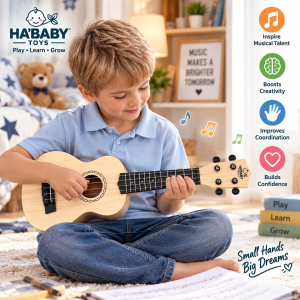
Music can turn ordinary playtime into an opportunity for children to explore sounds, rhythms, movement, and imagination. The HA’BABY Toy Guitar for Kids is a compact white peach kids ukulele created for hands-on musical play and simple sound exploration.
Instead of simply listening to prerecorded music, children can interact directly with the strings. They can strum, listen to the resulting sound, change their rhythm, sing along, and create their own pretend performances.
This simple process creates an engaging play cycle:
STRUM → LISTEN → REPEAT → EXPERIMENT → CREATE
The National Association for the Education of Young Children (NAEYC) explains that children can explore music by experimenting with sounds, rhythms, patterns, and musical vocabulary.
Parents looking for more hands-on toys can also explore the HA’BABY Toys Shop.
A Toy Guitar for Kids Who Love Music
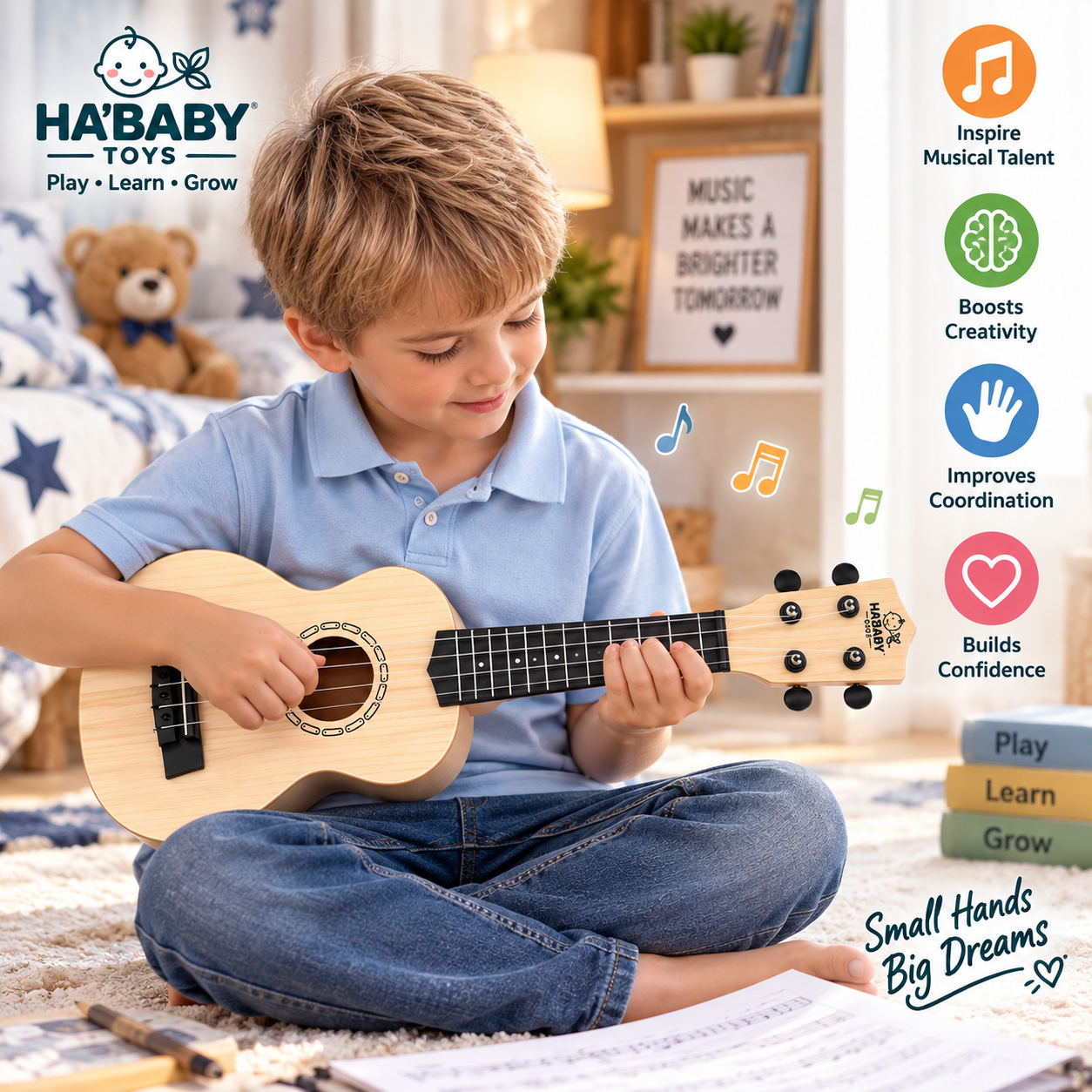
The HA’BABY Toy Guitar for Kids gives children a physical instrument they can interact with during music and imaginative play.
Children can experiment with activities such as:
- Strumming the strings
- Listening to different sounds
- Repeating simple rhythms
- Playing fast and slow
- Singing while strumming
- Copying an adult’s rhythm
- Inventing their own songs
- Pretending to perform on stage
These activities keep the child actively involved rather than simply watching or listening.
The American Academy of Pediatrics provides resources on child development and emphasizes the importance of play and meaningful interaction during childhood.
For more ideas about toys, learning, and creative activities, parents can visit the HA’BABY Blog.
Kids Ukulele for Hands-On Sound Exploration
A kids ukulele provides children with a simple way to discover the relationship between movement and sound.
When a child moves a hand across the strings, something happens immediately: sound is produced.
The child can then repeat or change the action.
For example:
Strum once → Listen → Strum again → Change the rhythm → Listen again
This type of experimentation can make musical play engaging without requiring formal music lessons.
UNICEF Parenting provides a range of play-based activities and resources showing how everyday play can create opportunities for children to explore, communicate, and interact with caregivers.
Attractive White Peach Design
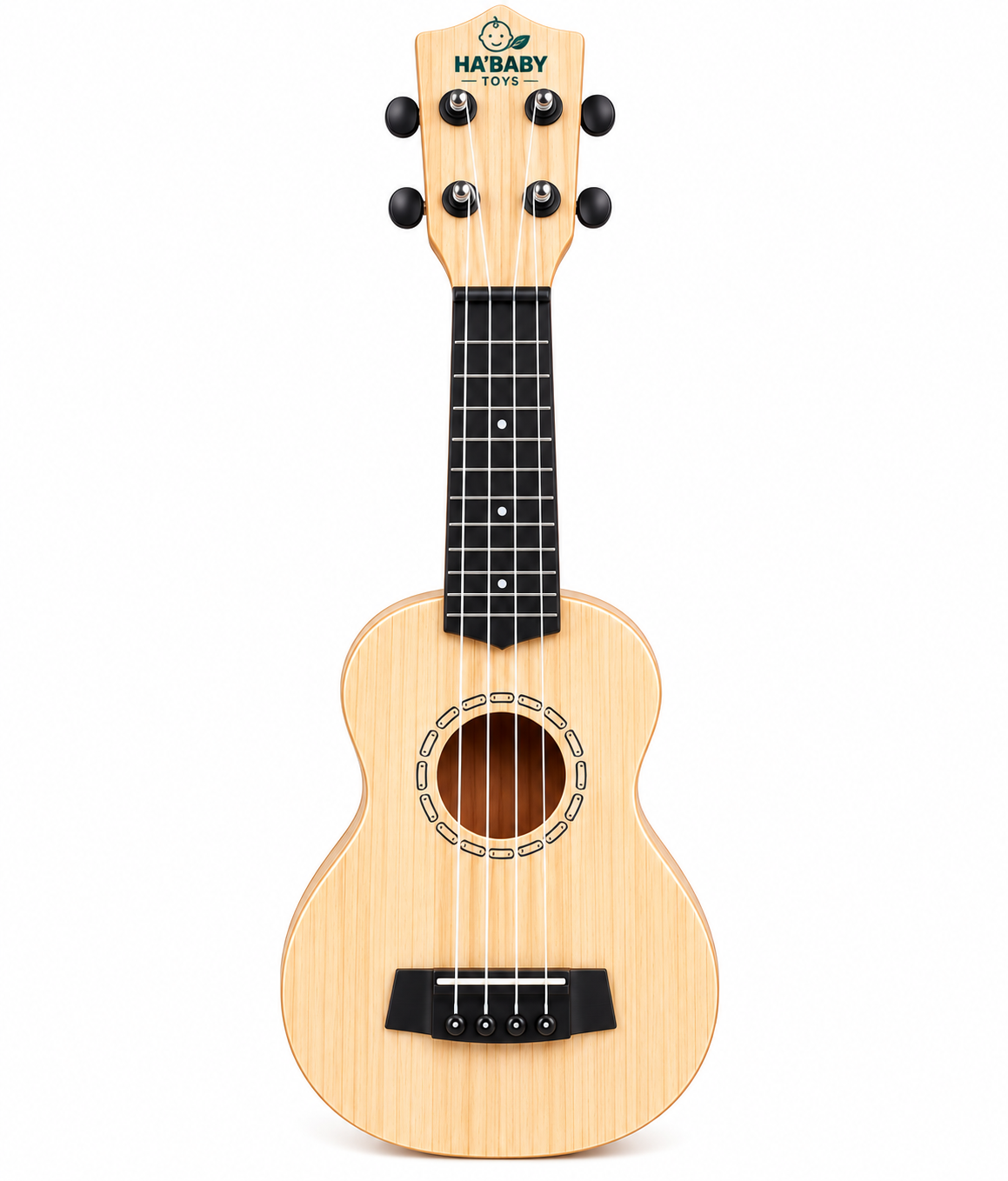
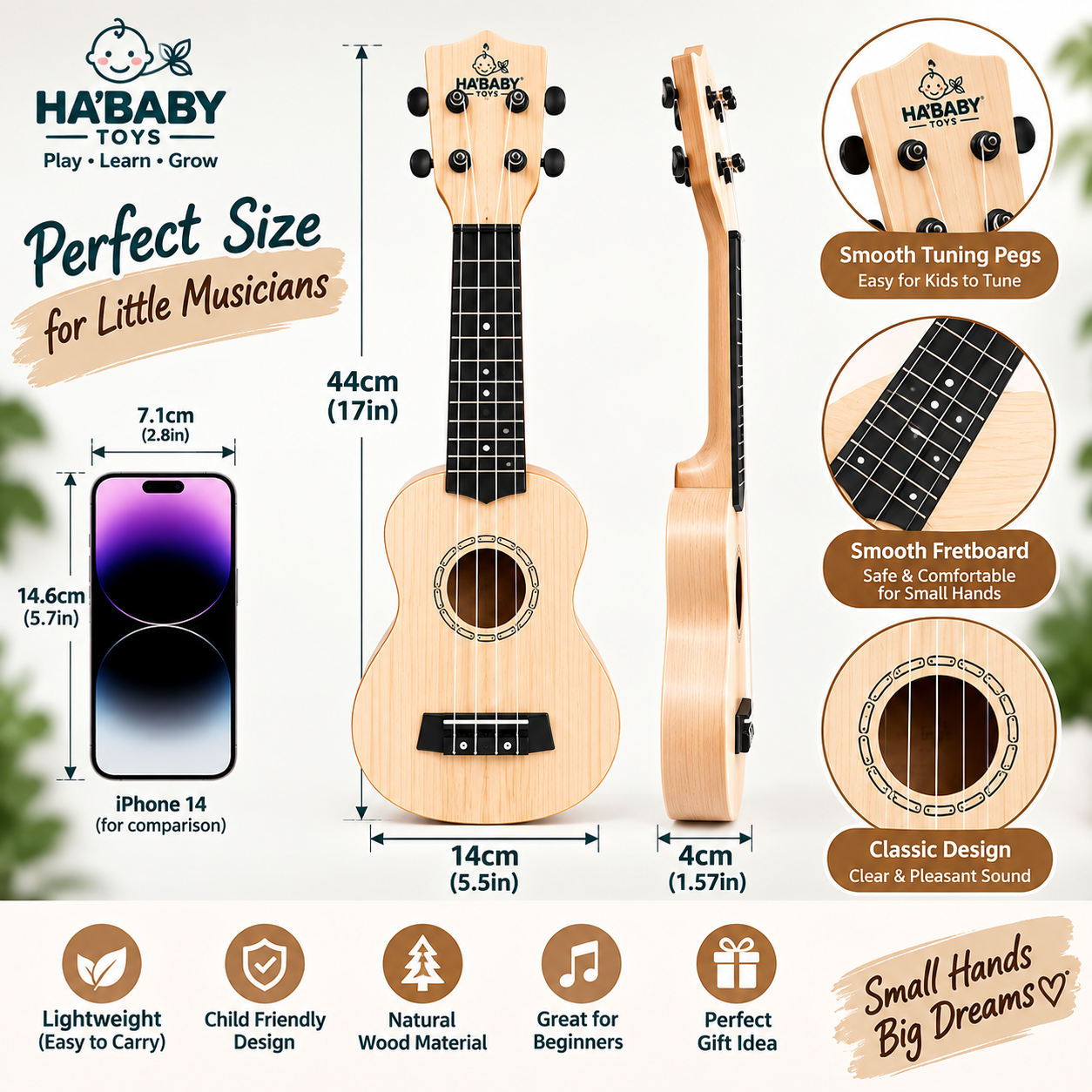
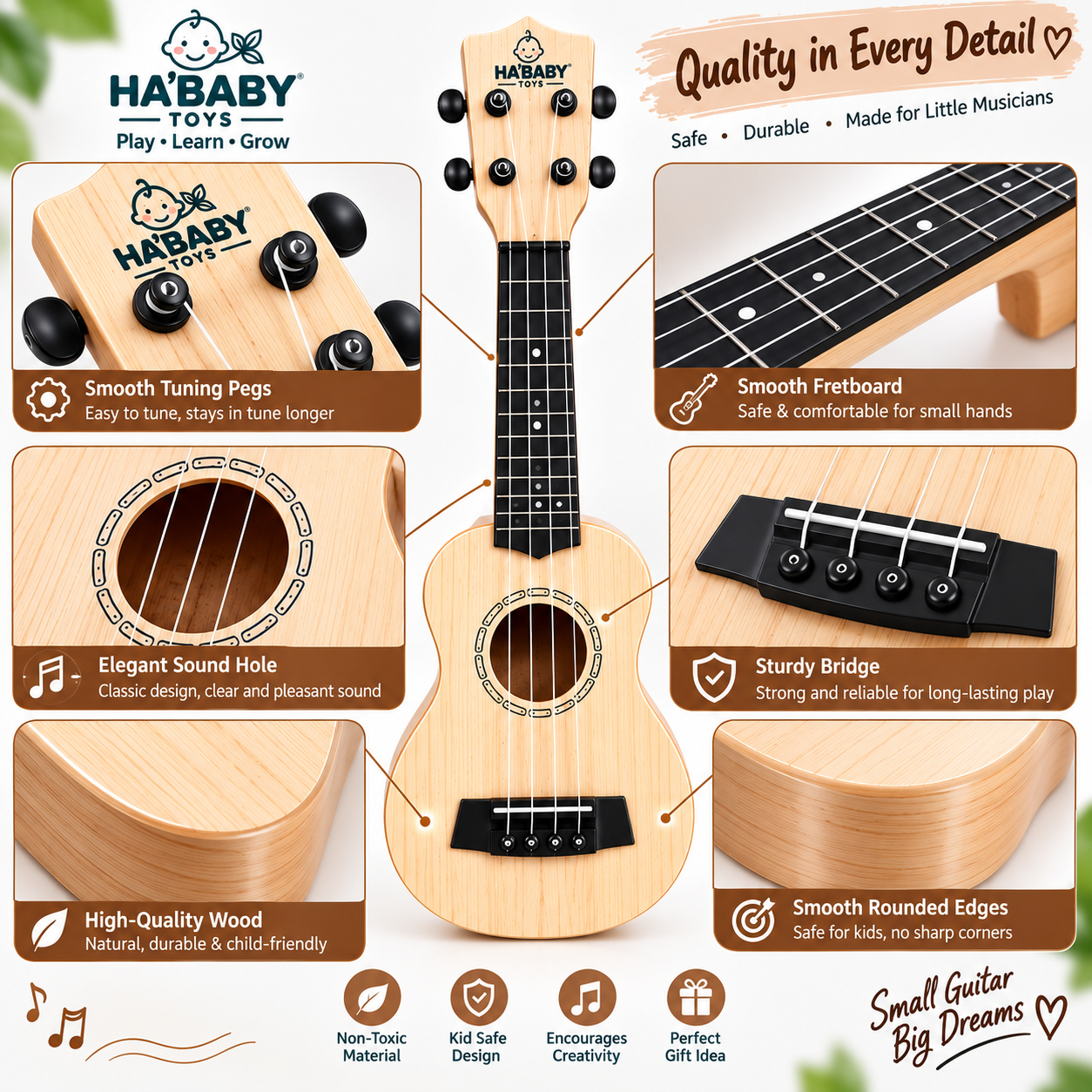
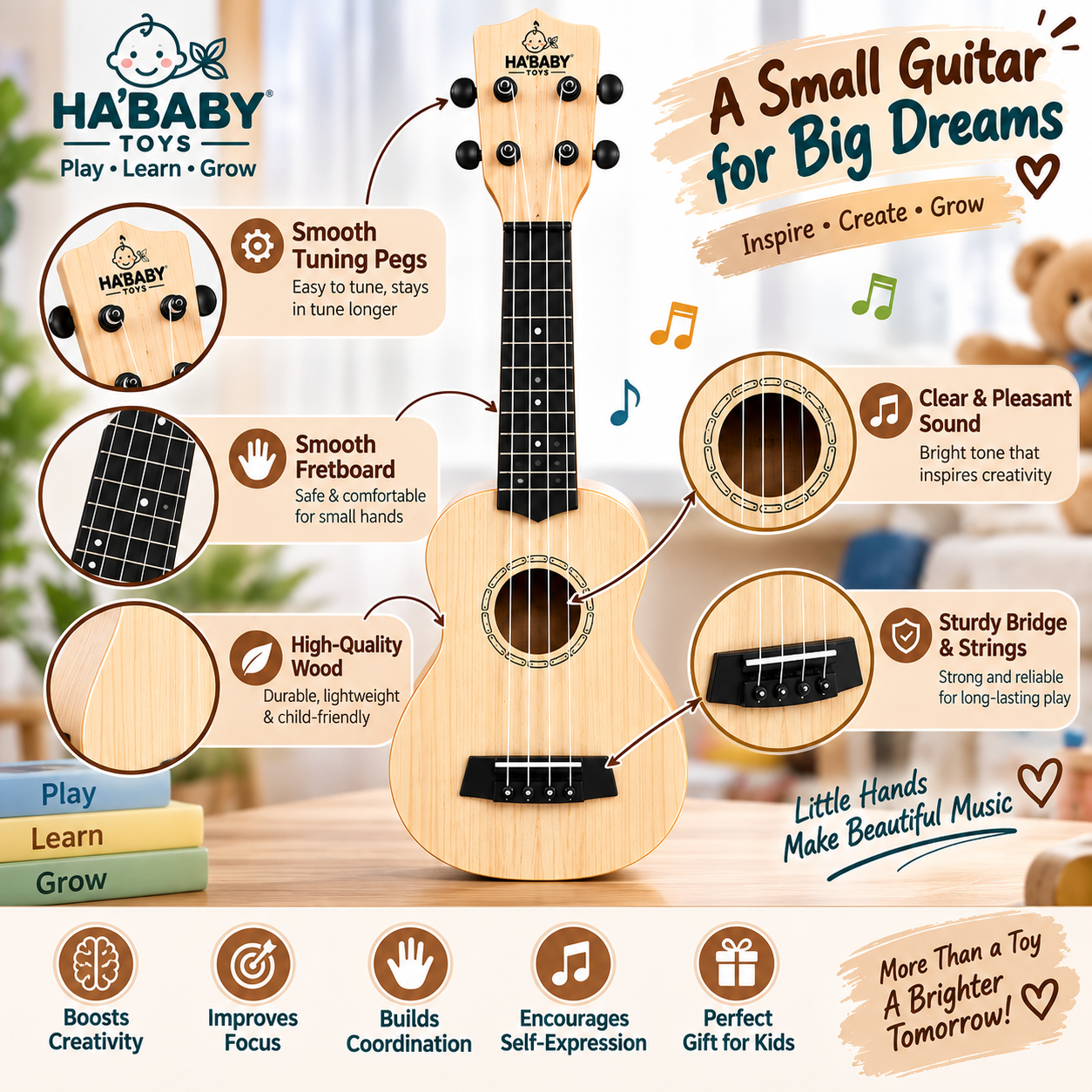
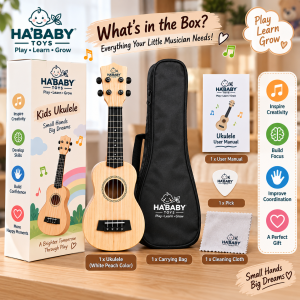
The HA’BABY toy ukulele for kids features an attractive white peach finish that gives the instrument a clean and distinctive appearance.
Its recognizable instrument-style design includes:
- Four strings
- Dark fretboard
- Tuning pegs
- Sound hole
- Bridge
- Compact guitar-style body
- White peach finish
The compact format makes the product visually different from a full-size adult guitar while preserving the familiar appearance children associate with a musical instrument.
For additional toys and play products, browse the complete HA’BABY Toys collection.
Introduce Children to Rhythm Through Play
Children do not need to understand formal music theory before they can enjoy rhythm.
Parents can start with extremely simple patterns.
Try:
STRUM — STRUM — PAUSE
Then repeat it.
Next, ask the child to copy the pattern.
Afterward, allow the child to create a rhythm for the parent to copy.
This changes the activity from passive instruction into interactive play.
The NAEYC music-at-home resource discusses activities such as listening for beats, creating sounds, recognizing patterns, and introducing children to musical vocabulary.
Simple Music Activities to Try at Home
The toy guitar for kids can be incorporated into several easy parent-child activities.
1. Copy My Rhythm
Create a simple strumming pattern.
Ask the child to listen and copy it.
Start with:
STRUM → PAUSE → STRUM
Keep the first patterns short and simple.
2. Fast and Slow
Play a slow rhythm first.
Then make it faster.
Ask:
“Which one was fast?”
“Which one was slow?”
This provides a natural way to introduce basic musical concepts during play.
3. Start and Stop
Ask the child to strum while you say:
“PLAY!”
Then suddenly say:
“STOP!”
The child pauses and waits for the next instruction.
Turn it into a game rather than a formal exercise.
4. Sing and Strum
Choose a familiar child-friendly song and let the child strum along.
The objective does not have to be playing the correct musical notes.
The child can simply participate in making music.
5. Create Your Own Song
Encourage imaginative musical play with questions such as:
“Can you make a song about your favorite animal?”
Or:
“Can you make a happy song?”
Children can combine singing, storytelling, imagination, and strumming.
The ZERO TO THREE organization provides extensive resources about early childhood development, play, relationships, and learning for parents and caregivers.
Musical Toys for Kids and Creative Play
A physical musical toy for kids can be used for much more than simply making sounds.
The ukulele can become part of imaginative play.
A child might pretend to be:
- A guitarist
- A singer
- A songwriter
- A musician
- A band member
- A stage performer
One day it can be a musical instrument.
The next day it can become part of an imaginary concert.
UNICEF’s Science of Play discusses the broader role that play has in children’s learning and development.
Parents looking for additional creative-play ideas can find more resources on the HA’BABY Blog.
Parent and Child Music Time
Musical play becomes more interactive when parents or caregivers participate.
For example:
Parent: “Can you strum once?”
Child: Strums.
Parent: “Now can you strum twice?”
Child: Strum, strum.
Then change roles.
Ask the child to create a rhythm while the adult copies it.
This allows the child to lead the activity.
The Harvard Center on the Developing Child provides research-based information about early development and responsive interactions between children and caregivers.
Its resources on Serve and Return Interaction further explain the importance of responsive back-and-forth interactions between young children and adults.
A Screen-Free Musical Play Option
The HA’BABY Toy Guitar for Kids can also provide families with a physical play activity away from digital entertainment.
Children can engage their:
- Hands
- Ears
- Voice
- Movement
- Imagination
The child creates the activity rather than simply consuming content on a screen.
The American Academy of Pediatrics provides guidance and resources for families concerning children’s media use, development, and healthy play routines.
Families interested in adding more hands-on toys to playtime can browse the HA’BABY Shop.
Musical Toys for Toddlers: Age Appropriateness Matters
Some shoppers may discover this product while searching for musical toys for toddlers or a guitar toy for toddlers.
However, suitability should always be based on the manufacturer’s actual age recommendation rather than the search keyword.
Before giving any musical toy to a young child, parents should review:
- Manufacturer’s recommended age
- Product warnings
- Small or detachable components
- Strings
- Tuning components
- Overall condition
- Supervision requirements
The U.S. Consumer Product Safety Commission Toy Safety Center provides guidance and safety information concerning children’s toys.
Parents can also consult HealthyChildren.org from the American Academy of Pediatrics for guidance on choosing age-appropriate toys.
Always follow the age recommendation and safety instructions supplied with the actual product.
Musical Instruments for Kids Can Offer Different Play Experiences
Families do not have to choose only one type of musical instrument.
Different instruments introduce different ways of creating sound.
For example:
| Instrument | Basic Play Experience |
|---|---|
| Kids ukulele | Strumming |
| Xylophone | Striking notes |
| Drum | Creating beats |
| Shaker | Exploring rhythm |
| Tambourine | Shaking and tapping |
A kids ukulele therefore adds string-based sound exploration to a collection of musical instruments for kids.
For more information about early childhood learning and play, parents can explore resources from NAEYC and UNICEF Parenting.
Build a Kids Musical Instrument Set
Families interested in music can gradually create a kids musical instrument set containing several different instrument types.
For example:
STRING → Kids Ukulele
RHYTHM → Shaker
PERCUSSION → Drum
MELODY → Xylophone
Children can then experiment with how different instruments produce different sounds.
Parents can even create a simple family music session where one person strums, another keeps the beat, and everyone sings together.
Explore currently available musical and creative products through the HA’BABY Toys Shop.
Introduce Simple Musical Vocabulary
The HA’BABY Toy Guitar for Kids can also give adults opportunities to introduce basic musical words naturally.
Rhythm
A pattern of sounds or beats.
Strum
Moving fingers across the strings.
String
The part of the instrument that vibrates when played.
Fast and Slow
Different speeds of playing.
Loud and Soft
Different sound levels.
Beat
The regular pulse heard in music.
Parents do not need to turn these words into a formal lesson. They can simply use them naturally while playing together.
The Smithsonian Science Education Center provides additional educational resources for families and educators interested in hands-on learning.
Toy Guitar vs Electronic Musical Toys
Different types of musical toys for kids provide different experiences.
| Feature | HA’BABY Toy Guitar | Typical Electronic Music Toy |
|---|---|---|
| Physical strumming | Yes | Varies |
| Child creates sound through strings | Yes | Varies |
| Pretend guitar performance | Yes | Possible |
| Pre-recorded songs | No claim | Often |
| Rhythm experimentation | Yes | Varies |
| Instrument-style design | Yes | Varies |
| Battery requirement | Verify specification | Often |
Neither category needs to be described as universally superior.
Families can choose according to the kind of play experience they want their child to have.
An Engaging Gift for Children Interested in Music
The HA’BABY kids guitar can also be considered as a gift for children who already show interest in:
🎸 Guitars
🎶 Music
🎤 Singing
🎵 Songs
🕺 Performing
🎨 Creative play
It can work particularly well as a birthday, holiday, or everyday surprise when the product’s manufacturer-recommended age matches the recipient.
For more gift and activity inspiration, visit the HA’BABY Blog.
Why Choose the HA’BABY Toy Guitar for Kids?
The HA’BABY instrument combines several straightforward play experiences in one product:
🎸 Hands-On Strumming
Children create sounds by physically interacting with the strings.
🎵 Rhythm Exploration
Children can experiment with different strumming patterns and speeds.
🎤 Pretend Performances
The guitar-style design can become part of singing, storytelling, and imaginative performances.
👨👩👧 Shared Musical Play
Parents, siblings, and children can create simple musical games together.
✨ White Peach Design
The light finish gives the instrument a clean and distinctive appearance.
These are observable product and play characteristics without relying on exaggerated developmental promises.
For broader guidance about selecting developmentally appropriate toys, families can consult the American Academy of Pediatrics, NAEYC, and the U.S. Consumer Product Safety Commission.
Bring Music Into Playtime with HA’BABY
The HA’BABY Toy Guitar for Kids offers children a hands-on way to explore strumming, rhythm, sound, singing, and imaginative musical play.
Whether a child is pretending to perform on stage, creating a homemade song, copying a parent’s rhythm, or simply discovering what happens when the strings are strummed, the kids ukulele can turn music into an interactive play experience.
Discover more from HA’BABY Toys, browse the latest products in the HA’BABY Shop, and explore additional parenting, toy, and activity content on the HA’BABY Blog.
Little hands. New sounds. Big musical adventures.
Reviews
There are no reviews yet.