
Children sometimes lose interest in toys that offer only one obvious activity. The water bird whistle for kids is different. It is a bird-shaped sound toy that can make playful chirping or warbling noises when used with water as directed. Parents can introduce it through listening games, sound imitation, turn-taking, and simple experiments that encourage children to notice how changing the way they use the whistle may change its sound. This guide explains what makes the toy interesting, how to use it for learning, seven fun activities, simple science experiments, and how to choose the right one. For a broader selection of educational toys, explore our HaBabyToys collection.
Table of Contents
- What Makes a Water Bird Whistle Interesting for Kids?
- Learning Through Sound, Listening, and Imitation
- Seven Fun Water Bird Whistle Activities for Kids
- Simple Water Bird Whistle Experiments for Curious Kids
- Creative Play Ideas for Home, Playdates, and Family Time
- How to Choose a Water Bird Whistle for Kids
- Safe Use, Cleaning, and Storage
- Is a Water Bird Whistle a Good Gift for Kids?
- Frequently Asked Questions
A water bird whistle for kids is a bird-shaped sound toy that can make playful chirping or warbling noises when used with water as directed. Parents can introduce it through listening games, sound imitation, turn-taking, and simple experiments that encourage children to notice how changing the way they use the whistle may change its sound.
What Makes a Water Bird Whistle Interesting for Kids?
A water bird whistle is not just another noisy toy. It is a hands-on tool for sound exploration. Children are naturally curious about cause and effect. When they blow into the whistle and hear a bird-like chirp, they want to understand why.
The appeal comes from several factors: the unusual sound, the bird-like shape, and the hands-on experimentation. Unlike passive toys that only require pushing a button, a water bird whistle requires the child to actively engage. They must add water, blow gently, and adjust the water level to hear different sounds.
Curiosity About Cause and Effect
Children learn by experimenting. The whistle offers immediate feedback: blow gently, and you get a chirp. Blow harder, and the sound changes. This encourages exploration and problem-solving.
A Hands-On Sensory Experience
The toy engages multiple senses: the feel of the whistle, the sound it makes, and the visual of the water moving inside. The National Association for the Education of Young Children (NAEYC) emphasizes the value of hands-on, sensory play.
A Realistic Example
Imagine a parent making a gentle sound, pausing, and inviting the child to describe or imitate it. This simple interaction can become a rich learning experience. The child practices listening, observation, and language skills.
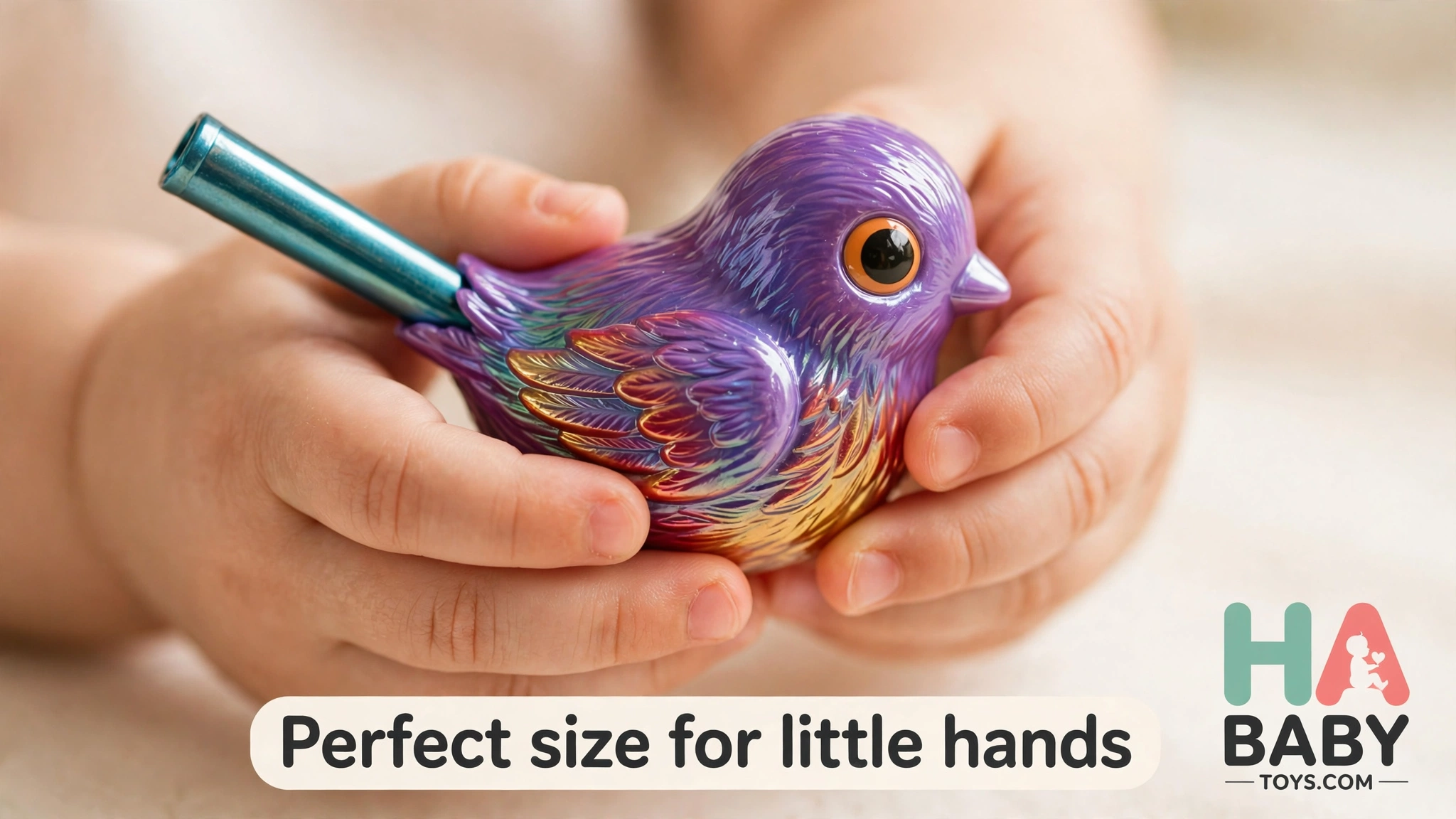
Learning Through Sound, Listening, and Imitation
The water bird whistle can be a tool for playful learning. It offers opportunities for listening, imitation, turn-taking, and observation. The American Academy of Pediatrics emphasizes the importance of age-appropriate play.
Listening
Encourage the child to notice the sound. Is it short or long? High or low? Does it change? This builds auditory discrimination and attention.
Imitation
Invite the child to repeat a sound or invent their own bird call. This builds vocal control and creativity. The Cornell Lab of Ornithology has resources for learning bird songs.
Turn-Taking
One person makes a sound, and the other responds after a pause. This builds social skills and patience.
Observation
Compare the toy’s artificial bird-like sound with birds heard outdoors or in a recording. This builds observation and comparison skills.
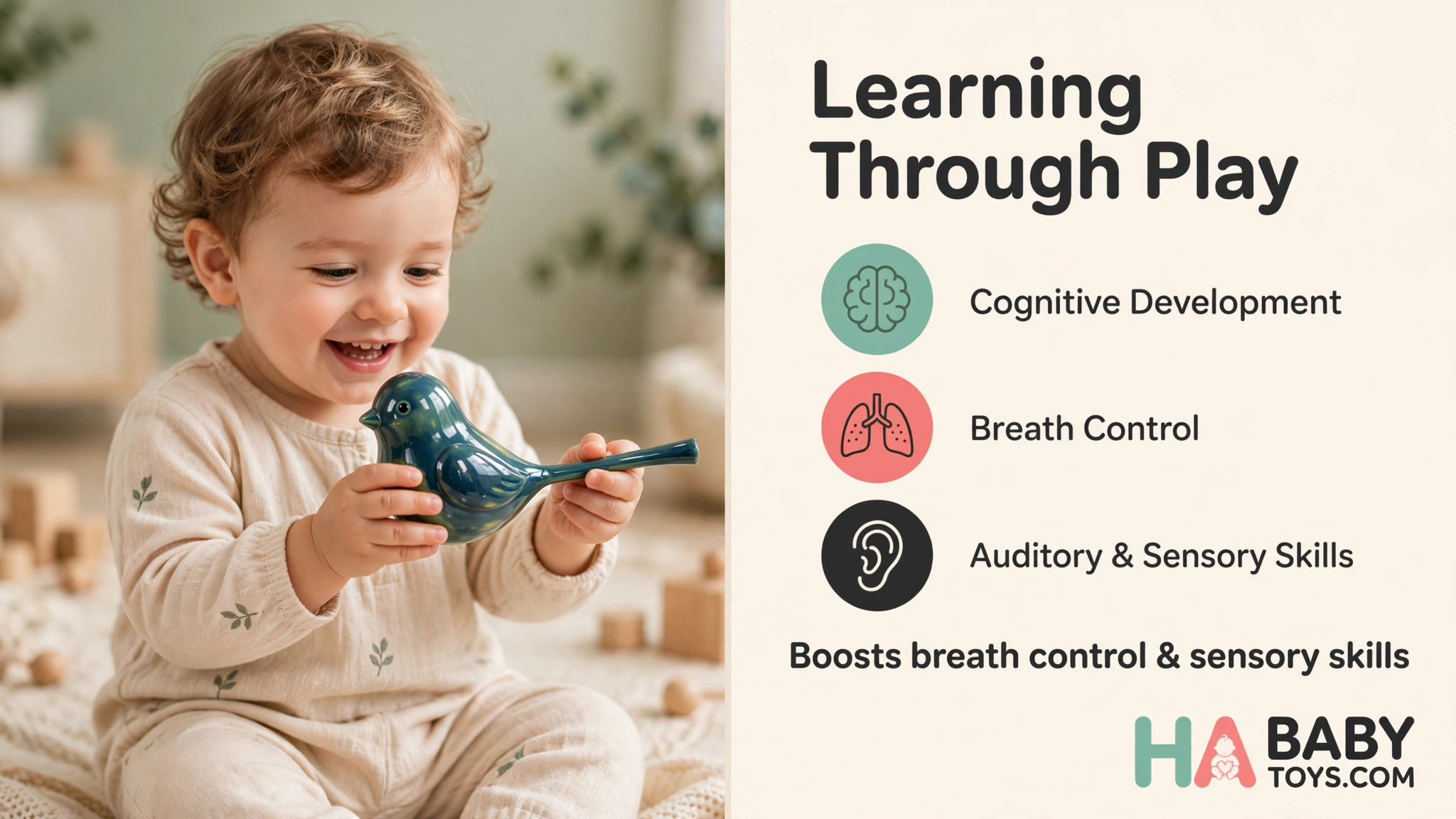
Seven Fun Water Bird Whistle Activities for Kids
These activities are simple to set up and can be adapted for different ages and abilities.
1. Copy My Chirp
An adult makes a sound and the child imitates it. Start with short, simple sounds and gradually make them longer or more complex.
2. Listen and Guess
Describe whether the sound is short, long, soft, or changing. This builds listening and observation skills.
3. Bird Character Story
Invent a bird character and use the whistle at appropriate moments in the story. This encourages imaginative play and storytelling.
4. My Turn, Your Turn
Practice waiting, listening, and responding. This builds social skills and turn-taking.
5. Sound Detective
Listen for real birds outdoors and discuss how their calls differ from the toy. This connects the toy to nature.
6. Make a Sound Pattern
Combine whistle sounds with claps or gentle taps on a table. This builds rhythm and pattern recognition.
7. Invent a Bird World
Use the sound as part of imaginative play with drawings or paper bird characters. This encourages creativity and storytelling.
Four Ways to Learn Through Sound
Select a step to see how parents can introduce the water bird whistle.
Simple Water Bird Whistle Experiments for Curious Kids
A simple sound experiment can turn playtime into a science lesson. With the toy’s instructions available, compare sounds made at two or three permitted water levels, using the same gentle technique each time.
How to Conduct the Experiment
Fill the whistle with a small amount of water. Blow gently and listen. Then add a little more water and repeat. Ask the child to describe what changes.
Recording Observations
Use simple words or drawings to record the observations. This builds science skills and language skills. The Physics Classroom provides age-appropriate explanations of sound.
Creative Play Ideas for Home, Playdates, and Family Time
The water bird whistle can be used in different settings. At home, it can be a short parent-child activity. In a playdate, it can be a turn-taking game with siblings.
A Low-Preparation Example
Draw three birds, give each a made-up call, and tell a story in which each bird takes a turn. This requires only paper and markers.
Adapting for Different Children
Some children prefer observing rather than making sounds themselves. Parents can adapt the activity by letting the child choose the bird character or describe the sounds.
What Parents Say About HaBabyToys
“My son loves this whistle. He spent hours experimenting with different water levels. It’s a great way to teach him about sound.”
“My daughter is obsessed with birds. This whistle is a perfect toy for her. She loves trying to imitate the sounds.”
“It’s well-made and easy to clean. I feel safe letting my child play with it.”
How to Choose a Water Bird Whistle for Kids
Before buying, use this checklist to evaluate the product.
| Feature | What to Check |
|---|---|
| Age suitability | Check the manufacturer’s age recommendation. |
| Construction | Look for sturdy, well-made materials. |
| Mouthpiece design | Ensure it is comfortable and easy to use. |
| Instructions | Check for clear instructions on adding water and cleaning. |
| Sound comfort | Consider whether the sound is appropriate for the child. |
The HA’BABY 3D Water Bird Whistle Toy is a well-designed option. Check the product page for current details. For more on the mechanism, see our guide to how the 3D water bird whistle works.
Safe Use, Cleaning, and Storage
Follow the age guidance and instructions. Supervise young children and check the toy for damage before use.
Cleaning
Empty the water after each use. Clean the whistle as directed by the manufacturer. Do not allow standing water to remain inside.
Storage
Store the whistle in a dry place. Avoid leaving it in damp environments.
Safety
Always supervise children during play. The U.S. Consumer Product Safety Commission provides general toy safety guidance.
Is a Water Bird Whistle a Good Gift for Kids?
A water bird whistle can be a great gift for a child who enjoys sound-based play and nature. Consider the child’s interests, age, and the household environment.
It is not for every child. Some children may find the sound uncomfortable or prefer quieter toys. The American Academy of Pediatrics recommends considering age-appropriate toys.
Make Everyday Play a Little More Curious
If you are looking for a toy that encourages listening, imitation, and creative play, the water bird whistle is a great choice. It is simple to use, fun to experiment with, and offers opportunities for learning. Explore the HA’BABY 3D Water Bird Whistle Toy to see if it is right for your family.
View the 3D Water Bird Whistle Browse All ToysFrequently Asked Questions
A water bird whistle for kids is a bird-shaped sound toy that makes playful chirping or warbling noises when used with water as directed.
It produces sound through a combination of airflow and water movement. Blowing into the whistle creates a stream of air that passes through a shaped chamber. The water changes the shape and volume of the cavity, creating a warbling sound. For a detailed explanation, see our how it works guide.
The toy can create opportunities for listening, imitation, turn-taking, and playful sound exploration. Children respond differently, so keep activities relaxed and suited to the child’s interests.
Try Copy My Chirp, Listen and Guess, Bird Character Story, My Turn Your Turn, Sound Detective, Make a Sound Pattern, or Invent a Bird World.
Follow the instructions supplied with your specific toy. Add water only through the intended opening and avoid overfilling it.
Check the instructions, water level, opening, and blowing technique. Try adjusting the water level and blowing gently.
Follow manufacturer guidance. Empty the water after each use and allow the toy to dry completely.
Check the product’s age label, warnings, mouthpiece, and small-parts considerations. Always supervise young children.
It can be a great gift for a child who enjoys sound-based play and nature. Check the product page for current details and age recommendations.
Conclusion: A Simple Toy, A World of Learning
The water bird whistle for kids is a simple toy that offers a world of learning. It encourages listening, imitation, turn-taking, and creative play. By introducing the toy through fun activities and experiments, parents can turn playtime into a meaningful learning experience. For more educational toys and play ideas, explore the HaBabyToys blog and browse our full collection.