
Toddler Cutting Toys: Fun Fruit Preparation Activities
Toddlers often enjoy copying adults in the kitchen. They see fruits being washed, sliced, arranged, and served, and naturally want to participate. Discover how toddler cutting toys can turn these everyday routines into playful learning experiences.
Expertly reviewed by the HA’BABY Child Development Team. We combine pretend-play insights with a focus on age-appropriate, hands-on learning.
Table of Contents
- 1. Hero — Turn Fruit Preparation into Playtime
- 2. What Are Toddler Cutting Toys?
- 3. Why Do Toddlers Enjoy Pretend Fruit Preparation?
- 4. 10 Fun Fruit Preparation Activities for Toddlers
- 5. What Can Children Explore Through Fruit-Cutting Play?
- 6. How to Choose the Right Toddler Cutting Toys
- 7. Toddler Cutting Toys vs. Real Fruit Preparation
- 8. How Parents Can Make Fruit Preparation Play More Engaging
- 9. Common Mistakes to Avoid During Toddler Cutting Play
- 10. Is a Toddler Fruit Cutting Toy a Good Gift?
- 11. HA’BABY Kids Cooking Knives: A Pretend Kitchen Play Option
- 12. Safety, Cleaning, and Storage
- 13. Frequently Asked Questions
- 14. Conclusion — Turn Pretend Fruit Preparation into Meaningful Play
Toddler cutting toys are pretend-play sets that let young children practise cutting and preparing toy foods, such as fruits and vegetables, using child-friendly play tools. These toys can support imaginative role-play, sorting, matching, communication, and simple hand movements while helping toddlers explore familiar food routines in a playful setting.
Hero — Turn Fruit Preparation into Playtime
Toddlers often enjoy copying adults in the kitchen. They see fruits being washed, sliced, arranged, and served, and naturally want to participate. Toddler cutting toys offer a way to recreate these familiar routines through pretend play. When you explore HA’BABY learning toys, you will find options that support this kind of imaginative, hands-on play.
These toys allow children to separate and reconnect toy fruit pieces, providing a simple cause-and-effect experience. Parents can turn a simple toy into a pretend fruit shop, a picnic, or a family snack activity. This guide will show you ten fun fruit preparation activities, explain what children can learn, and help you choose the right toy. If you are looking for more pretend kitchen activities, you can read about pretend kitchen activities. Let’s turn fruit preparation into playtime.
What Are Toddler Cutting Toys?
Toddler cutting toys are pretend-play sets designed for young children. They typically include toy fruits that separate into pieces, and often come with a pretend knife and cutting board. The pieces are usually joined with reusable fasteners, such as hook-and-loop strips, allowing children to “cut” the fruit and then put it back together.
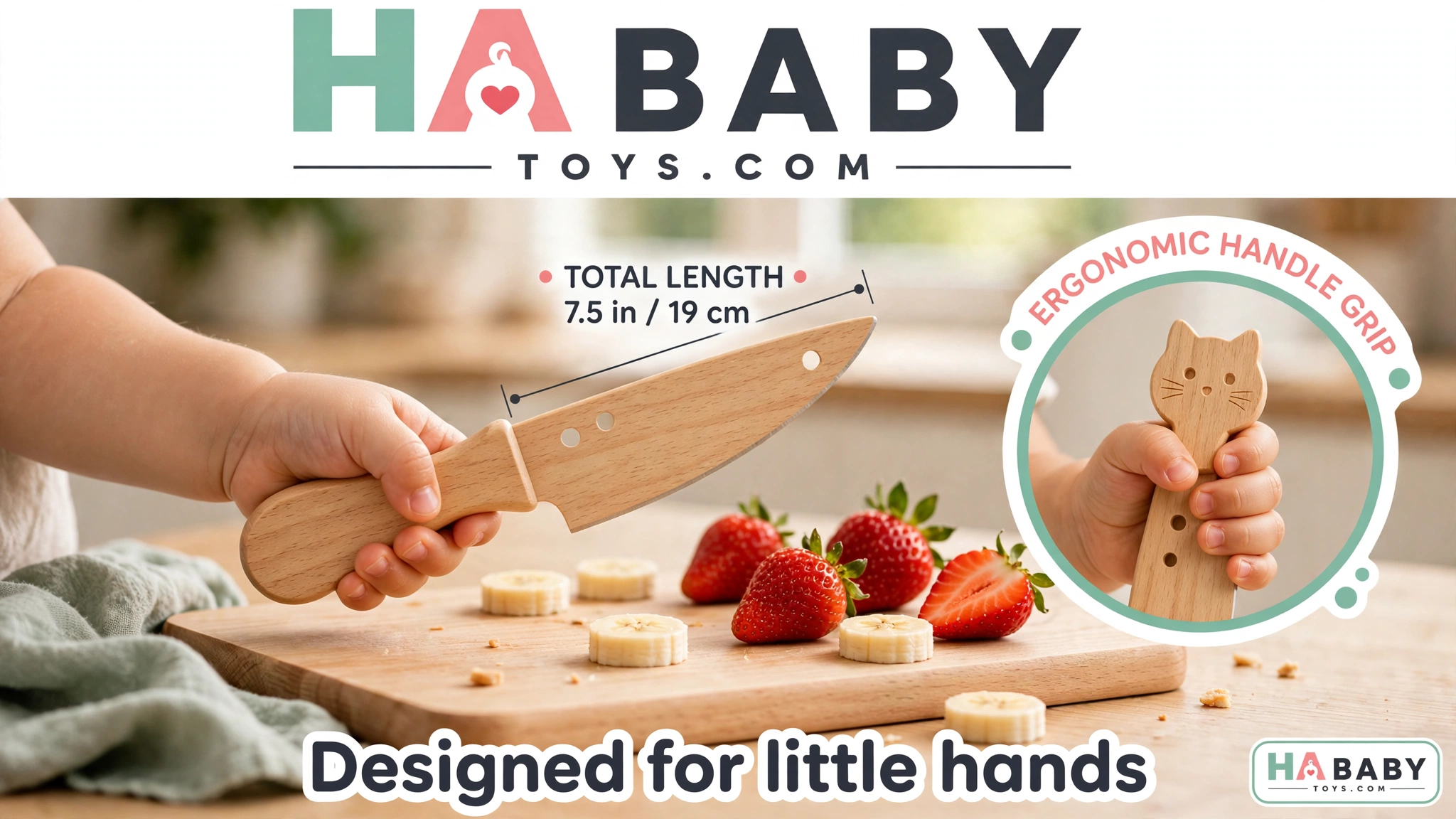
These sets come in different fruit shapes, colours, and sizes. It is important to note that not every set contains the same pieces or uses the same joining mechanism. Also, a pretend toy knife is not a real food-preparation tool. If you are interested in real food preparation, you can read about supervised food preparation for children.
Why Do Toddlers Enjoy Pretend Fruit Preparation?
Pretend fruit preparation is engaging for several reasons.
Imitation
Children recreate activities they observe adults doing. This helps them understand the world around them. The NAEYC’s resources on play highlight how imitation supports early development.
Discovery
Separating and reconnecting toy fruit creates a simple cause-and-effect experience. Children learn that their actions have results.
Choice
Children decide which fruit to prepare and serve. This sense of control is empowering.
Role-Play
They can become a chef, shopkeeper, customer, or family helper. The possibilities for imaginative play are endless.
Repetition
Repeating familiar activities can keep play engaging. Repetition is a natural and valuable part of learning.
Social Interaction
Parents, siblings, and friends can participate. This builds social skills and cooperation. The UNICEF’s guidance on learning through play supports this approach.
10 Fun Fruit Preparation Activities for Toddlers
This is the article’s main section. Here are ten practical activities to try.
Activity 1: Make a Pretend Fruit Salad
Materials: Toy fruits, a pretend bowl.
Instructions: Children choose different toy fruits, separate them, and place the pieces into a pretend bowl. They can announce which fruits they are adding.
Parent prompt: “What fruits are you adding to your salad?”
Variation: For older toddlers, ask them to count the pieces.
Activity 2: Open a Mini Fruit Shop
Materials: Toy fruits, a small counter or table.
Instructions: Set up a small counter. One person becomes the shopkeeper while another chooses and buys pretend fruit. Swap roles.
Parent prompt: “How much does this apple cost?”
Variation: For younger toddlers, simply let them choose and hand over the fruit.
Activity 3: Sort Fruits by Colour
Materials: Toy fruits of different colours.
Instructions: Ask the child to group red, yellow, green, and orange toy fruits. Keep it playful rather than turning it into a test.
Parent prompt: “Can you find all the red fruits?”
Variation: For older toddlers, ask them to sort by size.
Activity 4: Match the Fruit Pieces
Materials: Separated toy fruit pieces.
Instructions: Mix the separated pieces and invite the toddler to find which parts belong together.
Parent prompt: “Which pieces go together?”
Variation: For younger toddlers, start with just two fruits.
Activity 5: Prepare a Family Fruit Platter
Materials: Toy fruits, a plate.
Instructions: Let the child select toy fruits and arrange them on a plate for different family members.
Parent prompt: “Who is this plate for?”
Variation: For older toddlers, ask them to create a pattern.
Activity 6: Count the Fruit Pieces
Materials: Toy fruit pieces.
Instructions: Count the toy pieces together. Use simple questions such as, “How many pieces are on your plate?”
Parent prompt: “Let’s count together.”
Variation: For older toddlers, introduce simple addition.
Activity 7: Run a Pretend Smoothie Bar
Materials: Toy fruits, a toy blender or bowl.
Instructions: The toddler chooses pretend ingredients, places them in a toy blender or bowl, and serves an imaginary smoothie.
Parent prompt: “What kind of smoothie are you making?”
Variation: For younger toddlers, simply let them mix the pieces.
Activity 8: Guess the Fruit
Materials: Toy fruits.
Instructions: Describe a fruit by its colour or familiar features and let the child select the matching toy.
Parent prompt: “I am thinking of something yellow and curved. What is it?”
Variation: For older toddlers, let them describe the fruit to you.
Activity 9: Plan a Pretend Picnic
Materials: Toy fruits, a basket or bag.
Instructions: Pack toy fruits into a basket, arrange a pretend picnic, and invite family members or dolls to join.
Parent prompt: “What should we pack for our picnic?”
Variation: For younger toddlers, keep it simple with just two or three fruits.
Activity 10: Take a Restaurant Order
Materials: Toy fruits, a notepad (optional).
Instructions: One person acts as a customer and asks for a fruit plate. The child prepares the order and serves it.
Parent prompt: “I would like a fruit plate, please.”
Variation: For older toddlers, let them take the order and repeat it back.
For more ideas, you can read about pretend kitchen activities and explore the HA’BABY blog for more play and learning ideas.
What Can Children Explore Through Fruit-Cutting Play?
Discuss realistic learning opportunities without exaggerated developmental claims.
| Play opportunity | How it appears during play |
|---|---|
| Colour recognition | Grouping fruits by colour |
| Matching | Reconnecting the correct fruit pieces |
| Counting | Counting toy fruit or pieces |
| Vocabulary | Naming fruits, colours, and actions |
| Imaginative play | Running a shop or pretend restaurant |
| Hand movements | Holding, positioning, separating, and reconnecting pieces |
| Social interaction | Taking turns and sharing pretend orders |
Children’s experiences vary depending on age, interests, and how adults participate. For a broader look at early development, the Harvard Center on the Developing Child provides useful context.
How to Choose the Right Toddler Cutting Toys
Help parents make a sensible buying decision.
- Age guidance: Check the manufacturer’s recommended age.
- Construction and durability: Look for sturdy toys that can withstand repeated play.
- Smooth edges: Ensure there are no loose or broken components.
- Size of fruit pieces: Check for possible choking hazards.
- Ease of cleaning: Follow the manufacturer’s instructions.
- Joining mechanism: Ensure it is suitable for repeated play.
- Pretend knife: Verify that it is clearly intended for toy use.
- Storage and number of pieces: Check verified product specifications.
Important distinction: A pretend toy knife is not automatically suitable for cutting real fruit. Parents should use a separate, purpose-designed food-preparation tool for any real kitchen activity. The HealthyChildren.org guidance on play and toys is a useful reference for choosing appropriate toys.
Toddler Cutting Toys vs. Real Fruit Preparation
A useful comparison section to prevent confusion.
| Pretend cutting toys | Real fruit preparation |
|---|---|
| Use toy fruits | Uses actual edible fruit |
| Designed for imaginative play | Involves food handling |
| Focuses on role-play and matching | Involves real food preparation |
| Uses the toy’s supplied play tools | Requires suitable food-preparation equipment |
| Should follow toy age and safety instructions | Requires appropriate adult supervision and food hygiene |
Pretend play and real cooking are separate activities. Never use a pretend wooden or plastic toy knife to prepare actual food unless the manufacturer explicitly confirms that it is designed for that purpose.
How Parents Can Make Fruit Preparation Play More Engaging
Give parents practical tips for a richer play experience.
- Start with two or three toy fruits instead of overwhelming the child.
- Let the toddler choose the activity.
- Use familiar fruit names.
- Take turns being the customer and shopkeeper.
- Ask open-ended questions: “What would you like to prepare today?”
- Introduce counting and colour matching naturally.
- Allow children to repeat activities they enjoy.
- Praise participation and creativity rather than expecting perfect results.
The ZERO TO THREE resource on the power of play emphasizes the importance of parent-child interaction in early learning.
Common Mistakes to Avoid During Toddler Cutting Play
Address common parent mistakes.
- Choosing toys without checking the age recommendation.
- Ignoring small parts or damaged components.
- Expecting toddlers to follow complicated instructions.
- Turning every activity into a lesson or test.
- Forcing children to share before they are ready.
- Leaving children unsupervised with toy pieces.
- Treating pretend cutting tools as real kitchen knives.
- Buying a set based only on the number of accessories rather than construction and suitability.
For safety guidance, refer to the CPSC Toy Safety guidelines and the CPSC Small Parts and Choking Hazard guidance.
Is a Toddler Fruit Cutting Toy a Good Gift?
Discuss possible gift occasions.
- Birthdays.
- Early learning and playroom gifts.
- Pretend kitchen collections.
- Gifts for children who enjoy copying household routines.
- Shared parent-child play activities.
Suitability depends on the child’s age, interests, and the toy’s recommended use. For more ideas on age-appropriate toys, the NAEYC’s developmentally appropriate practice is a useful resource.
HA’BABY Kids Cooking Knives: A Pretend Kitchen Play Option
If you are looking for a child-oriented pretend kitchen product to support fruit-shop, restaurant, and family snack role-play, the HA’BABY Kids Cooking Knives are a practical option.
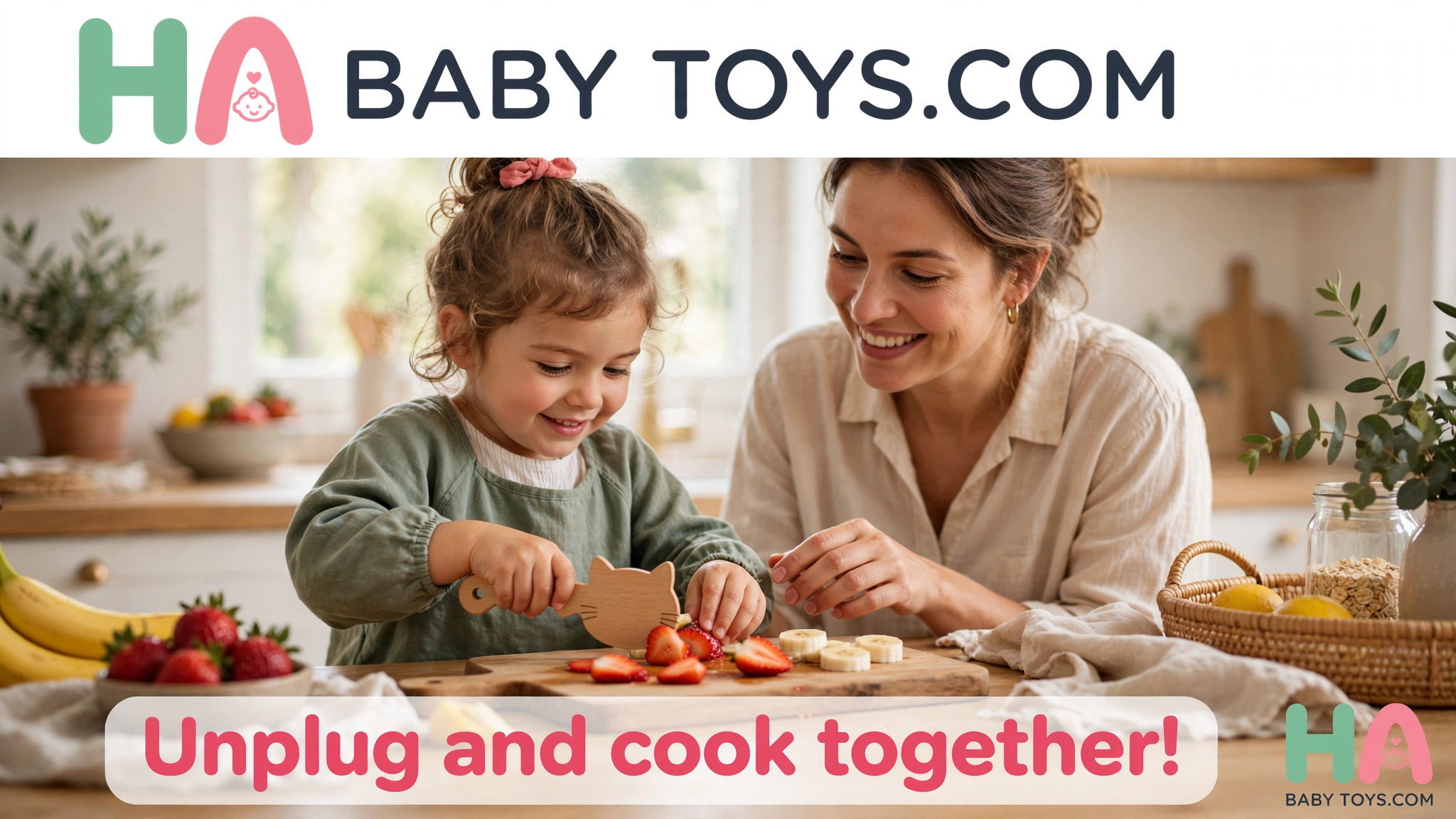
Parents can incorporate this product into the activities discussed above, using it as a tool for imaginative play and everyday routine imitation.
What to check before ordering: Review the product page for confirmed features, materials, age guidance, and safety instructions. If you have questions, visit the shopping and product FAQs.
Note: Always verify the actual product details and safety information on the live listing before purchasing. Do not assume that the product includes toy fruits or a cutting board unless confirmed.
Explore the HA’BABY Kids Cooking KnivesSafety, Cleaning, and Storage
Keep pretend-play accessories safe and in good condition.
- Check the manufacturer’s age recommendation.
- Inspect toys for cracks, broken connectors, loose parts, or sharp edges.
- Keep small pieces away from children who may put objects in their mouths.
- Supervise play, especially with younger toddlers.
- Clean according to the manufacturer’s instructions.
- Store pieces together in a suitable container.
- Remove damaged toys from use.
For more detailed safety information, you can refer to the CPSC Toy Safety guidelines.
How Fruit-Cutting Play Works
1. Select Toy Fruit
Choose from different toy fruits.
2. Pretend Cutting
Use the toy knife to separate the pieces.
3. Match Pieces
Find the matching halves and reconnect them.
4. Serve a Fruit Plate
Arrange the pieces and serve to family or friends.
5. Sort by Colour
Group the fruits by their colours.
6. Count the Pieces
Practise counting the toy fruit pieces.
Frequently Asked Questions
What are toddler cutting toys?
Toddler cutting toys are pretend-play sets that let young children practise cutting and preparing toy foods, such as fruits and vegetables, using child-friendly play tools. They are designed to support imaginative role-play and fine motor practice.
Are fruit-cutting toys suitable for 2-year-olds?
Suitability depends on the specific manufacturer’s age guidance, piece sizes, and the child’s abilities. Check for small parts and supervise play at all times.
What activities can toddlers do with toy fruits?
Toddlers can engage in activities such as making pretend fruit salads, running a mini fruit shop, sorting by colour, matching pieces, counting, and planning pretend picnics.
Do toddler cutting toys help develop fine motor skills?
Holding, positioning, separating, and reconnecting toy pieces can provide opportunities to practise hand movements. However, avoid expecting a specific developmental result, as each child develops at their own pace.
Can toddlers cut real fruit with toy cutting knives?
No. Pretend-play knives should be used only as instructed by the manufacturer. Real food preparation requires a suitable food-preparation tool and direct adult supervision.
How do I clean toddler fruit-cutting toys?
Follow the manufacturer’s cleaning instructions. Do not assume every material or joining mechanism can be soaked or placed in a dishwasher.
What should I check before buying a toddler cutting toy?
Check age guidance, materials, construction, piece size, cleaning requirements, and intended use. Always verify the product details before purchasing. You can also visit the shopping and product FAQs for more information.
Conclusion — Turn Pretend Fruit Preparation into Meaningful Play
Toddler cutting toys can turn familiar food routines into enjoyable pretend-play experiences. Parents can use simple fruit games to encourage imagination, conversation, matching, and shared family play.
Ready to explore more? Explore the toy collection to compare options, or contact HA’BABY for product enquiries if you have specific questions. For more play and learning ideas, visit the HA’BABY blog.
Explore the HA’BABY Kids Cooking Knives