
Baby Play Mat (0–36 Months): Crawling & Sensory Fun
Which play mat is suitable for a newborn and a toddler? Can a baby use the same play mat from birth to 36 months? Discover how one play space can support changing ways to explore as your child grows.
Expertly reviewed by the HA’BABY Child Development Team. We combine pediatric play insights with practical product guidance to help you make informed decisions.
Table of Contents
- 1. Quick Answer: What Is a Baby Play Mat (0–36 Months)?
- 2. What Is a Baby Play Mat and Why Do Parents Use One?
- 3. Why Is Floor Play Important During the First Three Years?
- 4. How Babies Grow and Explore from 0 to 36 Months
- 5. 12 Fun Baby Play Mat Activities for Crawling and Sensory Exploration
- 6. How a Baby Play Mat Can Support Crawling Practice
- 7. Sensory Play: How Babies Explore Through Their Senses
- 8. Baby Play Mat Activities by Age: A Practical Comparison
- 9. How to Choose the Best Baby Play Mat for 0–36 Months
- 10. How to Use a Baby Play Mat Safely
- 11. Common Baby Play Mat Mistakes Parents Should Avoid
- 12. Is a Baby Play Mat Worth Buying?
- 13. HA’BABY Baby Play Mat: A Practical Option for Everyday Play
- 14. Creating a Simple Baby Play Area at Home
- 15. Quick Tips for More Enjoyable Playtime
- 16. Frequently Asked Questions
- 17. Conclusion — Make Every Stage of Play a New Opportunity
A baby play mat is a dedicated floor-play surface where infants and toddlers can enjoy supervised, age-appropriate activities. From early tummy time and visual exploration to rolling, sitting, crawling, and simple toddler games, a suitable mat can provide a comfortable space for movement and sensory discovery as children grow.
What Is a Baby Play Mat and Why Do Parents Use One?
A baby play mat is a dedicated floor-play surface designed to give infants and toddlers a comfortable, defined area for supervised activities. Parents use them because they provide a practical space for movement, play, and interaction.
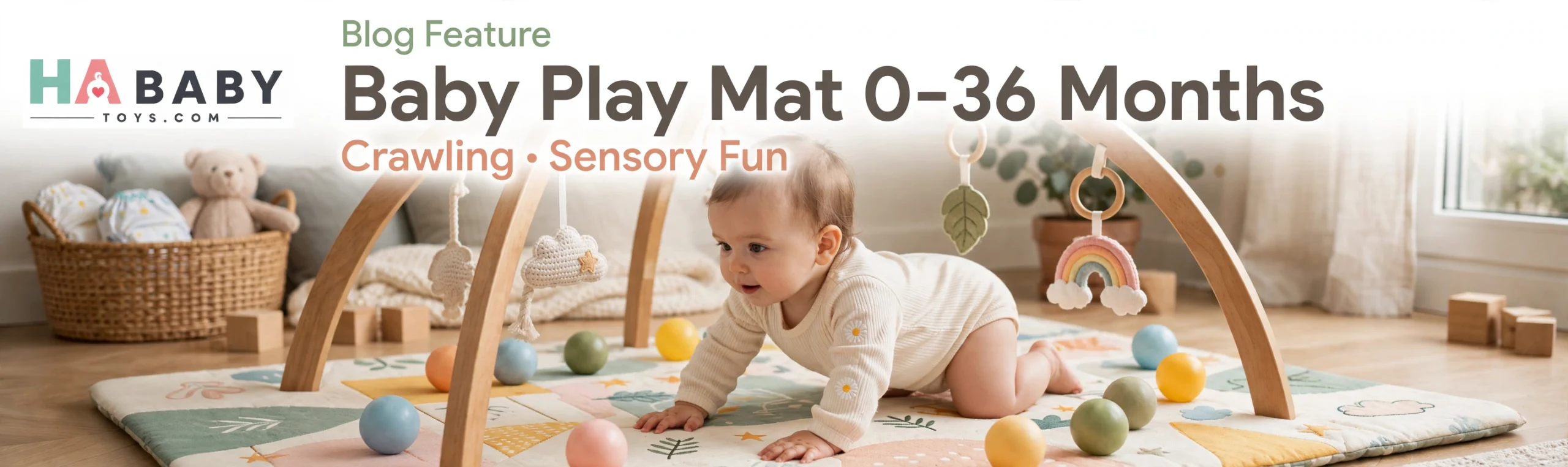
What are the typical features? A comfortable floor-play area creates a defined space for supervised activities. Space for movement allows babies to explore natural movements on an appropriate floor surface. Some mats may feature colours, patterns, textures, or interactive elements—these are possible opportunities for exploration rather than guaranteed developmental benefits.
Parents can use the mat for talking, playing, observing, and responding to their child. As the baby becomes more mobile, activities can change. To see how a play gym differs, you can read about the tummy time and early development guide. Do not assume the HA’BABY product has all features commonly found in other play mats.
Why Is Floor Play Important During the First Three Years?
Giving children opportunities to move and interact with their environment is valuable. Floor play supports free movement during supervised awake time, opportunities to practise different body positions, parent-child interaction, visual and tactile exploration, playing with age-appropriate objects, and gradually exploring a larger space as mobility increases.
The WHO Guidelines on Physical Activity for Children Under Five emphasize the importance of active play and limiting sedentary screen time. Floor play is an active alternative to passive screen-based entertainment.
How Babies Grow and Explore from 0 to 36 Months
This is one of the main educational sections. Divide it into three broad stages.
Stage 1: 0–6 Months — Looking, Moving and Exploring
In early infancy, babies observe faces and nearby objects, listen to familiar voices, and participate in supervised tummy time. They make natural arm and leg movements and gradually develop interest in reaching. Rolling emerges as movement skills develop. The CDC’s 2-month milestones provide useful context.
Stage 2: 6–12 Months — Rolling, Sitting and Exploring
During this stage, babies reach for nearby objects, roll and change positions, sit and play as they develop this ability, explore objects with their hands, begin to move around the play area, and crawl or use other forms of mobility. The CDC’s 6-month milestones and 9-month milestones describe this progression. Crawling at a particular month is not a compulsory milestone.
Stage 3: 12–36 Months — Active Play and Discovery
Older babies and toddlers walk and move around the play area, stack and sort suitable toys, play simple matching games, recognize colours, engage in pretend play, participate in parent-led movement games, and explore independently under appropriate supervision. The CDC’s 2-year milestones provide further guidance. These are broad examples, not deadlines.
12 Fun Baby Play Mat Activities for Crawling and Sensory Exploration
This is the most practical and engaging section.
Activity 1: Reach and Discover
Age: 3–6 months. Materials: A suitable toy. Instructions: Place a suitable toy within comfortable reach and allow the baby to explore it naturally. What the child explores: Reaching and grasping. Safety: Ensure the toy is age-appropriate and securely made.
Activity 2: Tummy-Time Observation
Age: 0–6 months. Materials: Your face or an age-appropriate object. Instructions: Offer supervised tummy time while the baby is awake. Use your face or an object to encourage observation. What the child explores: Head lifting and visual tracking. Safety: Only while awake and supervised. For more guidance, see the newborn activity gym activities.
Activity 3: Toy Tracking Game
Age: 2–6 months. Materials: A suitable object. Instructions: Move a suitable object slowly within the baby’s comfortable viewing area. What the child explores: Visual tracking. Safety: Do not move objects too quickly.
Activity 4: Roll and Explore
Age: 4–8 months. Materials: Clear floor space. Instructions: For babies beginning to roll, provide clear space and let them move naturally. Never force a rolling movement. What the child explores: Body awareness and movement. Safety: Supervise closely.
Activity 5: Reach-and-Grasp Play
Age: 4–8 months. Materials: An age-appropriate, securely designed toy. Instructions: Offer the toy and allow the baby to attempt reaching and grasping. What the child explores: Hand-eye coordination. Safety: Check for small parts.
Activity 6: Texture Discovery
Age: 4–12 months. Materials: The mat’s suitable textured sections. Instructions: If the mat has suitable textured sections, let the baby explore them with hands and feet. What the child explores: Tactile sensation. Safety: Never introduce detachable or loose materials that could become choking hazards.
Activity 7: Toy Hide-and-Find
Age: 8–12 months. Materials: A suitable toy and a lightweight cloth. Instructions: Partially hide a suitable toy under a lightweight cloth while keeping the activity supervised and the baby’s face unobstructed. What the child explores: Object permanence. Safety: Always supervise.
Activity 8: Crawling Toy Exploration
Age: 8–12 months. Materials: A suitable toy. Instructions: For a baby developing mobility, place a suitable toy a short distance away to create an opportunity to move toward it. Never force the baby to crawl. What the child explores: Mobility and motivation. Safety: Keep the area clear.
Activity 9: Colour Sorting
Age: 12–24 months. Materials: Large, age-appropriate objects in different colours. Instructions: Introduce large objects in different colours. Avoid small pieces that may pose choking hazards. What the child explores: Colour recognition and sorting. Safety: Check for choking hazards.
Activity 10: Stacking and Building
Age: 12–24 months. Materials: Suitable large stacking blocks. Instructions: Offer suitable large stacking blocks, following the toy’s age guidance. What the child explores: Coordination and construction. Safety: Follow age guidance.
Activity 11: Follow-the-Parent Game
Age: 12–24 months. Materials: None. Instructions: For a mobile baby or toddler, encourage movement toward a familiar caregiver through a simple, playful interaction. What the child explores: Movement and social connection. Safety: Keep the area safe.
Activity 12: Story and Picture Time
Age: 24–36 months. Materials: An age-appropriate picture book. Instructions: Sit with your toddler on the mat, show an age-appropriate picture book, and name the objects together. What the child explores: Language and vocabulary. Safety: Always supervise.
How a Baby Play Mat Can Support Crawling Practice
Crawling is part of the primary search intent, so it deserves special attention.
What does crawling look like? Babies may move differently—some crawl on hands and knees, others scoot, roll, or use other patterns. Babies need clear, supervised floor space. A suitable play area can provide opportunities to practise movement. Toys placed within a comfortable distance may encourage exploration. Parents should allow babies to develop at their own pace.
What If My Baby Does Not Crawl?
Some babies use different movement patterns or skip traditional crawling. Avoid alarming parents or suggesting that a play mat can solve developmental delays. The NHS Baby Moves guidance provides useful information on movement development. If parents have concerns about their child’s movement or development, they should speak with a pediatrician.
Sensory Play: How Babies Explore Through Their Senses
Sensory exploration is a natural part of early development.
- Visual Exploration: Colours, patterns, and appropriate objects give babies things to observe.
- Touch and Texture: Age-appropriate surfaces and toys provide opportunities to explore different textures.
- Sound: Gentle sounds and caregiver voices can become part of play.
- Body Awareness and Movement: Reaching, rolling, shifting positions, and moving around provide experiences of the body in space.
- Social Interaction: Smiling, talking, and playing with a caregiver make sensory activities more engaging.
More stimulation is not always better. Avoid loud sounds, flashing lights, overwhelming toys, and activities that upset the baby.
Baby Play Mat Activities by Age: A Practical Comparison
This is a useful visual table.
| Age range | Suggested play focus | Example activities |
|---|---|---|
| 0–3 months | Looking and listening | Face-to-face play, visual observation |
| 3–6 months | Movement and early exploration | Tummy time, reaching, rolling opportunities |
| 6–9 months | Exploring positions | Sitting play, reaching, movement |
| 9–12 months | Mobility and discovery | Crawling opportunities, toy exploration |
| 12–24 months | Active play | Stacking, sorting, picture games |
| 24–36 months | More complex play | Matching, pretend play, simple movement games |
Age ranges are illustrative, not strict developmental deadlines. Choose activities according to the child’s abilities and the toy’s age guidance. The CDC’s 4-month milestones and 6-month milestones offer further reference.
How to Choose the Best Baby Play Mat for 0–36 Months
This section is commercially useful without becoming overly promotional.
| Buying factor | What to check |
|---|---|
| Age suitability | Clear manufacturer guidance |
| Surface | Suitable for the intended play activities |
| Construction | Stable, durable construction |
| Materials | Verified material information |
| Cleaning | Clear washing and maintenance instructions |
| Size | Enough room for the child’s intended activities |
| Texture | Suitable surface without unsafe detachable parts |
| Portability | Storage and transport convenience |
| Safety | No damaged parts, exposed hazards, or unsuitable accessories |
Parents should not choose a mat based only on colourful appearance or low price. There is a difference between a basic play mat, a foam floor mat, a padded mat, and an activity gym. The exact product specifications determine its suitability. To compare options, you can explore the baby toy collection.
How to Use a Baby Play Mat Safely
This section is especially clear because the article targets newborns as well as toddlers.
- Put the mat on a clear, level floor.
- Check the product’s instructions and intended age range.
- Inspect for tears, loose parts, and damaged components.
- Keep small objects and choking hazards away.
- Supervise the baby continuously.
- Use tummy time only when the baby is awake.
- Keep pets, cords, heaters, and other hazards away.
- Stop activities when the child becomes tired or distressed.
- Clean the mat according to the manufacturer’s instructions.
- Never use a play mat as a replacement for a safe sleep surface.
Safe sleep reminder: Babies should be placed on their backs for every sleep on a separate, firm, flat, approved sleep surface. The NIH’s Safe to Sleep resources provide essential guidance. For toy safety, refer to the CPSC Toy Safety guidelines.
Common Baby Play Mat Mistakes Parents Should Avoid
Avoid these common pitfalls.
- Expecting every baby to crawl.
- Comparing developmental progress with other children.
- Leaving babies unattended on a play mat.
- Using unsuitable small toys.
- Overstimulating babies with too many activities.
- Ignoring cleaning instructions.
- Assuming a mat is suitable for sleep.
- Continuing an activity when the baby shows discomfort.
- Buying products without checking age suitability and construction.
For each mistake, consider the practical alternative: allow the baby to develop at their own pace, supervise closely, choose age-appropriate toys, introduce one activity at a time, and follow the manufacturer’s instructions.
Is a Baby Play Mat Worth Buying?
Discuss both sides honestly.
Reasons Parents May Find One Useful
- Provides a dedicated floor-play space.
- Makes it easier to organize age-appropriate activities.
- Can be used for different types of supervised play.
- Offers a defined space for parent-child interaction.
- May be convenient for everyday play routines.
Reasons Parents May Not Need One
- Safe floor space can also be used for play.
- A basic mat may be enough for some families.
- Babies do not require expensive toys to explore.
- Available space and cleaning requirements may affect practicality.
Buy one if it meets the family’s practical needs, not because parents feel they must purchase it for their baby’s development. The NAEYC’s resources on play emphasize that interaction and exploration matter more than expensive equipment.
HA’BABY Baby Play Mat: A Practical Option for Everyday Play
If you are looking for a dedicated floor-play surface for your child, the HA’BABY Baby Play Mat is a possible addition to a supervised play area.
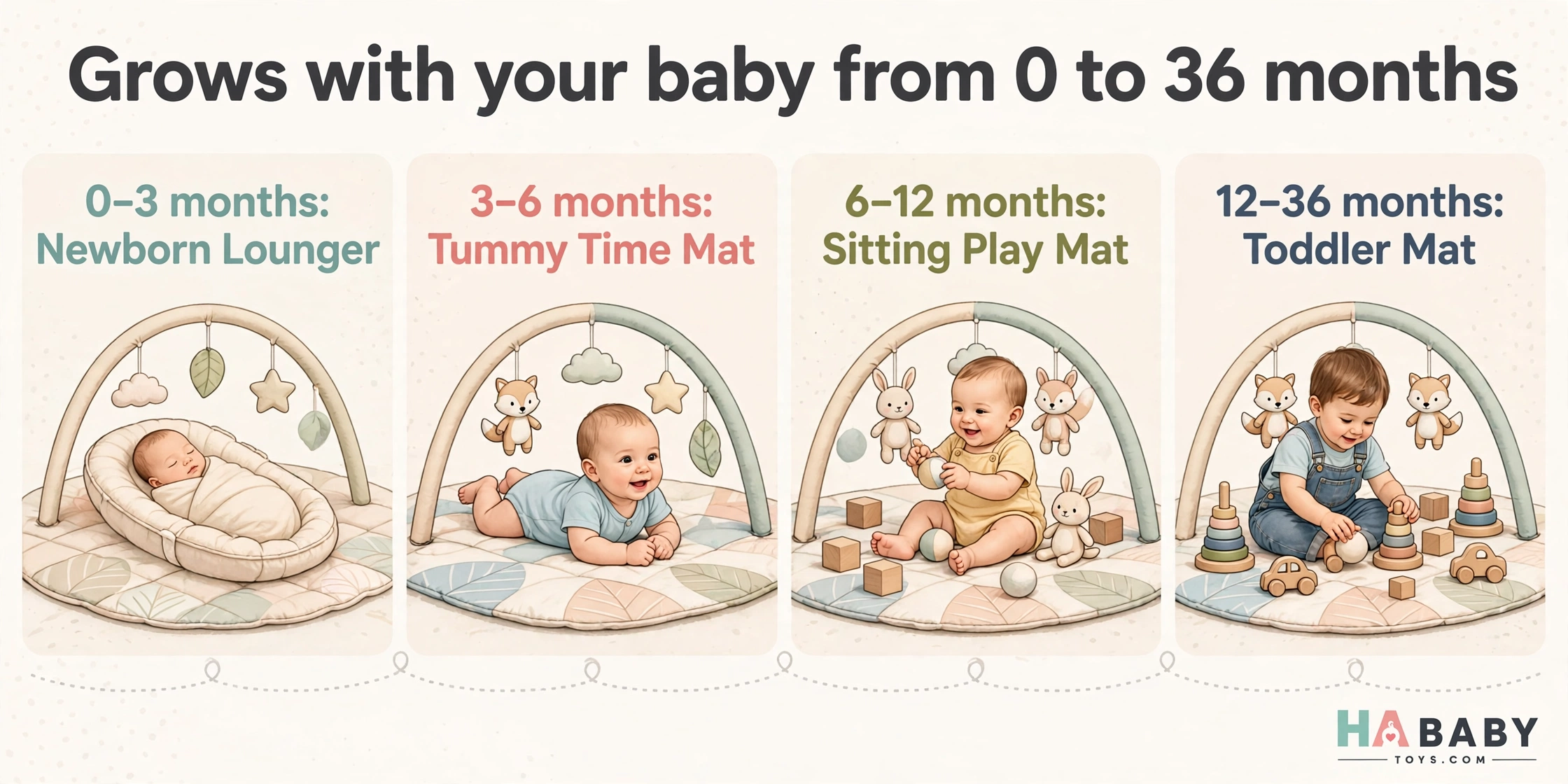
It can be incorporated into everyday floor-play routines, supporting the activities described above depending on its actual features. Parents should consider practical matters such as cleaning, storage, and age guidance.
What to check before ordering: Review the live product page for verified construction, design, materials, dimensions, and age recommendations. If you have questions, visit the product and shopping questions page.
Note: Always verify the actual product features and safety details on the live listing before purchasing. Confirm whether the product is the appropriate mat for the intended age range.
View the HA’BABY Baby Play MatCreating a Simple Baby Play Area at Home
Offer a practical home setup guide.
- A suitable play mat or safe floor surface.
- A clear area away from furniture hazards.
- A small selection of age-appropriate toys.
- A comfortable environment with caregiver supervision.
- A regular cleaning routine.
- Space for the child to move as mobility increases.
Parents do not need an expensive nursery setup to provide meaningful play opportunities. For more ideas, you can read about the tummy time and early development guide or the newborn activity gym activities.
Quick Tips for More Enjoyable Playtime
- Match activities to your child’s current abilities.
- Allow free movement.
- Introduce one activity at a time.
- Talk and interact during play.
- Give your baby opportunities to explore.
- Keep the play area clean and uncluttered.
- Respect rest and feeding times.
- Supervise every play session.
Three Stages of Play on a Baby Play Mat
0–6 Months: Looking and Moving
Observing faces, listening to voices, supervised tummy time, and natural arm and leg movements.
6–12 Months: Rolling and Sitting
Reaching for objects, rolling, sitting, exploring with hands, and beginning to move around.
12–36 Months: Active Discovery
Walking, stacking, sorting, matching, pretend play, and independent exploration under supervision.
Crawling Practice
Clear floor space and toys placed a short distance away may encourage movement.
Sensory Exploration
Visual, tactile, auditory, movement, and social experiences during play.
Parent Interaction
Talking, smiling, and responding to the child’s cues make play meaningful.
Frequently Asked Questions
What is the best baby play mat for 0–36 months?
The best option depends on the child’s age, intended activities, construction, materials, cleaning instructions, and manufacturer’s age guidance. No single mat is ideal for every family, so assess the product against your practical needs.
Can newborns use a baby play mat?
Yes, if the specific product is designed and approved for the newborn’s age and is used according to its instructions. Keep play supervised and use tummy time only while the baby is awake.
Does a baby play mat help with crawling?
A suitable mat can provide a defined area for supervised floor play and opportunities to practise movement. It cannot guarantee that a baby will crawl or accelerate the development of crawling.
What age should a baby start using a play mat?
It depends on the product’s age recommendation. Some mats are designed for newborns, while others are intended for older babies or toddlers. Always check the manufacturer’s guidance.
How long should a baby play on a mat each day?
There is no single required play-mat duration. Offer age-appropriate opportunities for movement and interaction throughout the day, while respecting the child’s sleep, feeding, comfort, and activity needs.
Are sensory play mats good for babies?
They can offer opportunities to explore colours, textures, and other age-appropriate features. Their value depends on safe design and how parents use them during interactive play.
Can toddlers use baby play mats?
Some play mats can remain useful for toddlers if their construction and manufacturer guidance allow it. Toddlers may use them for sorting, stacking, matching, and simple games.
Can babies sleep on a play mat?
No. A play mat is not a safe sleep surface. Babies should sleep on their backs on a separate, firm, flat, approved sleep surface.
How do I clean a baby play mat?
Follow the manufacturer’s cleaning instructions. Different materials may require different washing or wiping methods. Allow the mat to dry properly before use. You can also visit the product and shopping questions page for more information.
Conclusion — Make Every Stage of Play a New Opportunity
Play changes as babies grow. Early observation gradually becomes more active exploration, movement, and toddler games. A baby play mat can offer a convenient space for these experiences, provided it is suitable for the child’s age and used safely.
Parents should focus on interaction, exploration, and the child’s comfort rather than milestone pressure. Ready to create a dedicated play space? Explore the baby toy collection to compare options, or contact HA’BABY for product enquiries if you have specific questions. For more baby play and learning guides, visit the HA’BABY blog.
Explore the HA’BABY Baby Play Mat