
You have a newborn, and you are wondering if they are tracking objects correctly. You may have heard about high-contrast cards and want to know if they can help with focus and visual tracking. It is normal to have questions about your baby’s development. High-contrast cards for newborns feature bold patterns that may be easier for young babies to notice while their vision develops. Parents can hold a card still during calm, awake interaction and introduce gentle movement when the baby is ready. These cards encourage visual exploration but cannot diagnose vision problems or guarantee faster visual development. This guide explains how newborn focus and tracking develop, how to use high-contrast cards safely, what realistic expectations to have, and when to ask a pediatrician about vision. For a broader selection of baby learning toys, explore our HaBabyToys collection.
Table of Contents
- Understanding High-Contrast Cards for Newborns
- How Newborn Focus and Visual Tracking Develop
- Benefits of High-Contrast Cards for Newborns
- How to Use High-Contrast Cards for Focus and Tracking
- Which High-Contrast Patterns Should Parents Choose?
- Common Focus and Tracking Mistakes to Avoid
- When Should Parents Ask a Pediatrician About Vision?
- How to Choose High-Contrast Cards for Newborns
- Are High-Contrast Cards Worth Buying for a Newborn?
- Frequently Asked Questions
High-contrast cards for newborns feature bold patterns that may be easier for young babies to notice while their vision develops. Parents can hold a card still during calm, awake interaction and introduce gentle movement when the baby is ready. These cards encourage visual exploration but cannot diagnose vision problems or guarantee faster visual development.
Understanding High-Contrast Cards for Newborns
High-contrast cards are simple cards with bold, contrasting patterns—usually black and white. They are designed to be visually noticeable to young infants whose vision is still developing. A newborn’s vision is not as sharp as an adult’s. They can see, but their focus is limited, and they are drawn to high-contrast patterns.
The American Academy of Pediatrics notes that one-month-old babies may prefer high-contrast patterns. The American Academy of Ophthalmology explains how infant vision develops throughout the first year.
What Makes a Card High Contrast?
A high-contrast card has strong differences between light and dark areas. This makes it easier for the developing visual system to process shapes and edges.
Why Simple Patterns Can Attract a Newborn’s Attention
Simple, bold patterns are easier to process than complex images. They can capture a newborn’s attention and encourage visual exploration.
Why a Parent’s Face and Voice Remain Important
Cards are a supplement, not a replacement. Faces and voices are the most important stimuli for a baby. The UNICEF early childhood development resources emphasize the importance of responsive caregiving.
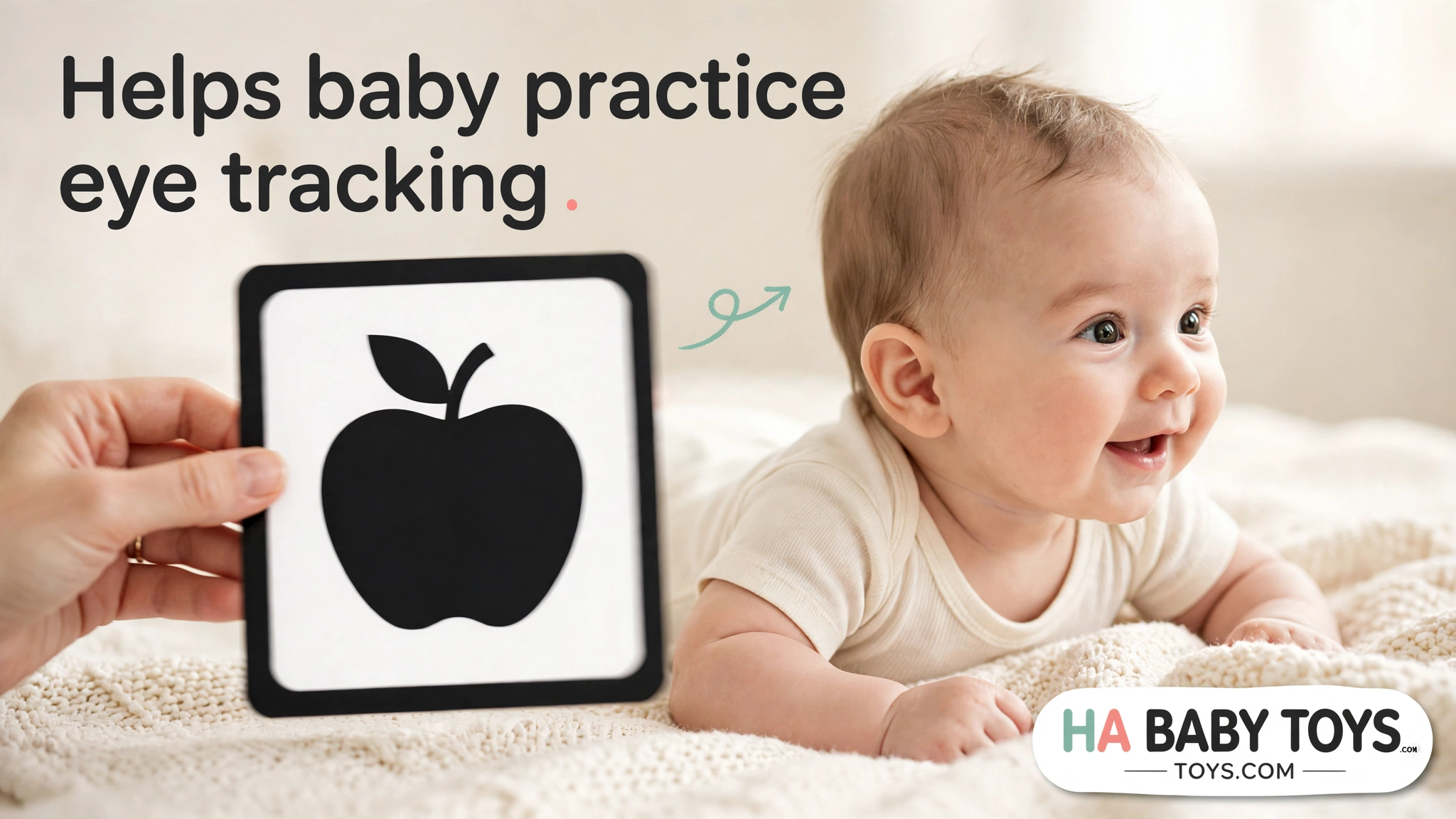
How Newborn Focus and Visual Tracking Develop
Newborn vision develops gradually. Understanding the difference between briefly focusing on a stationary object and following an object as it moves can help parents set realistic expectations.
Early Focusing and Close-Range Viewing
Newborns can focus on objects at close range. They may briefly look at a stationary object. The American Optometric Association provides background on infant vision development.
What Visual Tracking Means
Visual tracking is the ability to follow a moving object with the eyes. This skill develops over time.
Why Eye Movements May Look Uncoordinated in the Early Weeks
In the early weeks, eye movements may look uncoordinated. This is normal. The CDC two-month milestones can provide a useful reference.
What Changes Around 2–3 Months
Around 2–3 months, babies may begin to track objects more consistently. The American Academy of Pediatrics provides guidance on development from 1–4 months.
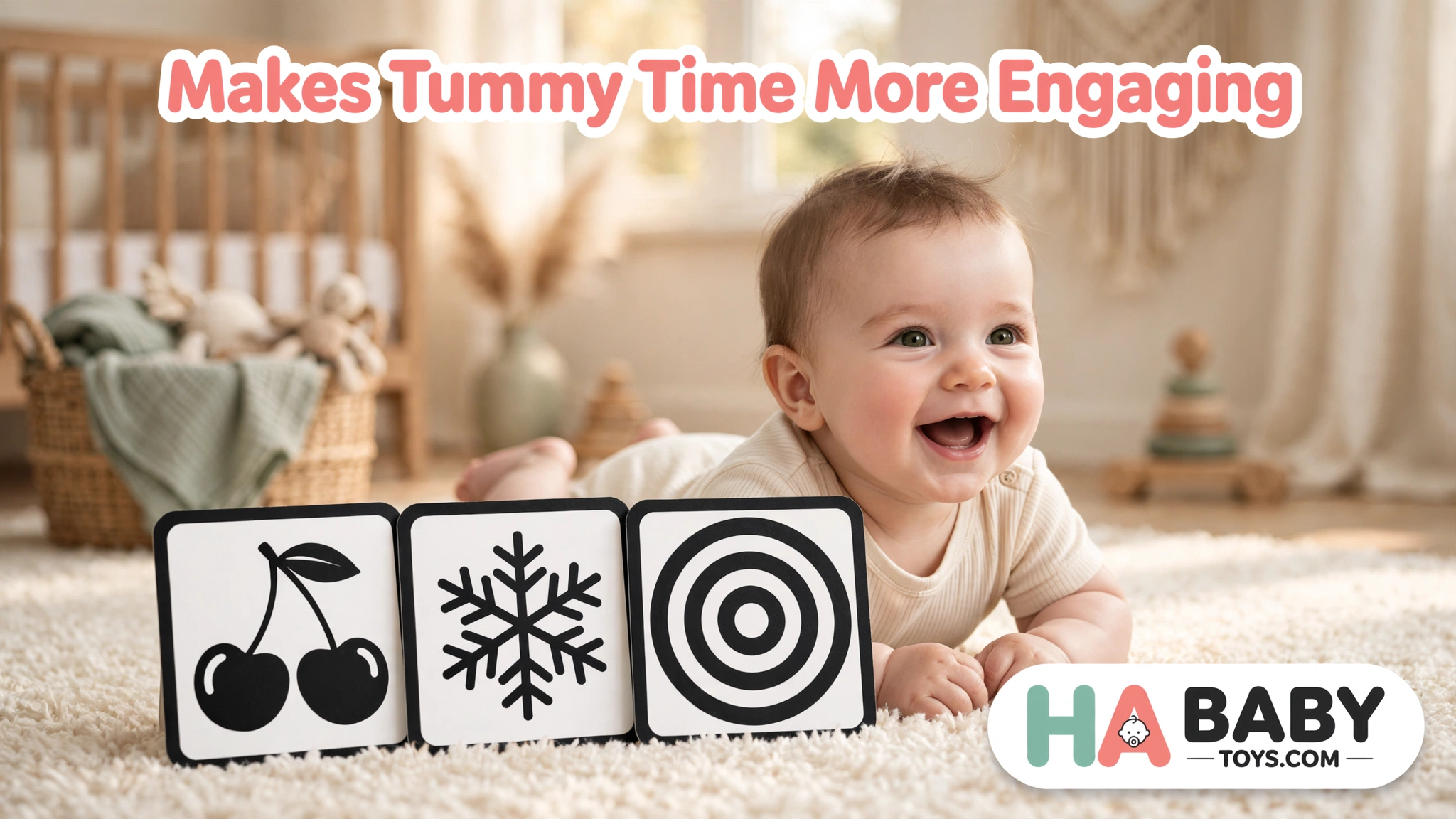
Benefits of High-Contrast Cards for Newborns
High-contrast cards offer practical benefits. They provide a simple visual target and create opportunities for interaction. They do not improve eyesight or raise intelligence.
Providing a Clear Visual Target
Cards give the baby something clear to look at. This can encourage visual attention.
Creating Opportunities for Brief Looking Activities
Cards can be used for brief looking activities. This helps build attention span.
Encouraging Caregiver Interaction
Using the cards together encourages interaction. Parents can talk about the patterns and respond to the baby’s cues.
Adding Variety to Awake, Supervised Play
Cards add variety to supervised play. They are a simple activity that can be done during calm, awake moments.
From Looking to Following
Select a step to see how visual skills develop.
How to Use High-Contrast Cards for Focus and Tracking
Using the cards is simple. Follow these steps for a calm, low-pressure routine.
The American Academy of Pediatrics recommends age-appropriate play. For a detailed guide on visual learning benefits, see our black-and-white baby cards and their visual-learning benefits.
Which High-Contrast Patterns Should Parents Choose?
There is no universally best pattern for every baby. Clear patterns are a sensible starting point.
Simple Geometric Shapes
Simple shapes like circles and stripes are easy to process. They are a good starting point.
Bold Black-and-White Patterns
Bold black-and-white patterns offer strong contrast. They are visually noticeable.
When to Introduce Other Colors and Images
Introduce other colors and images as the baby’s vision develops. For more on sensory cards for older babies, see our sensory cards for babies from 0–36 months.
How to Avoid Overwhelming the Viewing Area
Avoid cluttering the viewing area. Keep it simple.
What Parents Say About HaBabyToys
“My newborn loves these cards. She stares at them during tummy time. It’s a great way to keep her engaged.”
“The cards are thick and durable. The patterns are clear and bold. Very pleased with this purchase.”
“We use these to help our baby practice tracking. It’s a simple activity that works well.”
Common Focus and Tracking Mistakes to Avoid
Avoid these mistakes to ensure a positive experience.
When Should Parents Ask a Pediatrician About Vision?
Cards cannot diagnose vision or replace routine checkups. If you have persistent concerns, discuss them with your pediatrician.
What Can Be Normal in the Early Weeks?
Eye movements may look uncoordinated in the early weeks. This is normal.
Which Observations Should Be Discussed With a Professional?
Discuss persistent concerns, unusual eye alignment, or difficulty visually following objects as expected for the baby’s age with a pediatrician. The National Eye Institute provides additional resources.
Why Routine Well-Child Visits Matter
Routine well-child visits are important for monitoring development.
What Information Parents Can Share at an Appointment
Share observations about visual tracking, eye alignment, and any concerns you have. The ZERO TO THREE resources can help parents understand early development.
How to Choose High-Contrast Cards for Newborns
Before buying, check these features.
| Feature | What to Check |
|---|---|
| Pattern clarity | Are the patterns clear and bold? |
| Image variety | Is there a good variety of patterns? |
| Material | Are the cards made from safe, durable materials? |
| Edge quality | Are the edges rounded and safe? |
| Durability | Are the cards thick and well-made? |
| Cleaning instructions | Can the cards be wiped clean? |
| Storage | Is there a safe place to store the cards? |
| Ease of use | Are the cards easy for parents to handle? |
The HA’BABY black-and-white baby flash cards are a well-designed option. Check the product page for current details. For more on choosing baby toys, see the AAP toy selection guide.
Are High-Contrast Cards Worth Buying for a Newborn?
High-contrast cards can be a convenient optional play resource. They are especially useful for parents who want to encourage visual attention and tracking.
Who May Find High-Contrast Cards Useful?
Parents of newborns may find these cards useful. They are also a great gift for new parents.
What to Expect From a Simple Card Set
Expect a simple activity that encourages looking and visual attention. The HA’BABY FAQ page may answer additional questions.
Explore HA’BABY Black-and-White Baby Flash Cards
The HA’BABY black-and-white baby flash cards are a convenient option. Check the product page for current details.
Introduce Bold Visual Patterns During Your Baby’s Awake Time
High-contrast cards offer a simple way to encourage visual attention and tracking. If you are looking for a low-pressure activity to do with your newborn, these cards are a great choice. Explore the HA’BABY black-and-white baby flash cards to see if they suit your family’s needs.
View the Black & White Cards Browse All ToysFrequently Asked Questions
Bold patterns can be visually noticeable during early visual development. They may attract a newborn’s attention and encourage visual exploration.
Newborns can focus on close-range objects. The early development of central vision means they may briefly focus on a stationary card. Individual variation is normal.
A comfortable, close viewing distance is a reasonable starting point. AAP guidance for one-month-olds describes focusing at approximately 8–12 inches.
Start with a stationary pattern and allow time for looking. Only try gentle movement when appropriate. Follow the baby’s cues.
Keep interactions short and baby-led. There is no strict daily target. Stop when the baby looks away.
This can occur in early infancy. However, persistent eye turning or other concerns should be discussed with a pediatrician.
No. Cards are optional play materials, not treatment, and cannot guarantee improved vision.
Discuss with a pediatrician if the baby consistently does not follow objects as expected for their age or if you notice persistent eye-alignment concerns.
They can be useful options but are not universally superior to faces, colorful images, books, and other suitable activities.
Check the actual product’s age guidance, material details, and safety instructions. Always supervise your baby.
Conclusion: A Simple Tool for Visual Exploration
High-contrast cards for newborns are a simple, low-pressure tool for visual exploration. They encourage looking, attention, and interaction. They are not a treatment or a guarantee of faster development, but they can be a valuable addition to your baby’s play routine. For more educational toys and play ideas, explore the HaBabyToys blog and browse our full collection.