
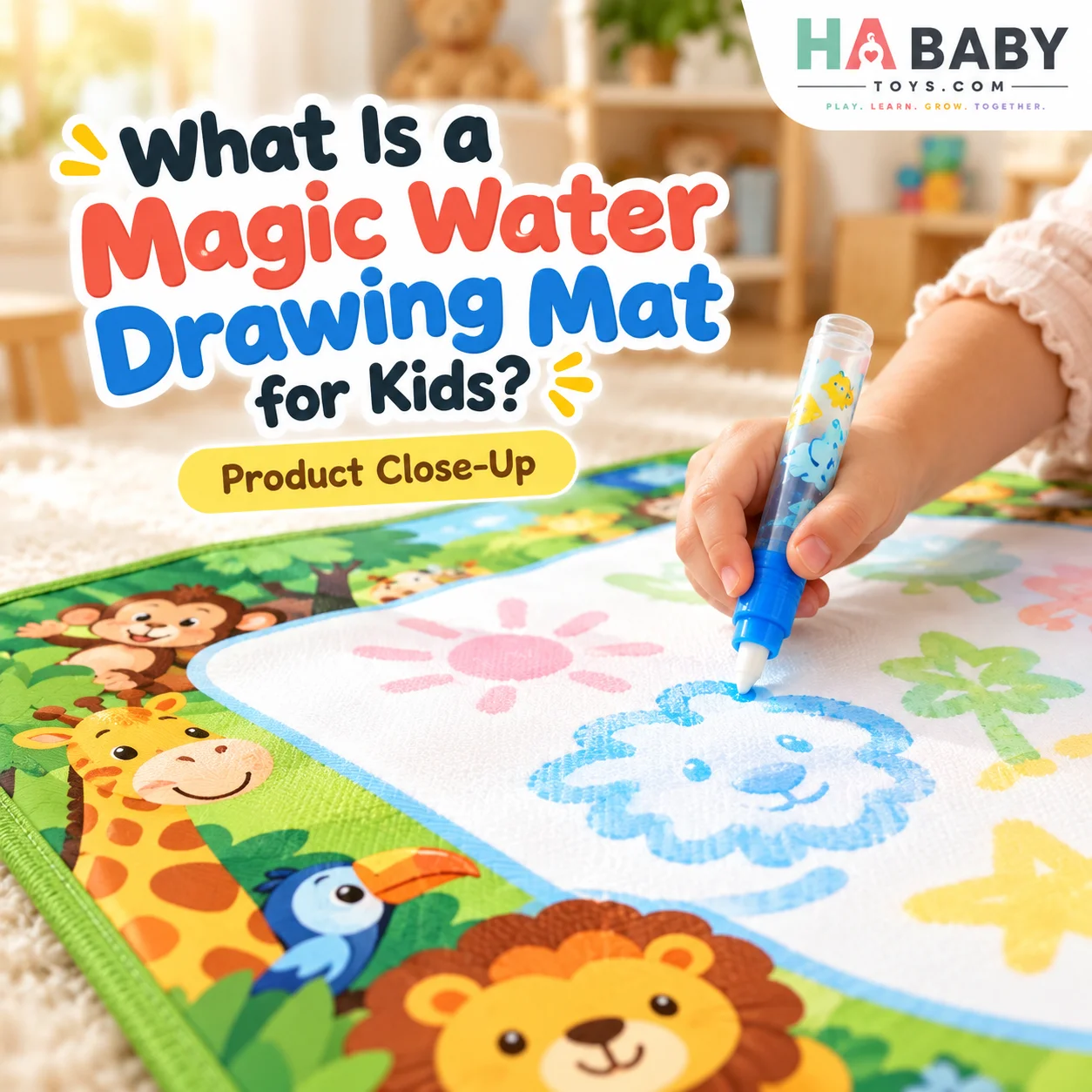
A magic water drawing mat is a reusable drawing surface that reveals colors when children draw on it with water-filled pens or brushes. As the water dries, the marks gradually disappear, allowing the mat to be used again without ink, paint, or piles of paper.
If you have seen these mats online and are not sure whether they actually reset, whether they need ink, or whether “mess-free” is a genuine description, this guide explains it in plain language. The HA Baby Toys Magic Water Drawing Mat is a good example of the category — a water-activated surface with pens and accessories for creative play.
What Is a Magic Water Drawing Mat?
A magic water drawing mat for kids is a reusable doodle surface that changes color when it gets wet.
Children usually:
- Fill a special pen with water
- Draw on the mat
- Watch colors appear
- Wait for the mat to dry
- Draw again
Water drawing mat: water-based marks that fade as the surface dries
Fill → Draw → Reveal → Dry → Repeat
The five-step cycle behind every drawing session
Magic Water Drawing Mat
Water in, color out, reset for next time
Fill
Add clean water to the drawing pen.
Draw
Move the pen across the mat.
Reveal
Colors or darker marks appear where the surface becomes wet.
Dry
The water evaporates.
Repeat
The mat returns to a blank state for another drawing session.
Fill → Draw → Reveal → Dry → Repeat
What Exactly Is a Magic Water Drawing Mat?
It is usually a:
- Reusable drawing mat
- Water-activated surface
- Mess-light alternative to markers or paint
- Creative play surface
- Drawing and tracing activity
What separates it from a plain drawing sheet is the reset behaviour: the marks are created by water rather than ink, so the surface returns to blank once it dries. That single difference is what makes the mat reusable and what makes parents describe it as “mess-light.”
Parents who want the practical side of setting one up can read the guide on how to use a reusable water drawing mat.
How Does the Water-Reveal Surface Work?
The drawing surface is designed to change appearance when it becomes wet. Water from the pen activates the surface temporarily, revealing color or darker contrast. As the water evaporates, the visible marks fade.
A simple visual for the whole process:
Dry surface → Water touches mat → Color appears → Water evaporates → Surface resets
Do not make chemical or material claims about the surface unless the manufacturer confirms them. The safe description is that it changes appearance in response to water and returns to its previous state as it dries.
What Happens Under the Pen?
Five layers behind the reveal-and-reset effect
Water Pen
The drawing tool that applies water only.
Wet Area
The surface becomes visibly damp where the pen passes.
Color-Reveal Surface
Color or contrast appears in the wet area.
Drying Phase
The water gradually evaporates from the mat.
Blank Again
The surface returns to its starting state, ready for another drawing.
Water Pen → Wet Area → Color → Dry → Blank
Is It Really Reusable?
Yes. The mat is reusable because the drawing is created by water rather than permanent ink. Once the water dries, the visible marks fade, allowing the same surface to be used again.
That said, “reusable” does not mean:
- Indestructible
- Free from needing proper storage
- Safe from wear on the pens and accessories
- Immune to surface staining if left dirty
Treating the mat well — clean, dry, and stored properly — extends how long it stays usable.
Is It Actually Mess-Free?
A water drawing mat can be much cleaner than markers, crayons, or paint because the drawing tool uses water instead of colored ink. However, it is better described as “low-mess” rather than literally impossible to make a mess with.
Possible mess still exists:
- Water spills
- Overfilled pens
- Wet floor around the mat
- Damp storage if the mat is folded too soon
Being honest about this builds trust. It is cleaner than most creative activities, but it is not zero-maintenance.
Water Drawing Mat vs Paper and Markers
| Feature | Water Drawing Mat | Paper + Markers |
|---|---|---|
| Reusable surface | Yes | No |
| Ink needed | No | Yes |
| Color stains | Lower risk | Possible |
| Paper waste | Low | Higher |
| Permanent artwork | No | Yes |
| Easy repeat play | Strong | Requires new paper |
| Cleanup | Usually simple | Varies |
Water Drawing Mat vs Paint
Water mat
- Cleaner
- Reusable
- Fast setup
- Temporary artwork
Paint
- More color control
- Permanent artwork
- More cleanup
- More supplies
Neither is universally better. Paint offers expressive range and permanent results. A water mat offers instant reset, low cleanup, and repeat play — the trade-off is that nothing stays.
What Can Kids Actually Do With It?
Free drawing
Let children make whatever shapes they want.
Line practice
Draw straight, curved, and zigzag lines.
Shape tracing
Practice circles, squares, triangles.
Letter practice
Older toddlers or preschoolers can trace letters.
Number practice
Write simple numbers.
Picture copying
Copy basic shapes from cards.
Parent-child drawing
Take turns adding parts to the same picture.
Story drawing
Draw one scene from a simple story.
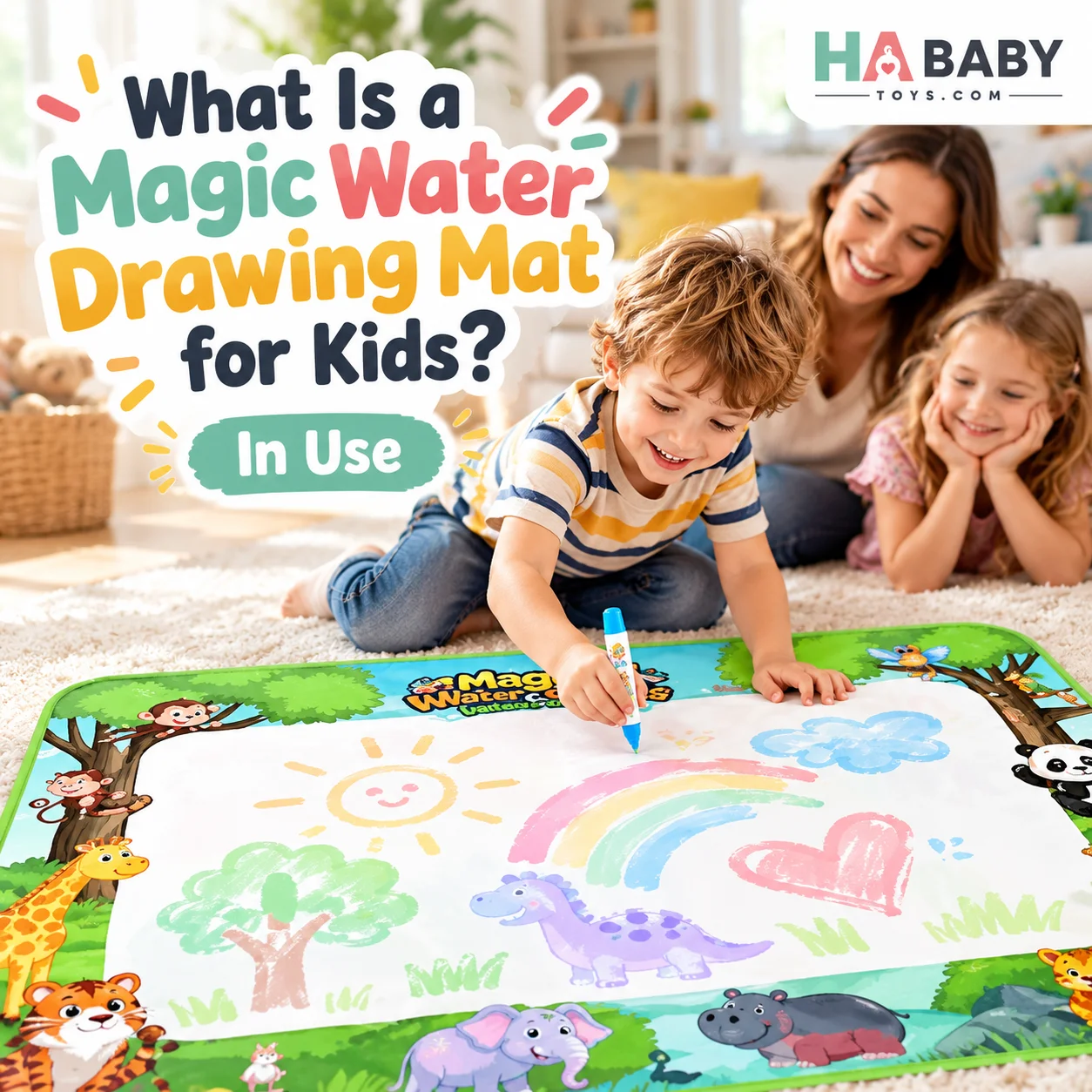
One Mat, Many Activities
Different ways to use the same water mat
Free Draw
Let children doodle whatever they want.
Shapes
Practice circles, squares, and triangles.
Letters
Trace simple letters and names.
Numbers
Write numbers and count together.
Tracing
Trace lines and outlines.
Family Game
Take turns adding parts to a shared picture.
Doodle Challenge
Draw a given shape or simple scene.
Story Drawing
Draw a scene from a favourite story.
Can Toddlers Use a Water Drawing Mat?
Suitability depends on the manufacturer’s age recommendation and the specific accessories included.
For younger children, parents may focus on:
- Scribbling
- Large shapes
- Simple lines
- Parent-assisted play
For older children:
- Letters
- Numbers
- Tracing
- Picture games
Why the Mat Can Be Easier for Parents
Potential conveniences:
- No marker caps
- No paint cups
- No colored ink
- No constant paper replacement
- Quick setup
- Quick reset
The real appeal is not just what children draw — it is how little setup the activity can require. For parents in a rush or in a small space, that difference matters.
How Long Do Drawings Last?
The marks remain visible while the surface is damp and gradually fade as it dries. Drying speed can vary with room temperature, humidity, water amount, and how heavily the child draws.
There is no fixed universal drying time. On a warm, dry day the mat may reset quickly; in a cool or humid room, it may take noticeably longer.
What Happens If Too Much Water Is Used?
Possible issues with over-wetting:
- Drawing becomes too wet
- Drying takes longer
- Surface may become patchy temporarily
- Water may drip outside the mat
Use enough water for visible lines, but avoid soaking the surface. A well-filled pen, used lightly, produces clean lines without making the mat soggy.
How to Introduce the Mat to a Child
Lay the mat flat
On a clean, dry surface.
Fill the pen with clean water
Follow the manufacturer’s fill instructions.
Make one line
Show how the color appears where the water touches the surface.
Let the child try
Let them draw freely and watch the reveal effect.
Wait for the drawing to fade
Show how the mat resets itself.
Start again
Repeat play is the main feature.
For a full step-by-step guide, see how to use a reusable water drawing mat.
What Is an Aqua Doodle Mat?
“Aqua doodle mat” is commonly used to describe the same general type of water-activated drawing surface: children draw with water and the marks disappear as the mat dries.
The names vary, but the underlying idea is the same. If you see terms like “water doodle mat,” “aqua doodle mat,” or “reusable water mat,” they usually refer to this same category.
Can It Be Used for Tracing?
Yes, if the set includes tracing aids or the mat design supports them. Possible uses include:
- Lines
- Letters
- Numbers
- Shapes
- Simple picture outlines
Do not assume a mat includes a tracing board or pre-printed outlines unless the product listing confirms it. Some sets include these aids, and some do not.
Can It Help With Early Writing Practice?
A water drawing mat can provide opportunities to practice:
- Holding a pen
- Making marks
- Copying lines
- Tracing simple shapes
- Repeating letter forms
It can be one low-pressure way to practice pre-writing movements, but it should not be presented as a replacement for broader fine-motor and writing activities. Reading Rockets offers practical guidance on the drawing-to-writing progression, and the CDC developmental milestone resources note that these skills develop gradually through play.
Can It Encourage Creativity?
Yes, but avoid grand claims. Children can:
- Doodle freely
- Draw characters
- Make patterns
- Create simple stories
- Collaborate with parents or siblings
Because drawings disappear, some children may feel freer to experiment without worrying about making a “mistake.” That is a genuine emotional benefit — it removes the pressure of producing something permanent.
The National Association for the Education of Young Children (NAEYC) and UNICEF Parenting both emphasize that open-ended creative play supports early development naturally — no elaborate setup required.
Parent-Child Activity Ideas
Finish My Picture
Parent draws half, child completes it.
Guess the Shape
Draw a shape and ask what it is.
Copy Me
Parent draws a line or symbol, child copies it.
Story Doodle
Draw one scene from a simple story.
Count and Draw
Draw three circles, five lines, and so on.
Name Game
Draw a shape or letter and ask the child to name it.
How Is It Different From a Magnetic Drawing Board?
| Feature | Water Drawing Mat | Magnetic Drawing Board |
|---|---|---|
| Drawing tool | Water pen | Magnetic stylus |
| Surface size | Often larger | Usually smaller |
| Reset method | Drying | Slider or eraser |
| Group use | Often easier | More individual |
| Water required | Yes | No |
| Portability | Depends on size | Often portable |
How Is It Different From a Whiteboard?
Water mat
- Water only
- Temporary reveal
- Lower stain risk
- Often floor-based
Whiteboard
- Marker required
- Erasing needed
- More permanent until wiped
- Better for clearer writing
Both are useful tools for different stages. A water mat is a great introduction to mark-making; a whiteboard is more suited to structured writing practice once fine motor control develops.
What Parents Should Check Before Buying
Look for:
- Manufacturer age guidance
- Mat size
- Reusable surface
- Number of water pens
- Tracing accessories
- Storage method
- Foldability
- Drying behaviour
- Ease of cleaning
- Non-slip backing, if applicable
- Whether colors reveal clearly
This is a high-value section for general buyers. The two biggest decisions are usually size and whether the set includes everything you need.
Choose a Water Drawing Mat If:
- You want a reusable drawing surface
- You prefer water over ink or paint
- You want quick creative play
- Your child enjoys doodling or tracing
- You want less paper waste
- You prefer temporary drawings
- You want an activity for siblings or parent-child play
- You have space to lay the mat flat
If that matches what you are looking for, explore the HA Baby Toys Magic Water Drawing Mat. Parents comparing options can also read why choose a mess-free water doodle mat for kids.
Ready to bring reusable water-based drawing into your home?
Explore the HA Baby Toys Shop →Who Is This Product Best For?
Families with older children can also explore the 3+ Years category for other creative and activity products.
Who Might Prefer Something Else?
A water drawing mat may not be ideal if:
- You want permanent artwork
- Your child prefers real paint or markers
- You have very limited floor space
- You do not want to refill pens with water
- Your child wants detailed color control
What it can offer:
- Reusable drawing surface
- Low-cleanup creative play
- Quick setup and reset
- Freedom to experiment without pressure
- Portable activity option
Safety and Practical Considerations
Before and after play
- Follow manufacturer age guidance
- Use clean water
- Avoid soaking the mat
- Wipe spills
- Let the mat dry before folding
- Keep water away from electronics
- Inspect pens for damage
- Supervise younger children as appropriate
For toy safety guidance, the U.S. Consumer Product Safety Commission publishes information on children’s products, recalls, and hazards. HealthyChildren.org from the American Academy of Pediatrics covers safe play practices in more detail, and the ZERO TO THREE organization offers practical guidance on early creative play.
How to Get the Most From the Mat
Once the routine is set, a few habits keep the mat working well:
- Keep the mat flat and clean between sessions
- Let it dry fully before folding or storing
- Use clean water in the pens
- Avoid overfilling pens
- Rotate activities so play stays fresh
For more ideas and further guides, browse the HA Baby Toys blog, which covers creative play, drawing activities, and other parent-friendly products.
Frequently Asked Questions
What is a magic water drawing mat for kids?
It is a reusable drawing surface that reveals color when children draw on it with water-filled pens or brushes. As the water dries, the marks fade, allowing the mat to be used again without ink, paint, or paper.
How does a water drawing mat work?
The surface changes appearance when it becomes wet. Water from the pen activates the surface temporarily, revealing color or darker contrast. As the water evaporates, the visible marks fade, and the mat returns to its starting state.
Is a water drawing mat reusable?
Yes. Because the drawing is created by water rather than permanent ink, the marks fade as the mat dries, and the same surface can be used again. It still needs to be cleaned and stored properly to keep it usable long-term.
Does it use ink or paint?
No. The drawing tool uses water only. This is why the marks fade and why the mat can be reused without ink, paint, or marker refills.
How long do the drawings stay visible?
The marks remain visible while the surface is damp and fade as it dries. Drying speed varies with room temperature, humidity, water amount, and how heavily the child draws. There is no fixed universal drying time.
Is a water drawing mat really mess-free?
It is better described as “low-mess” rather than literally impossible to make a mess with. It is cleaner than markers or paint because there is no colored ink, but water spills can still happen if pens are overfilled or the mat is moved while wet.
What happens if too much water is used?
Drawing becomes too wet, drying takes longer, the surface may become temporarily patchy, and water may drip outside the mat. Use enough water for visible lines, but avoid soaking the surface.
Can toddlers use a water drawing mat?
Suitability depends on the manufacturer’s age recommendation and the accessories included. Younger children may focus on scribbling, large shapes, and simple lines with parent assistance.
Can kids practice letters and numbers on it?
Yes. It can be one low-pressure way to practice pre-writing movements like copying lines, tracing shapes, and repeating letter forms. It is not a replacement for broader fine-motor and writing activities. The Reading Rockets organization offers practical guidance on early drawing-to-writing development.
Can siblings use the mat together?
Yes, especially on larger mats. Shared play works best when children take turns or work on different areas of the mat. The National Association for the Education of Young Children (NAEYC) highlights turn-taking and shared creative play as normal parts of early group activity.
How is it different from a magnetic drawing board?
A magnetic drawing board uses a stylus and a slider to reset the image. A water drawing mat uses a water pen and resets itself by drying. Water mats tend to be larger and better for shared play; magnetic boards are typically smaller and more portable.
How should the mat be stored?
Let the mat dry fully before folding or storing it, keep it in a clean, dry place, and protect the water pens so they do not get damaged. Folding a damp mat can trap moisture and affect the surface over time.
Can I fold it while it is still damp?
It is better not to. Let the mat dry fully before folding. Folding a damp mat can trap moisture inside, which may affect the drawing surface and encourage mould or odour over time.
What should parents check before buying one?
Check the manufacturer’s age guidance, mat size, reusable surface, number of water pens, tracing accessories, storage method, foldability, drying behaviour, ease of cleaning, and whether the colors reveal clearly. The HA Baby Toys FAQ also answers common product and ordering questions.
Where can I buy the HA Baby Toys Magic Water Drawing Mat?
Visit the HA Baby Toys shop to see the magic water drawing mat and other creative play products. Retailers and larger buyers can also request a quote from HA Baby Toys.
The Short Version for Busy Parents
A magic water drawing mat is a reusable surface that reveals color when wet and resets itself as it dries. It is a low-mess creative play option — not a magical replacement for every art activity, and not perfectly clean, but noticeably simpler than markers, paint, or paper.
If your child enjoys doodling, if you want something that resets without paper waste, and if you have space to lay a mat flat, it can be a genuinely useful addition to the creative play shelf. If your child prefers permanent art, paints, or needs detailed color control, another option will serve them better.
For more family-friendly creative play products and parent guides, HA Baby Toys offers toys and activity products designed around everyday family routines. You can also browse the HA Baby Toys blog for more ideas on drawing, mark-making, and screen-free play.
2 Responses